Omand, along with collaborators at the University of Maine, is developing AI tools that could determine the chemical contents of “marine snow,” particles made up of organic matter, minerals, and other materials that continually sink through the ocean.
“Marine snow is a term used to describe the small sinking particles that are produced when phytoplankton die, or are excreted by larger organisms,” said Omand. “These particles are rich in carbon and other nutrients and provide a key food source for deep-living marine life, as well as having an important role in marine carbon sequestration.”
Underwater cameras can capture large numbers of marine snow particles and reveal characteristics such as their size, shape, and transparency. Images alone, however, generally cannot tell scientists what the particles are made of. If successful, the approach could help scientists learn more from the underwater images they already collect, while reducing the time spent manually classifying particles and improving estimates of how material moves through the ocean.

The National Science Foundation awarded nearly $700,000 to the team for the three-year project, which is scheduled to begin in January 2027 and run through December 2029.
Teaching AI to Read Marine Snow
Omand, along with University of Maine researchers Meg Estapa and Chaofan Chen, will investigate whether AI can predict particle composition from characteristics visible in underwater images.
Researchers have used image-analysis tools to study marine snow for years, but much of that work remains labor intensive. Estapa said one of her graduate students spent months classifying particles and identifying what appeared in underwater images.
The researchers hope AI can help automate some of that work, allowing scientists to collect and interpret more information while spending more time on scientific analysis and discovery.
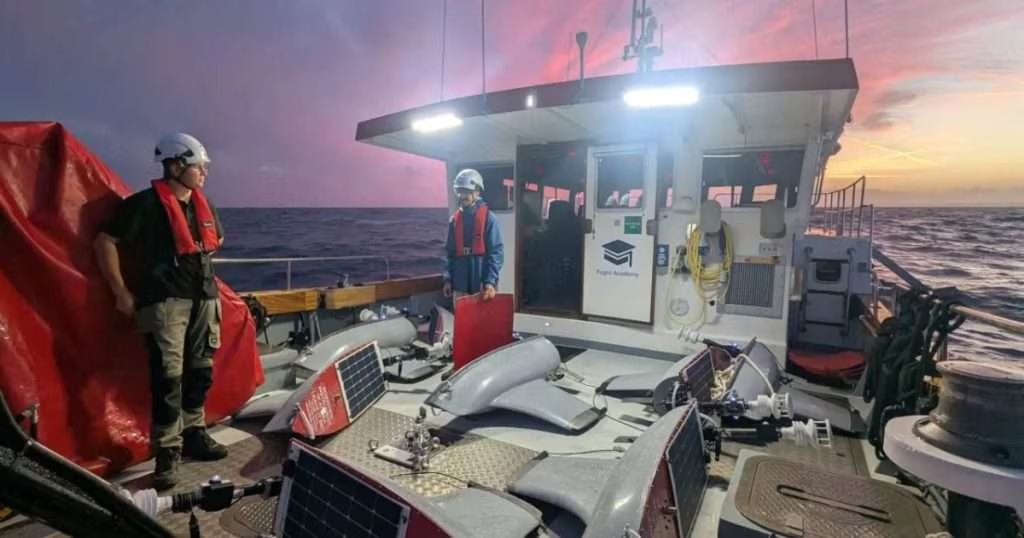
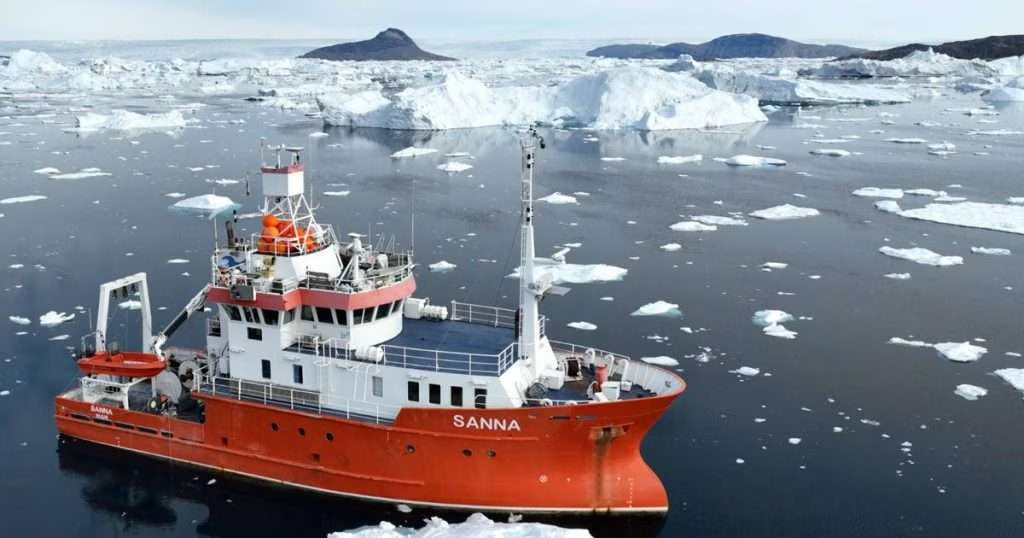
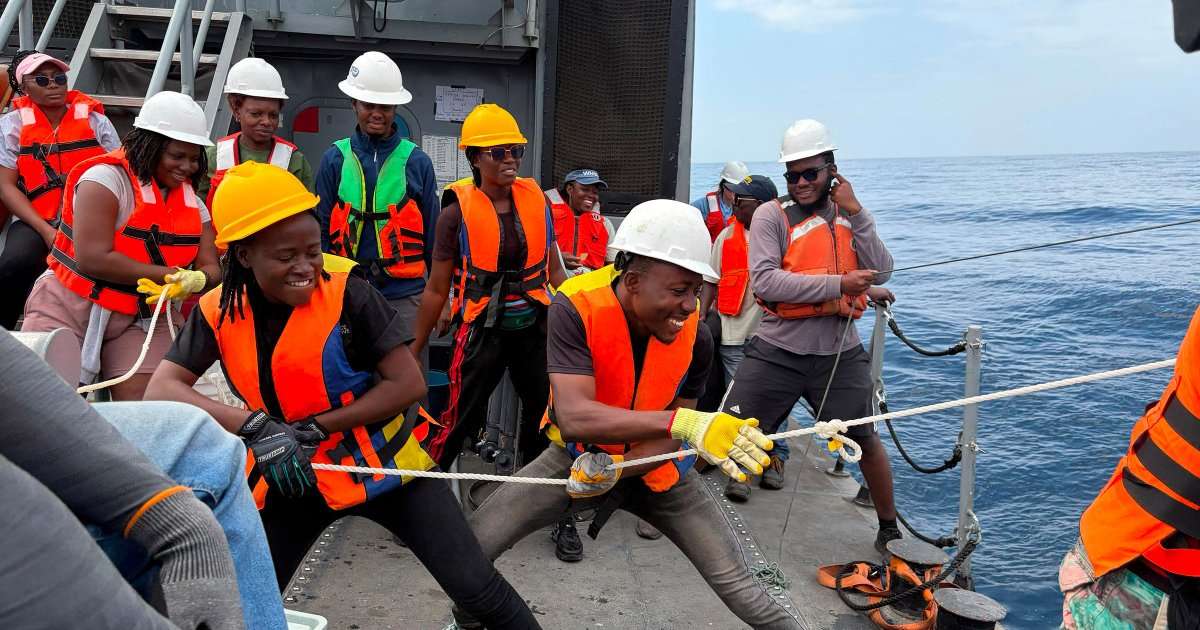
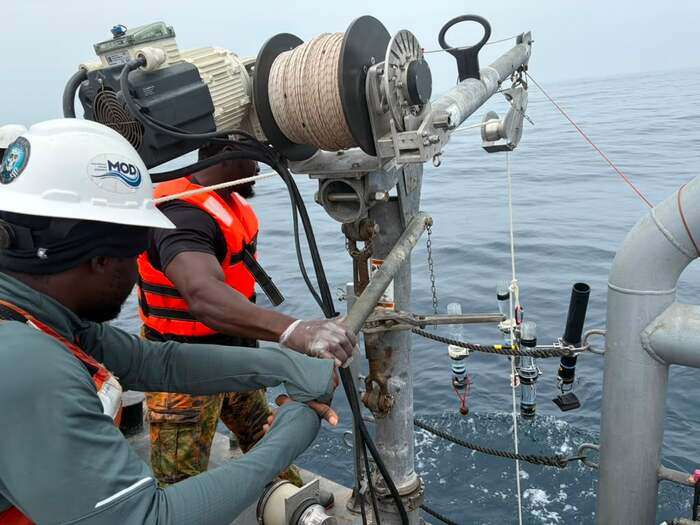
Omand’s role year one will be through collection of marine snow images and physical samples in a broad range of locations spanning coastal Ghana, the equatorial Atlantic, the New England shelf, and the California current system.
Through collaborations with the Monterey Bay Aquarium Research Institute and the University of Ghana, the team collected samples from two of these sites this past summer. Ultimately, they plan to compile a database pairing marine snow images with information about the geochemical properties, how much microplastic is present, and where the samples were collected. They will then develop AI models that can learn from the data, while also helping scientists understand how the models reach their conclusions.
The researchers will use data from six major oceanographic field campaigns to test whether groups of particles visible in images can accurately predict their chemical composition.
What Marine Snow Carries into the Deep Ocean
Microplastics will be one focus of the project. By identifying and quantifying plastic particles alongside naturally occurring marine snow, the researchers hope to better understand how plastic pollution moves from surface waters into the deep ocean and through marine food webs.
The same tools could help researchers better understand the natural cycling of carbon and nutrients through the ocean.
“By gaining detailed insights into marine snow particles, their associated communities, and linking them to the environment, we will be able to better predict the movement of carbon and nutrients in the ocean and the impact changes may have on marine life,” said Omand.
For Omand, the project represents a way to extract more information from the increasingly large volumes of imagery scientists collect in the ocean. The approach could have applications beyond oceanography, as scientific fields increasingly rely on complex images that can be difficult and time-consuming to interpret.
This story was written by Mackensie duPont Crowley, digital communications coordinator at URI’s Graduate School of Oceanography.