The compound, known as dimethylsulfoniopropionate (DMSP), is one of Earth’s most abundant organic sulfur compounds in the marine environment. Apart from its ability to protect organisms against environmental stressors, its degradation yields dimethylsulfide (DMS) and methanethiol (MeSH), which are important climate-cooling gases.
In polar regions, however, the role of DMSP remains understudied. In the case of the Southern Ocean, sea ice has until recently been considered an inhospitable environment whose microbial communities contribute little to the ecology of the polar region.
In a new study published in Nature Communications, scientists reveal up to 38-fold higher DMSP concentrations in Southern Ocean sea ice versus the surrounding seawaters during the Southern Ocean austral winter. This finding matters because at its maximum in September, the ice extends to cover about 20 million km² encircling the Antarctic continent in a 400–1,900 km wide ring of ice.
The study was led by scientists from Stellenbosch University in South Africa, in collaboration with scientists from the United Kingdom and Italy.
Southern Ocean Sea Ice a Reservoir of DMSP
Dr. Mayi Buthelezi, a marine microbiologist from Stellenbosch University and first author on the paper, says their findings reveal that Antarctic sea ice is a concentrated reservoir of DMSP.
“Together with these high concentrations of DMSP, we also found an abundance of algal marker genes which are encoding for DMSP production, as well as diverse and previously unidentified bacterial producers. These processes are central to sustaining the ecological and physiological adaptions of microorganism in these extreme environments,” he explained.
Their findings reveal the widespread metabolic pathways for DMSP cycling in Southern Ocean sea ice microbes. It further underscores the role of this seemingly uninhabitable environment as a dynamic reservoir and transformation hub influencing climate-cooling cycles in the polar region.
Prof. Thulani Makhalanyane, holder of the South African research chair in African Microbiome Innovation at Stellenbosch University and senior author, says their findings contribute to our understanding of the role of the Southern Ocean in terms of global nutrient cycles and climate control.
“The specific contributions of microbial communities to Earth systems remain underappreciated. Until now we have just basically tried to describe what types of microorganisms are in the Southern Ocean, and how they differ from those that are found in other marine ecosystems that are not limited in trace elements such as iron and manganese.
“With this study we show how microbial communities are contributing to the recycling of important sulfur-related compounds with important contributions in climate cooling. Now we need to find ways to add these microbial communities as components to Earth system models to aid in predictions,” he explains.
Dr. Stéphane Pesant, co-author and senior marine data curator at the European Bioinformatics Institute (EMBL-EBI) in the United Kingdom, says the results of this study contributed key knowledge to the research and innovation project AtlantECO (Atlantic ECOsystems assessment, forecasting and sustainability), a collaboration between scientists in South Africa, Brazil, and Europe.
“With the recent expansion of data infrastructures, bioinformatics skills and artificial intelligence, we are starting to exploit a treasure trove of historical data, and to identify important gaps in the geographic coverage of those observations. This study contributes to fill those gaps,” she adds.
Sampling the Southern Ocean in Winter
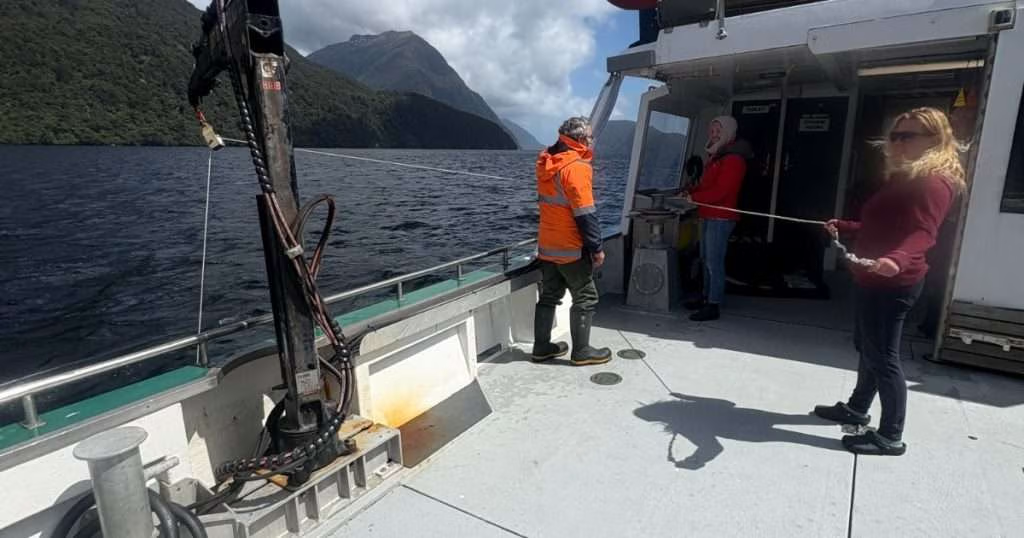
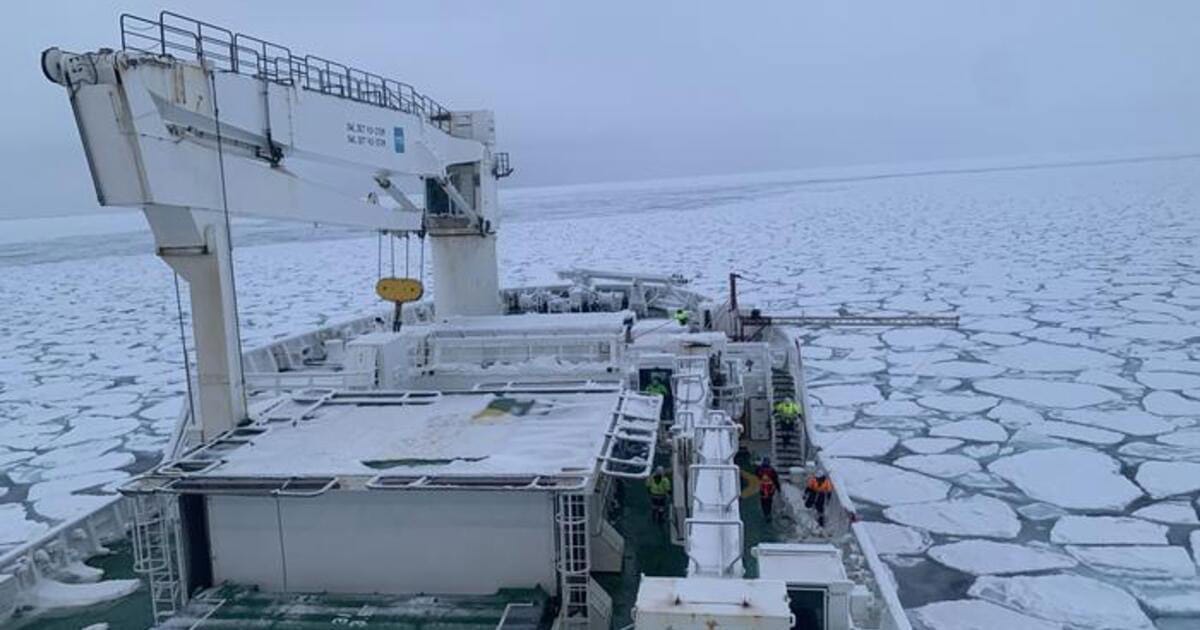
The samples for the study were collected during the Southern Ocean Seasonal Experiment (SCALE) austral winter expedition on board the SA Agulhas II polar research vessel from July 11–22, 2022. During austral winter, the Southern Ocean sea ice expands far to its northern boundary. Coupled with some of the strongest winds on the planet, it is very difficult to access this region at this time to collect samples. That is why this type of data is of disproportionally high value (compared to an overrepresentation of data collected during summer).
Dr. Buthelezi, who participated in this expedition, says his first objective was to determine the structure, composition, and abundance of microorganisms during this time of year. But it soon became clear that he would also need to understand the ecological significance of finding such high concentrations of DMSP in this environment.
“Although DMSP production is exclusive to some microbial groups, the process is not metabolically expensive,” he explains. “Under stressful conditions, when organisms cannot afford to spend excessive energy for growth, they express metabolic pathways for either intercellular synthesis or extracellular import of DMSP as a buffering mechanism to survive. At the same time, DMSP is a vital source of carbon and sulfur for microorganisms, which further explain the multifaceted roles of DMSP within microbes trapped in sea ice.”
Elevated DMSP production in sea ice compared to seawater is clearly supported by metagenomic data showing enrichment of genes capable for DMSP synthesis. The results further show enhanced microbial demand for DMSP as an antistress in freezing and hypersaline environments of the sea ice. In seawater, the high abundance of genes for DMSP degradation compared to those for production shows that in this relatively less stressful environment microbes also disproportionately utilize DMSP as a sulfur and carbon source.
Altogether, the presence of DMSP cycling pathways in seawater and sea ice are sufficient markers for the production of the volatile climate-cooling gases dimethylsulfide and methanethiol. This study further reinforces the importance of the Southern Ocean marginal ice zone as a critical hotspot for global sulfur cycling where biogeochemical processes for climate regulation are enhanced.
Did You Know
- The sea-ice ecosystem is an extreme, low-temperature environment with internal temperatures perpetually subzero, ranging from minus 1 degrees Celsius to minus 20 degrees Celsius in winter.
- At its maximum extent in wintertime, the ice extends to cover about 20 million km² encircling the Antarctic continent in a 400–1,900 km wide ring of ice.
- Microbial communities are central to primary and secondary production of the global ocean, including the Southern Ocean. In this environment, they are essential for nearly half of the atmospheric carbon uptake and nutrient recycling, which is important for Earth’s climate system.