Social information transition exists in some mammals, such as sea otters, bottlenose dolphins and chimpanzees—the latter of which teaches their young to fish for termites using a stick.
However, this type of behavior was not previously known in otariids, or ‘eared seals’, the family of pinnipeds that comprises fur seals and sea lions.
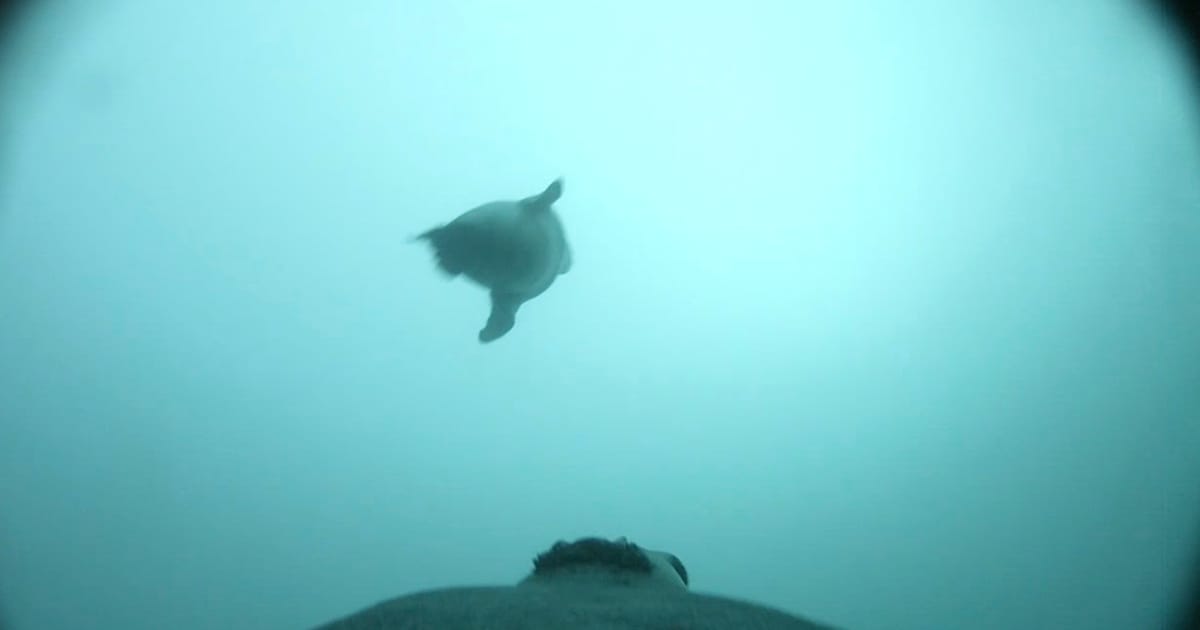
The research team used body-worn cameras and tracking technology attached to an Australian sea lion mother, who was observed taking a pup on an eight-hour foraging trip.
“Social transmission of information helps young to develop specialized and complex foraging behaviors,” said Nathan Angelakis, from Adelaide University’s Southern Seas Ecology Laboratories and SARDI Aquatic Sciences.
“Although this social transmission is well recognized in some marine mammals, our research has provided the first direct evidence for mother-to-pup social transmission of foraging behavior in Australian sea lions.”
Australian sea lions have a unique 18-month reproductive cycle that is asynchronous, meaning it occurs at different times in different colonies, and a seasonal, meaning it does not align to seasonal climatic patterns.
“This supra-annual reproductive cycle, which is six months longer than other otariids, contrasts the highly seasonal, annual and synchronized reproductive cycles conformed to by other seals,” Angelakis said.
“We believe Australian sea lions’ prolonged period of maternal care could provide mothers the opportunity to demonstrate foraging behaviors to pups.”
The researchers observed the sea lion mother adapted her foraging behavior when she was accompanied by a pup.
“When the adult sea lion was with her pup, the duo dived for short durations, and the majority of their time at the seafloor was spent on macroalgae-dominated reefs and macroalgae meadows,” Angelakis said.
“There were also fewer prey attempts on the pup-accompanied trips—just three, as opposed to 172 attempts when the mother was by herself—and the mother’s solo trips were also spent in deeper invertebrate-dominated reefs.”
Angelakis, whose research was published in the Australian Journal of Zoology, said the new knowledge of Australian sea lion behavior could aid conservation efforts.
“The presence of a social component to foraging in Australian sea lions could have important conservation implications, such as whether mother-pup foraging trips increase or decrease predation risk to white sharks, as well as the risk of interactions with fisheries,” Nathan said.
“Investigating the trade-offs of joint foraging trips to mothers, specifically the potential benefits imparted to pups in increasing their foraging and diving abilities, relative to the energetic costs to mothers, could be important for understanding pup survival, broader population dynamics and the conservation and management implications of the species.”