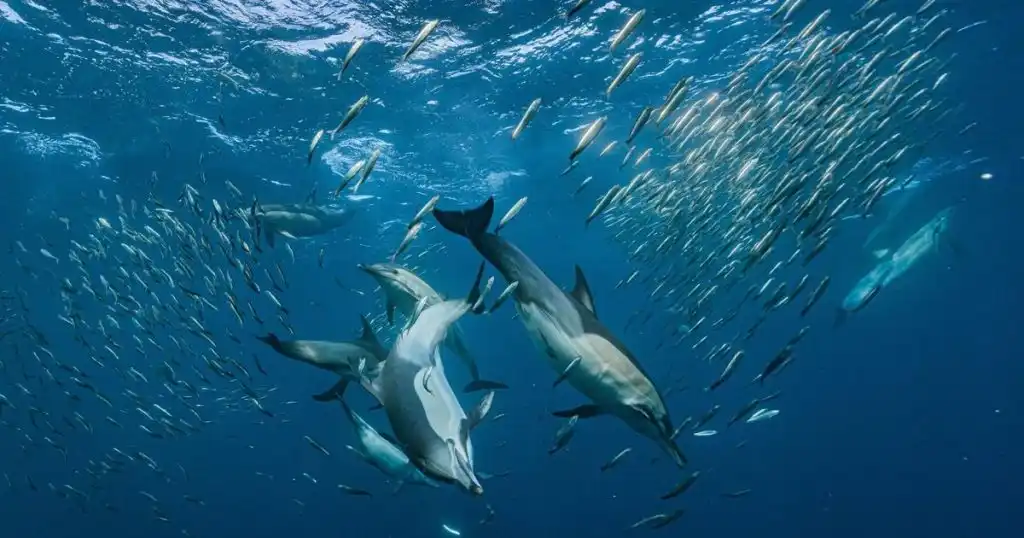
Located on the west coast of the island of Hawaiʻi, Kona offers a unique opportunity to study open-water, or pelagic, ecosystems. Hawaiʻi rises from the deep seafloor in the middle of the Pacific, enabling observations of animals that typically live far from shore. Every night, fishes and invertebrates migrate from the depths to the surface to feed, part of the largest migration on Earth.

For more than four years, Matsumoto has joined biologists from MBARI’s education and conservation partner, the Monterey Bay Aquarium, for fieldwork offshore of Kona.
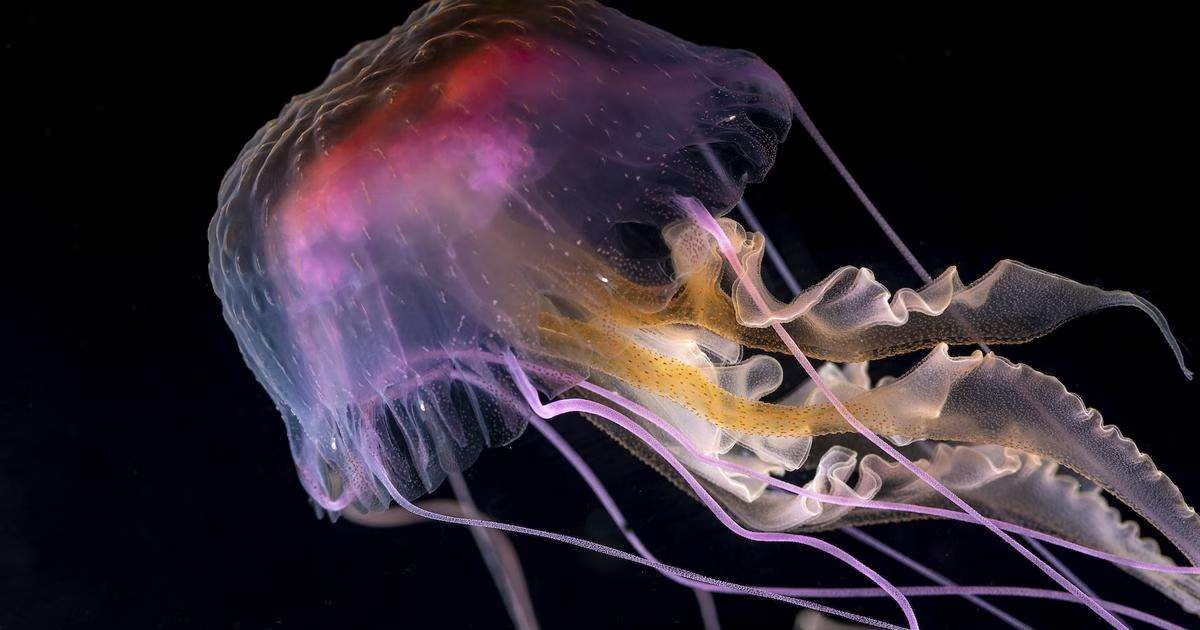
Blackwater diving—nighttime open-water dives—has allowed the team to observe deep-sea animals as they migrate to the surface to feed. The team collected some of the oceanic jellies they encountered, introducing Aquarium visitors to species like slipper lobster larvae and mauve stingers (Pelagia flaveola) to raise awareness about humanity’s close connection to the deep sea.
This fieldwork has also revealed a previously unknown species of crown jelly in the genus Nausithoe. The Aquarium’s animal care team is now culturing this species for display in the Into the Deep/En lo Profundo exhibition, and researchers are preparing the scientific description of this new species.
Matsumoto and Chapman shared new developments from this unique research collaboration during the two-day Kona Aquatics Conference, hosted by the Hawaii Wildlife Fund and Technical Aquatic Research and Exploration. Held November 5–6 at Terraformation’s Ridge to Reef Restoration Center, this meeting brought together individuals, independent institutions, companies, nonprofits, and resource managers conducting research in Kona to exchange ideas and create new connections.
MBARI and Monterey Bay Aquarium’s 2026 fieldwork was conducted under DLNR DAR Special Activity Permit #2026-35. This research is supported by the David and Lucile Packard Foundation and the Monterey Bay Aquarium.