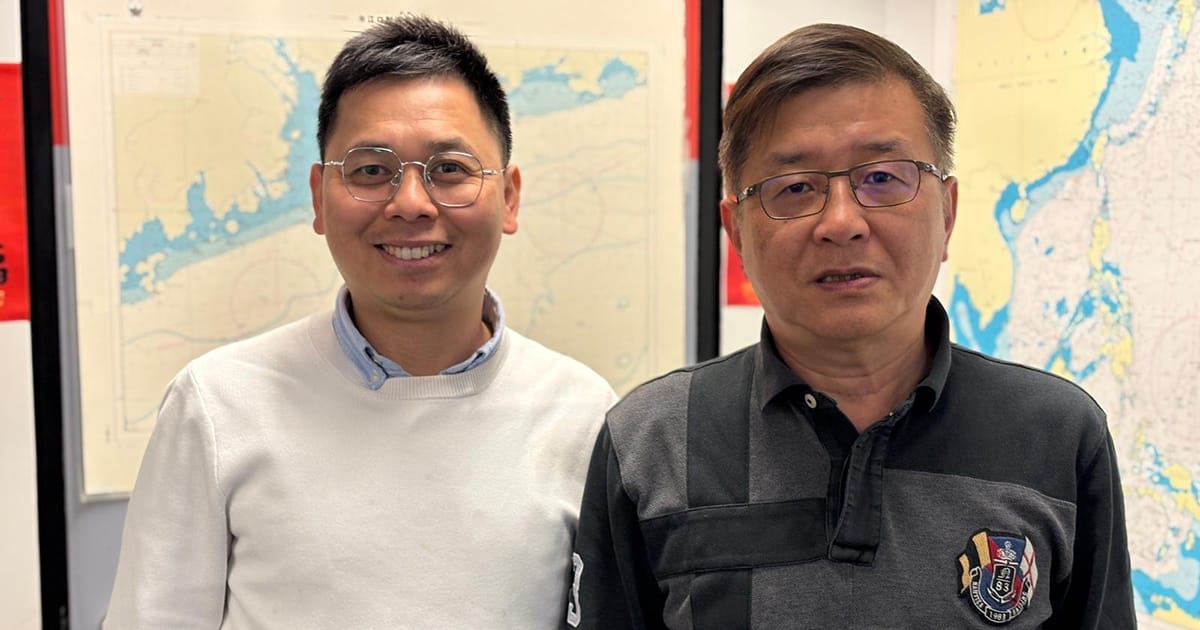
The research was led by Prof. GAN Jianping, Chair Professor and Head of the Department of Ocean Science at HKUST, and Director of the Centre for Ocean Research in Hong Kong and Macau. The study, titled Global increase in rain rate of tropical cyclones prior to landfall, has been published in the international journal Nature Communications.
While previous studies have focused mainly on long-term changes in tropical cyclone rainfall driven by global warming, short-term rainfall changes in the critical hours before landfall—when early warning is most essential—have remained underexamined. To fill this gap, the HKUST team analyzed global satellite rainfall datasets from 1980 to 2020 to assess how rainfall evolves as storms approach the coast and to uncover the physical processes driving these changes.
The study found that, across all ocean basins, storm intensities and latitude bands, rainfall systematically increases before landfall. Crucially, this surge is not directly caused by sea‑surface warming. Instead, it is driven by land–sea contrasts that emerge as the storm nears the coast. These include an increased low-level humidity over coastal land; higher surface friction over land than over ocean, enhancing near-shore convergence, and an increased atmospheric instability that strengthens convection. Together, these factors cause tropical cyclones to produce markedly more rainfall in the 60 hours prior to landfall, with the rise exceeding 20% globally. This means coastal regions face elevated flood risk even before the storm actually makes landfall.
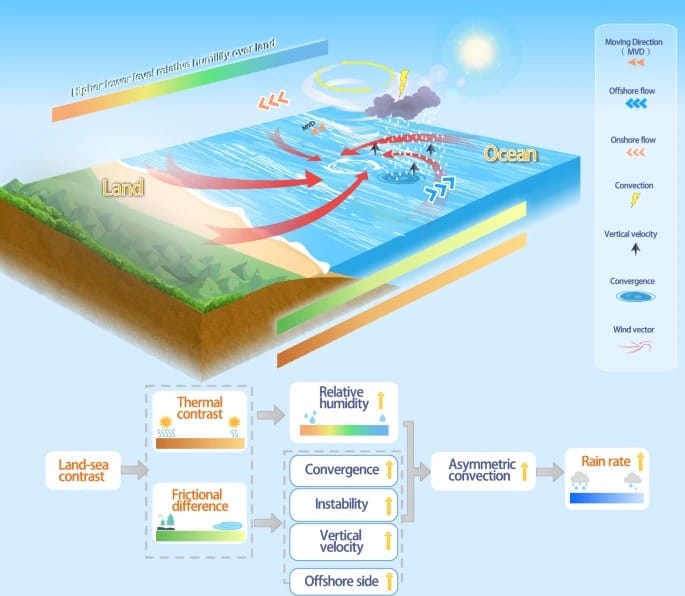
Prof. Gan remarked, “This study identifies the key mechanisms behind the sharp increase in rainfall before tropical cyclones reach land. The findings can help meteorological agencies and governments improve forecasts of heavy rain, flooding and landslides. Combined with our team’s immersive digital twin platform of regional earth system, WavyOcean 2.0—which integrates data on ocean currents, marine ecology, atmospheric conditions, and the distribution of rivers and pollutants in terrestrial watersheds—this work will support more comprehensive disaster‑risk assessment and emergency planning in the future.”
The study was supported by the University Grants Committee Research Grants Council’s Areas of Excellence (AoE) Scheme, further demonstrating HKUST’s leadership in ocean and atmospheric science research.