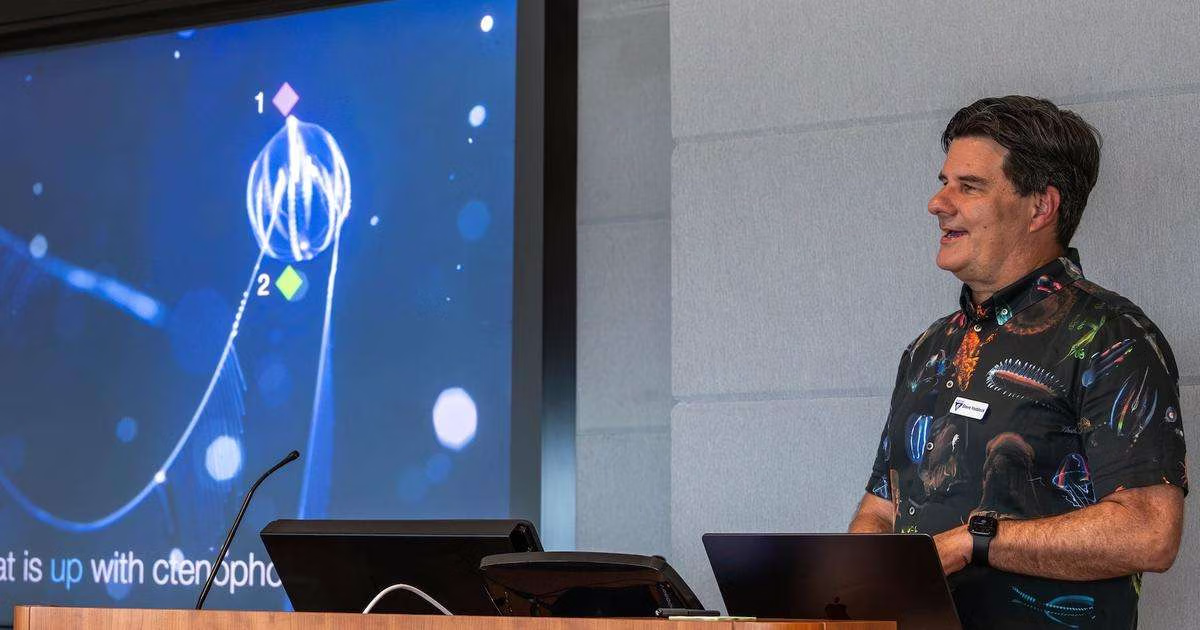
This week, MBARI hosted Ctenopalooza Ctwo, a two-day workshop gathering leaders in ctenophore science to share their latest research and facilitate new collaborations to advance an integrative understanding of ctenophore biology. This workshop was only the second international meeting dedicated wholly to ctenophores, following the first Ctenopalooza in 2016.
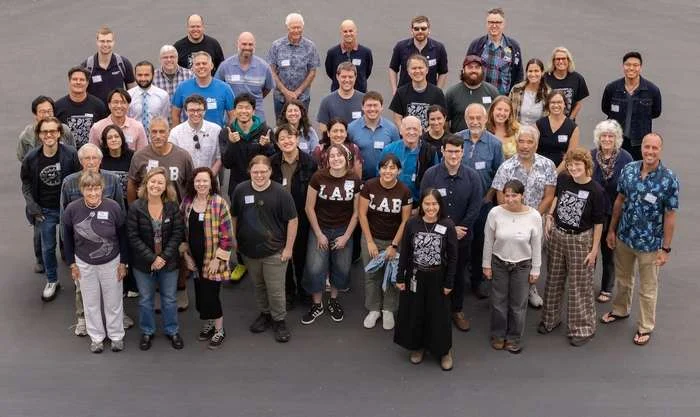
The event was organized by MBARI Senior Scientist Steven Haddock, MBARI Senior Education and Research Specialist George Matsumoto, and Joseph Ryan, an associate professor at the University of Florida’s Whitney Laboratory for Marine Bioscience. Held at our research facilities in Moss Landing, California, Ctenopalooza Ctwo (pronounced “teen-o-pa-loo-za two”) welcomed 49 participants from 28 different institutions in the US, Brazil, Canada, Germany, Japan, the Netherlands, Norway, and the UK.
Presentations and lightning talks highlighted new milestones in ctenophore research from around the world. Members of MBARI’s Biodiversity and Biooptics Team shared their latest findings on ctenophore cell physiology, population genetics, and more. Biologists from our education and conservation partner, the Monterey Bay Aquarium, introduced their innovations in ctenophore husbandry techniques. After the workshop, participants were invited to a behind-the-scenes tour at the Aquarium to learn about their biologists’ work to culture several ctenophore species.
Trainees and early-career scientists were encouraged to participate in the workshop to network with established investigators, exchange ideas, and shape the next decade of discovery. A dinnertime poster session provided participants the opportunity to connect with their peers. Seven invited science communicators and illustrators helped facilitate new collaborations that can generate public interest in the ocean’s dazzling drifters.
The Ctenopalooza Ctwo workshop was made possible thanks to funding from the David and Lucile Packard Foundation and Dalio Philanthropies.