Recently Discovered Hydrothermal Field Off Norway
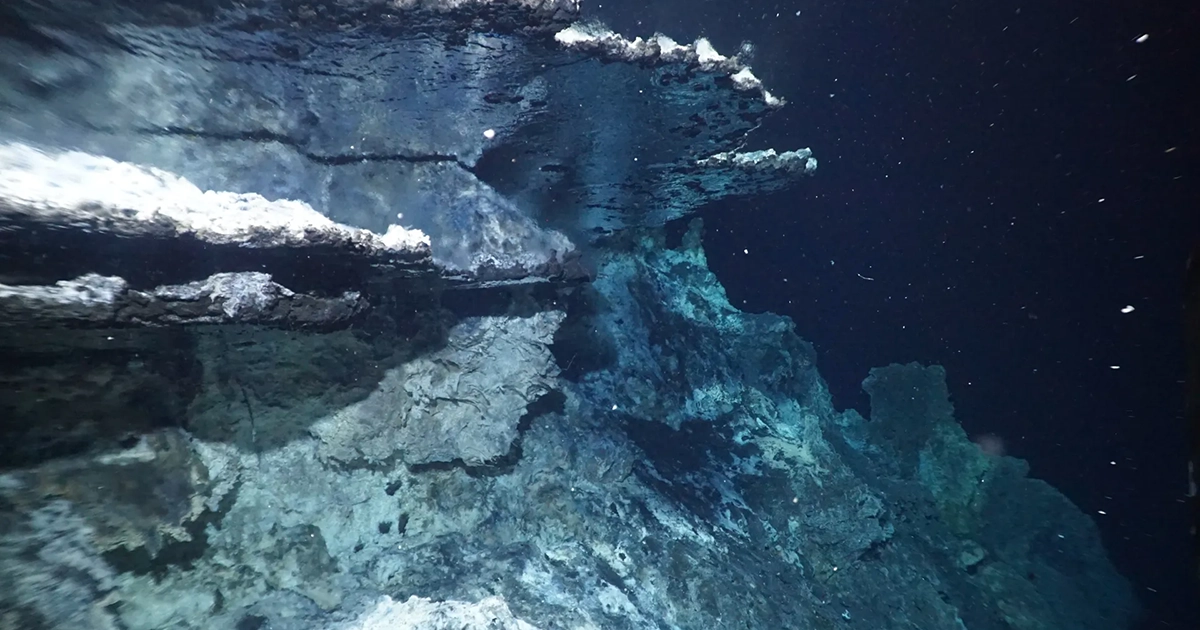
The area of study is the Jøtul Hydrothermal Field on the Knipovich Ridge. This lies off the coast of Spitsbergen in the European Norwegian Sea and represents the junction of the North American and Eurasian tectonic plates. It was first discovered in 2022 during a MARUM expedition of the research vessel MARIA S. MERIAN. It is significant because it lies on the flank of a rift valley in an ultraslow spreading mid-ocean ridge that is overlain by sediments from the continental slope. The entire region is characterized by a multitude of different seeps and vents. During the original expedition, initial samples of hydrothermal fluids were taken by the remotely operated vehicle MARUM-QUEST 4000.
“However, on the way to the surface the gases escaped and could no longer be precisely measured in the laboratory. Similar to opening a pressurized soda bottle,” explained Alexander Diehl, “the gas fizzes out.” In order to investigate the components of the hydrothermal fluids more accurately, the research team returned to the Knipovich Ridge in 2024 with gas-tight sample containers.
More Than Just Serpentinization
But there is another specialty associated with the Jøtul Hydrothermal Field: It lies much deeper than other sediment-accumulating hydrothermal vents.
“At a depth of 3,000 meters, high pressures dominate, which, on the one hand, makes sampling a challenge—and on the other hand, also influences the geological and chemical processes taking place there,” explained Prof. Dr. Gerhard Bohrmann, who was the Chief Scientist of both MARUM expeditions to the Jøtul Hydrothermal Field. The researchers analyzed the major components and dissolved gases as well as isotopic compositions, then applied thermodynamic modeling to study how the fluids react with the surrounding rocks.
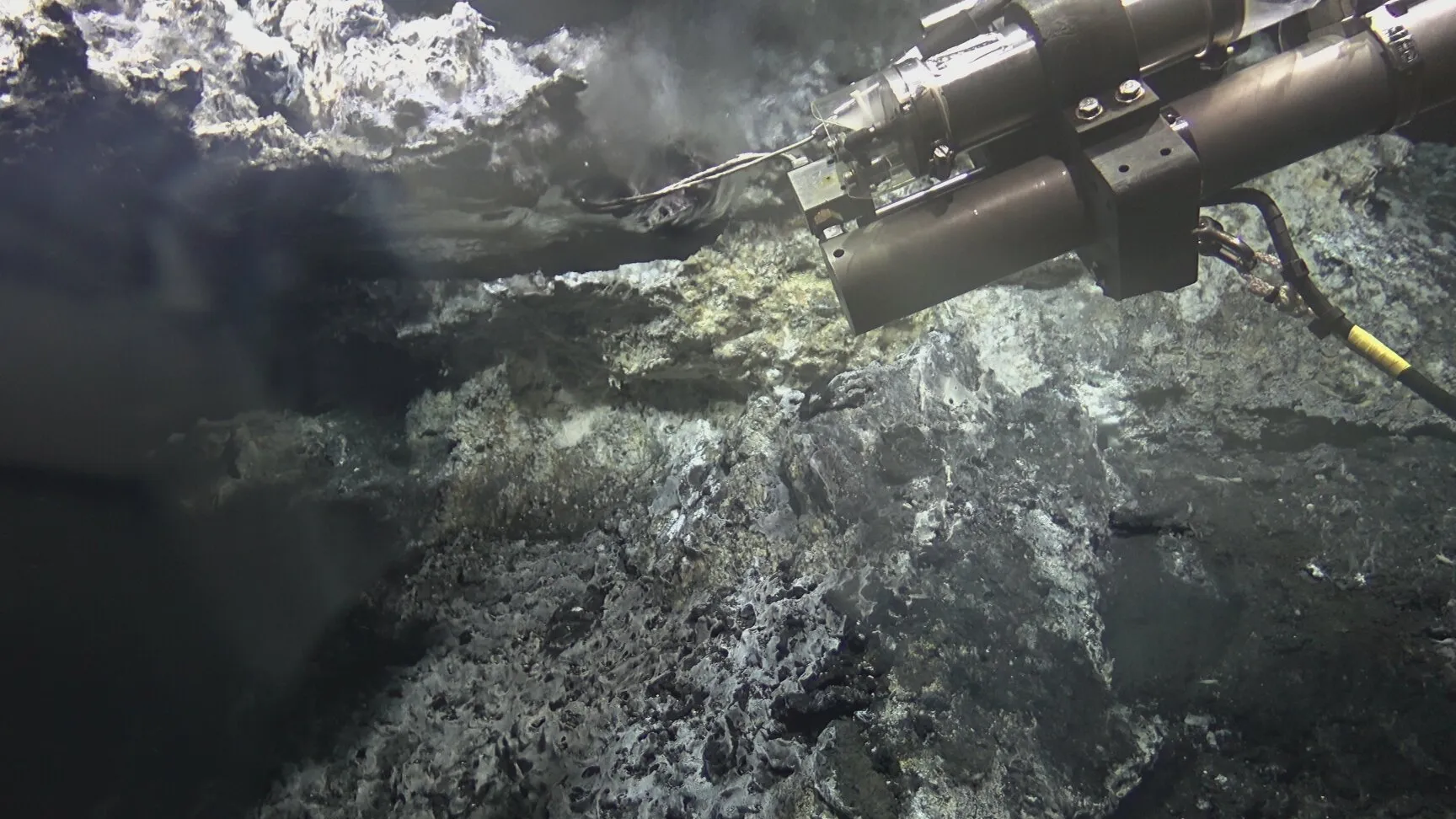
“Our models showed that, because of the high pressures and temperatures in the subsurface at the hydrothermal vents, the organic materials in the sediments decompose under supercritical conditions, causing the release of hydrogen molecules,” explained Diehl. “We were able to show that serpentinization is not the only explanation for how elevated hydrogen concentrations can occur in the deep sea. These findings expand our understanding of sediment-dominated hydrothermal vents, and suggest that the interaction between fluids and sediments is a more important source for dissolved hydrogen in the ocean than was previously believed.”
New Cluster of Excellence Carries on with Research
The research was carried out under the Cluster of Excellence “The Ocean Floor – Earth’s Uncharted Interface”, and further ship expeditions will return to the Knipovich Ridge in the second funding phase of the Cluster of Excellence, which starts at the beginning of 2026.
“The focus of these expeditions will be to improve our understanding of the composition of the vents and the escaping fluids, and to compare them with other hydrothermal vents,” added Prof. Dr. Wolfgang Bach, scientist at MARUM – Center for Marine Environmental Sciences, and at the Faculty of Geosciences at the University of Bremen.