This collaborative research project will help enable the future of mCDR growth beyond pilot and regional test sites by integrating key innovations, including:
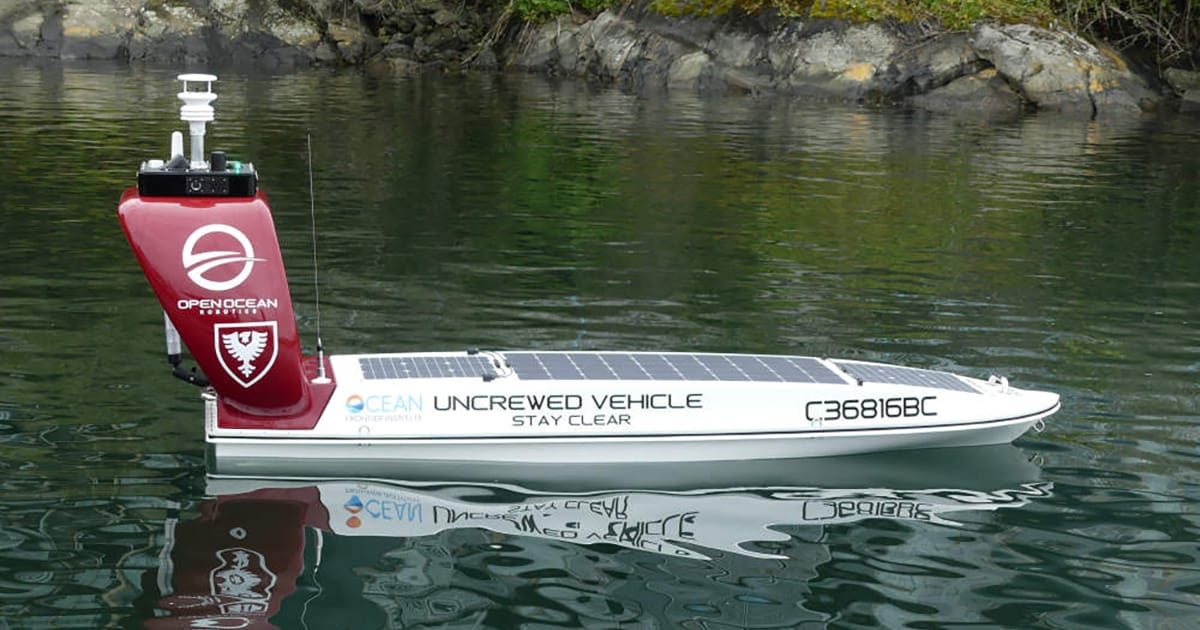
- Uncrewed surface vehicle (USV): Using a commercially available USV equipped with sensors to enable continuous, cost-effective, and adaptive ocean monitoring.
- Advanced sensor integration: Combining trusted commercial sensors with next-generation tools for optimal sensing.
- AI-enhanced data analysis: Utilizing machine learning to optimize ocean sampling strategies, fill observational gaps, and enhance MRV model accuracy.
- Numerical modeling & sensitivity analysis: Developing high-performance ocean computer models to assess carbon removal efficacy and guide optimal observation strategies.
- Field testing: Using the USV and sensors in multiple locations, including coastal and open ocean settings, to understand technology limitations, validate MRV methodologies, and partner with models to improve MRV scalability.
Collaboration between academia and industry is essential to ensure the credibility and accountability of mCDR efforts, advance ocean technology, and deploy scalable MRV solutions. OFI, led by Dalhousie University, has partnered with philanthropic and industry leaders who provide expertise and contributions to support the SCALE MRV project:
- Oceankind’s mission is to improve the health of global ocean ecosystems while supporting the livelihoods of people who rely on them.
- atdepth specializes in advanced computer simulations and monitoring operations for mCDR.
- Nortek makes advanced instruments to measure movement underwater.
- Open Ocean Robotics provides uncrewed boats for autonomous data collection.
- Pro-Oceanus designs and manufactures dissolved gas sensors for all environments.
- RBR develops high-precision sensors for ocean monitoring.
“Through our partnership with atdepth, Nortek, Open Ocean Robotics, Pro-Oceanus, and RBR, we are advancing ocean-based climate solutions that can help achieve a sustainable and climate-resilient future,”
says Eric Siegel, OFI’s Chief Innovation Officer. “We are proud to be using world-class products and innovations produced in Canada for the core robotic and environmental sensing technologies,” he added.
Dr. Chris Whidden, lead research principal investigator on the project, encourages further collaborations and said, “We are looking for additional partners, including researchers to develop this technology, developers of mCDR systems to test it, and potential end users of the mCDR systems to understand their reporting requirements.”
The SCALE MRV project aligns with OFI’s Transforming Climate Action (TCA) research program, focusing on oceans, climate, and people. Both TCA and SCALE MRV will contribute data to the Canadian Integrated Ocean Observing System, enhancing the value of both initiatives.