The grants will leverage $1.2 million in matching contributions for a total conservation impact of $9.6 million. The projects were awarded through the Vessel Strike Avoidance Fund (VSAF), a partnership between NFWF and NOAA.
“Providing better and faster information on the water will advance conservation efforts in cooperation with mariners to protect whales and other marine species from vessel strikes,” said Jeff Trandahl, Executive Director and CEO of NFWF. “These projects build upon successful technology and research efforts that are already underway. The projects will support the development of promising new tools to give mariners timely information to make safe decisions on the water.”
“Promoting further development, testing, and implementation of vessel strike avoidance technologies remains a top priority for us,” said Eugenio Piñeiro Soler, Assistant Administrator for NOAA Fisheries. “The partnership between NFWF and NOAA launches new and innovative projects and advances existing technologies to better detect whales and disseminate accurate, timely information for mariner decision-making. These advancements will help empower mariners, enhance on-water safety, and conserve our large whale populations.”
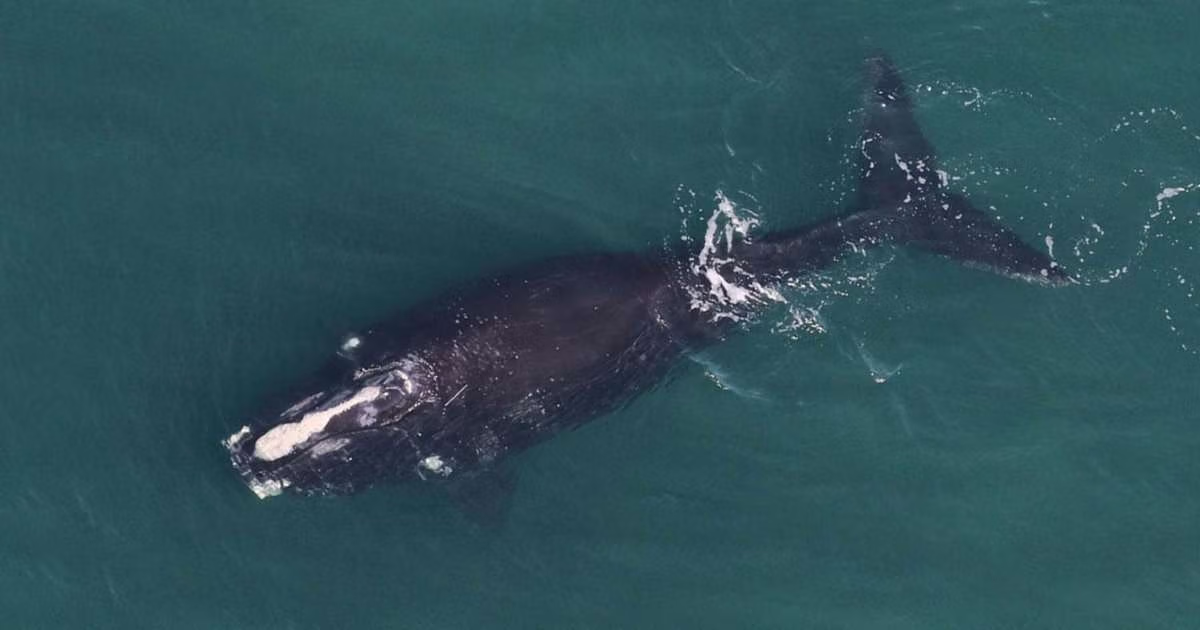
Calving, foraging, and migratory habitats for North Atlantic right whales and other whale species overlap with major port entrances, shipping lanes, and areas of heavy recreational boating use along the Atlantic coast. Timely and accurate knowledge about where cetaceans and other species are located, and better ways to communicate that information, can help mariners make informed decisions to reduce the risk of collisions.
The 16 new grants announced today approach that need from multiple angles, supporting technologies designed to detect whales and other species, better predict where they are likely to be, and quickly put useful information into the hands of vessel operators. Among the projects supported by this year’s grants are:
- Listening for whales: Sofar Ocean Technologies will develop PodCast, a cost-effective, high-density acoustic monitoring network designed to detect whales in near real time across a region. Cornell University will test whether existing fiber-optic cable infrastructure can be used to detect whales and will develop AI algorithms to recognize their calls.
- Improving detection and alerts: Arizona State University will develop machine-learning models that use high-resolution satellite imagery to improve the accuracy and efficiency of whale detection. Ocean Science Analytics will use satellite data to chart vessels under 65 feet, including many recreational and small commercial fishing vessels that often don’t carry automatic identification system (AIS) transceivers, and help design alerts that reach recreational mariners.
- Getting information to vessel operators: Conserve.io will integrate real-time detection tools into the Whale Alert platform, improve how warnings reach mariners, and expand outreach to grow its user base. The California Marine Sanctuary Foundation will analyze vessel traffic and cetacean habitat overlap to identify voluntary measures that vessel operators can use to reduce collision risks.
This is the second round of funding under the VSAF, which made eight awards in 2025. The program now has a cumulative impact of 24 awards with almost $12.3 million in funding. These projects have leveraged nearly $2 million in matching contributions for a total conservation impact of $14.3 million.
A complete list of the 2026 grants made through the VSAF is available here.