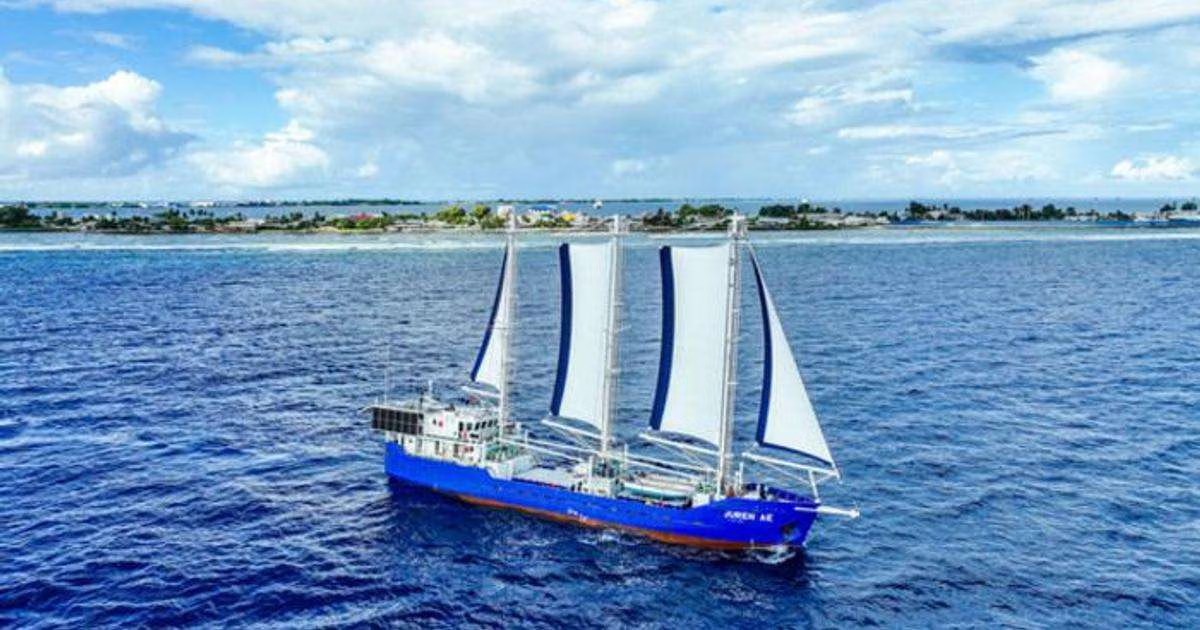
For more than 6,000 years, Pacific peoples have been pioneers in sailing, navigation, and vessel design. Today, ships remain lifelines for many island communities, providing essential connections to food, healthcare, education, energy, and employment.
However, many domestic vessels are aging, inefficient, and expensive to operate, contributing to high freight costs and unreliable services. Climate change is adding to these challenges, with the growing risks associated with intense tropical cyclones making maritime operations more dangerous. The transition to diesel-powered shipping has also put traditional sailing knowledge at risk, with much of it going undocumented or disconnected from modern maritime training.
Combining tradition and technology
The new Pacific Winds of Change project, led by Alice Larkin at The University of Manchester and funded by Lloyd’s Register Foundation, will work with communities across the Pacific to explore how their knowledge could help support the safe adoption of modern wind propulsion.
Wind propulsion systems such as wing sails and suction sails are of growing interest in the global shipping industry as it seeks to reduce fuel consumption and greenhouse gas emissions. Studies suggest that wind propulsion technology, combined with optimized operating strategies, could cut annual fuel consumption by more than 30 percent on suitable vessels and routes. In the Pacific, wind propulsion could also offer potential safety and resilience benefits by providing supplementary propulsion in certain circumstances, including following engine problems, depending on vessel design and operating conditions.
Working across Fiji, the Marshall Islands, Tonga, and Vanuatu, the two-year project will examine where wind-powered shipping could work most effectively, what new skills crews will need, and how Pacific sailing knowledge can inform modern safety and training.
Professor Larkin said: “Modern wind propulsion has huge potential for Pacific Island shipping in the fight against climate change and to build resilience, but introducing new technology is only part of the challenge. Crews will need to adapt skills and understanding to take full advantage of new propulsion technologies, particularly when conditions become difficult.
“Pacific sailors have generations of experience of working with the wind and sea. By bringing that expertise together with weather data, new modeling and modern maritime training, we can investigate where wind propulsion is best suited and what crews need to operate it safely.
“We hope this project will give governments, operators, and seafarers the practical evidence they need to make informed decisions about whether, where, and how to introduce these technologies.”
Putting knowledge into practice
The new project focuses on three strands of work:
- Learning from Pacific sailing heritage. Working with Pacific sailors, elders, educators, and cultural organizations to document historic and living knowledge about sailing and safety, and turn it into accessible training materials.
- Identifying where modern wind propulsion could work best. Combining Pacific sailing knowledge with weather data and modeling to identify the ships, routes, and seasons most suited to modern wind propulsion, and assess potential fuel savings and safety benefits.
- Identifying crew training needs. Identifying the skills and training crews will need to operate modern wind-powered vessels safely, including in extreme weather, and developing training materials and safety guidance and proposed certification requirements
The findings will produce an open-access digital platform bringing together heritage insights, training guidance, and analysis of different shipping routes. It will include a range of training resources from immersive virtual reality scenarios for practicing complex procedures to shorter simulations or videos for routine safety training, all produced by The University of Manchester’s Data Visualization Observatory.
The resources will be designed so that maritime practitioners, policymakers, trainers, and community organizations can reuse and adapt them, including for use in remote locations with limited internet access or intermittent electricity. The team hopes the approach could ultimately provide lessons for other island regions and remote communities facing similar challenges.
The project also aims to strengthen opportunities for future generations of Pacific seafarers by translating heritage-based skills into modern maritime training and employment pathways.
Pacific Winds of Change brings together researchers and organizations including The University of Manchester’s Tyndall Centre for Climate Change Research and Alliance Manchester Business School, the Micronesian Center for Sustainable Transport, Waan Aelõñ in Majel, The Drua Experience, the International Windship Association, and the University of Melbourne. The project supports Lloyds Register Foundation’s ‘Learning from the Past’ program goal, which is to draw on heritage data to better understand the safety challenges of transitions in the ocean economy, and to connect this evidence and insight with those who can make real changes happen.