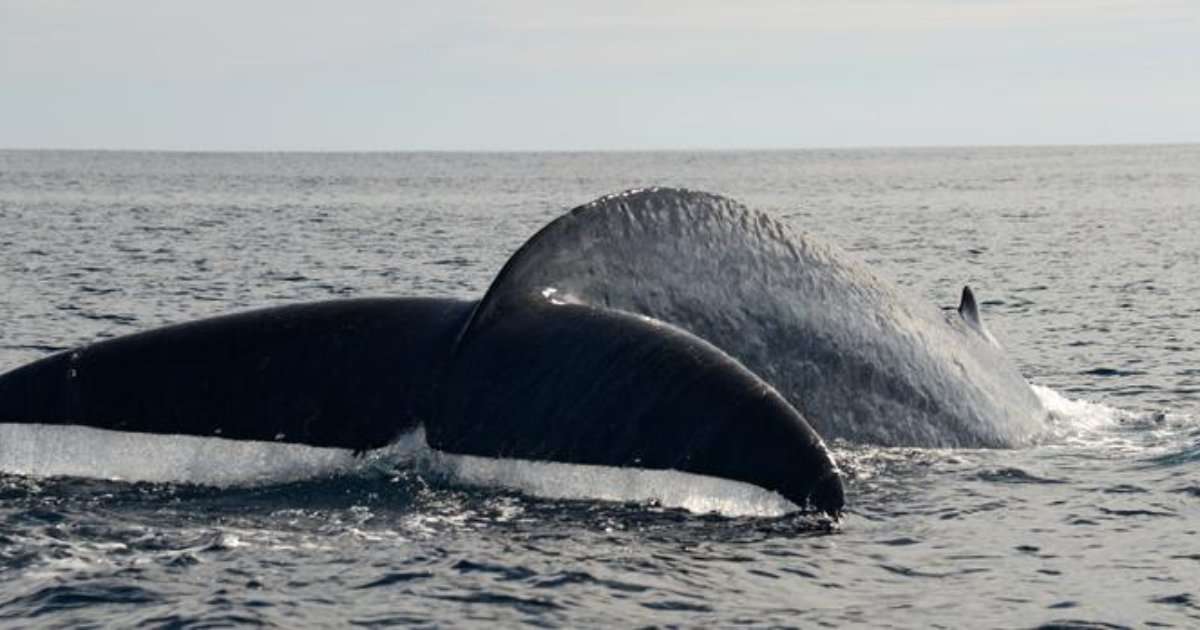
In a new Curtin University-led study published in Royal Society Open Science, researchers found pygmy blue whales generally fed during daylight hours, leaving more time available for singing at night. During the pygmy blue whales’ feeding season in Perth Canyon, more song was recorded at night than during the day for up to three months.
The findings suggest that listening for differences in whale song between day and night could provide a way to monitor feeding activity across large areas of ocean without needing to observe the whales directly.
The research examined pygmy blue whale singing and feeding behavior in offshore waters from the Perth Canyon, along WA’s Midwest coast and further north towards Ningaloo and the Northwest Shelf.
Lead author, Ph.D. candidate Andrew Davenport from Curtin’s Centre for Marine Science and Technology, says the relationship between feeding and singing offers a valuable new way to understand the behavior of this endangered population.
Mr. Davenport said: “Just as we can’t talk while we’re eating, pygmy blue whales appear to have less time available to sing while they’re feeding. By listening to when they sing more at night than during the day, we can infer when whales in an area are likely to be feeding.”
The research is available here: Pygmy blue whale feeding drives greater nocturnal than diurnal song production | Royal Society Open Science | The Royal Society