Plymouth Marine Laboratory’s (PML) Director of Science Professor Tim Smyth speaks to BBC News about the global ocean hitting its highest temperatures on record as El Niño grows, and the almost continuous marine heatwave conditions observed in the western English Channel—for over three years running.
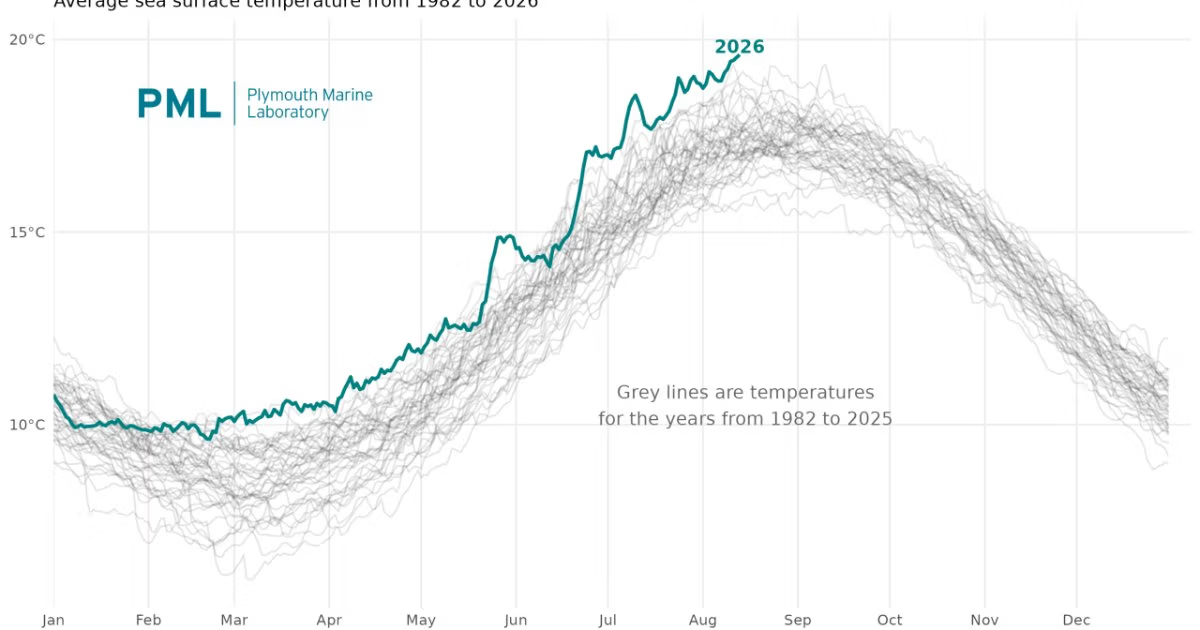
Closer to Plymouth, PML’s Dr. Robert Wilson shared a graph showing record sea surface temperatures this month in the English Channel.
Dr. Wilson said: “Some may see that and think, well, a few degrees doesn’t sound like much. For everyday people, that increase doesn’t sound that dramatic until you think about your own body. A temperature rise of just a couple of degrees is enough to cause a fever, because our bodies are adapted to operate within a very narrow range.”
“Just like us—much of marine life can only exist within a specific temperature range, and these record temperatures have the potential to push species beyond their limits.”