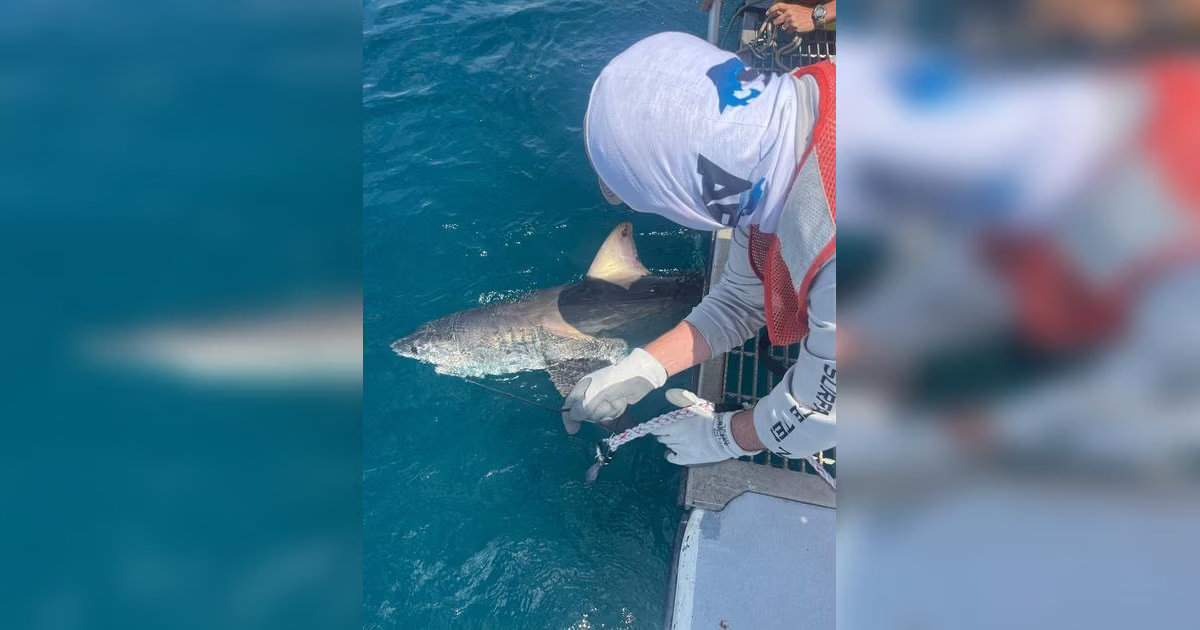
The animals carry CTD tags that record conductivity, temperature, and depth as they swim and dive, sending back information that can help fill gaps in the ocean data used by forecasting models. The tags are small electronic devices fitted to marine animals, allowing researchers to gather near-real-time readings from places that are difficult, costly, or unsafe to monitor with fixed instruments or research vessels. Hurricanes draw their strength from the ocean, and the most important heat is not always visible at the surface.
The University of Delaware has said that warm water tucked below the top layer can drive rapid intensification, when a storm strengthens sharply in a short period. Because satellites cannot measure those hidden conditions directly, forecasters still struggle to capture the full picture of what a storm may encounter. The University of Delaware team is focusing on sharks because their wide-ranging movements could provide observations across large stretches of open water that would otherwise remain under-sampled.
The project is not aimed at replacing buoys, satellites, or aircraft reconnaissance. Rather, scientists are trying to add more starting points for the oceanographic, atmospheric, and climate models that underpin hurricane prediction. Data from the sharks can be fed into those systems to improve estimates of a storm’s intensity before landfall, particularly in the Mid-Atlantic Bight, where MARACOOS said the work is being used to sharpen forecasting models.