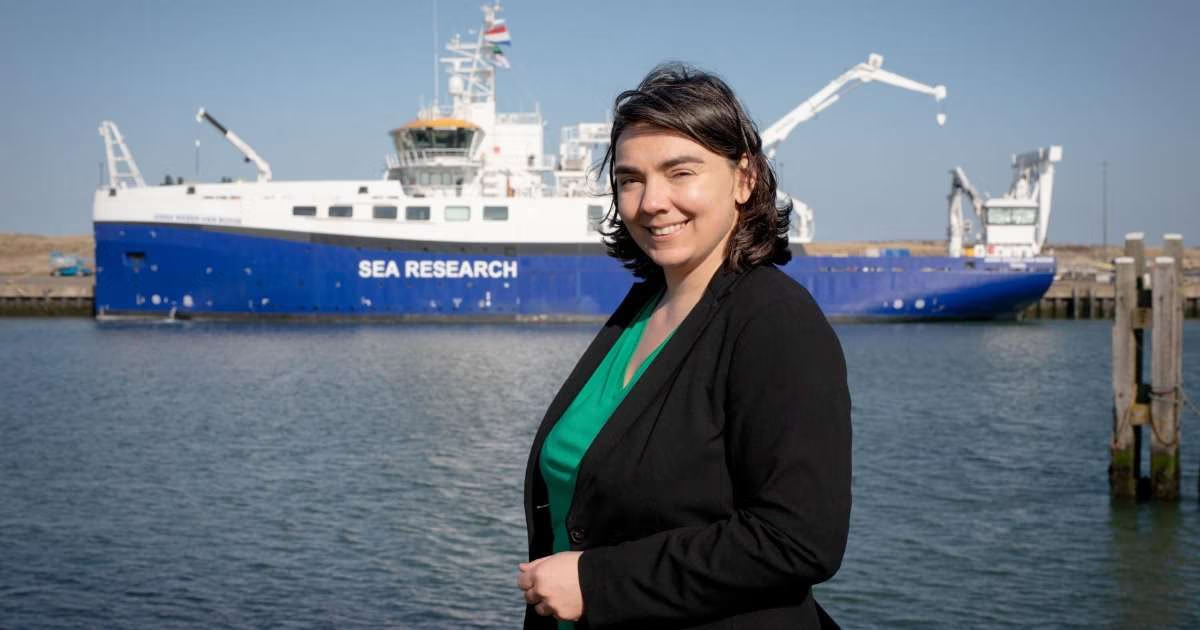
Gollner has been exploring biodiversity in the ocean for more than 20 years, with a focus on deep-sea hydrothermal vents and polymetallic nodule fields, two contrasting ecosystems that are at risk of potential future deep-sea mining disturbance. She obtained her Ph.D. in 2009 in Vienna (Austria), followed by postdoctoral research in Germany. Since 2017, Sabine has been a scientist at NIOZ.
Whilst hidden from our eyes, the deep sea—defined as the ocean below 200 meters depth—covers 60% of Earth’s surface. An estimated 90% of deep-sea animal life is currently unknown, but the utilization of deep-sea living and non-living resources (e.g., metals), as well as climate change, increasingly puts pressure on deep-sea biodiversity and the associated ecosystem functions and services. The effective conservation of biodiversity requires a solid scientific foundation and an integrative approach, where environmental knowledge and understanding of the legal context go hand in hand.
Gollner’s current scientific studies include biodiversity, connectivity, and resilience of deep-sea hydrothermal vent fauna, as well as diversity and restoration of fauna after test-mining impact at polymetallic nodule fields. Gollner has participated in and led several research expeditions on the high seas, including dives in submersibles and work with Remotely Operated Vehicles. In her transdisciplinary research projects, she works together with lawyers on the topics of ocean health and management. Gollner acts as a scientific advisor for the Dutch delegation at the International Seabed Authority and is co-lead of the Minerals Working Group of the Deep Ocean Stewardship Initiative (DOSI), and a member of the Netherlands Ocean Decade Committee.