Surprisingly, the sea squirts showed no comparable reactions even at underwater sound pressure levels exceeding 130 decibels, provided that substrate vibrations remained below the determined reaction thresholds. “The results show that sound pressure alone cannot explain the observed behavioral reactions,” Huhn concluded.
A Close Look at the Nervous System
It is not yet certain which sensory structures perceive the mechanical stimuli. However, sea squirts possess specialized ciliated mechanoreceptor cells in the region of the siphons, particularly in what is known as the coronal organ. These may register local movements in the water or mechanical deformations. “Further physiological and neurobiological studies are required to determine whether these receptors are stimulated by particle motion in the water or by vibrations transmitted via the substrate and the mantle,” said Böttner.
Questions Remain
Sound pressure, particle motion, and substrate-borne vibrations are physically closely intertwined underwater, especially at low frequencies. This makes it impossible to completely separate these factors, including in the current study. “However, the findings show that mechanical components of underwater sound have to be more closely considered in the examination of benthic organisms,” said the researchers in Bochum.
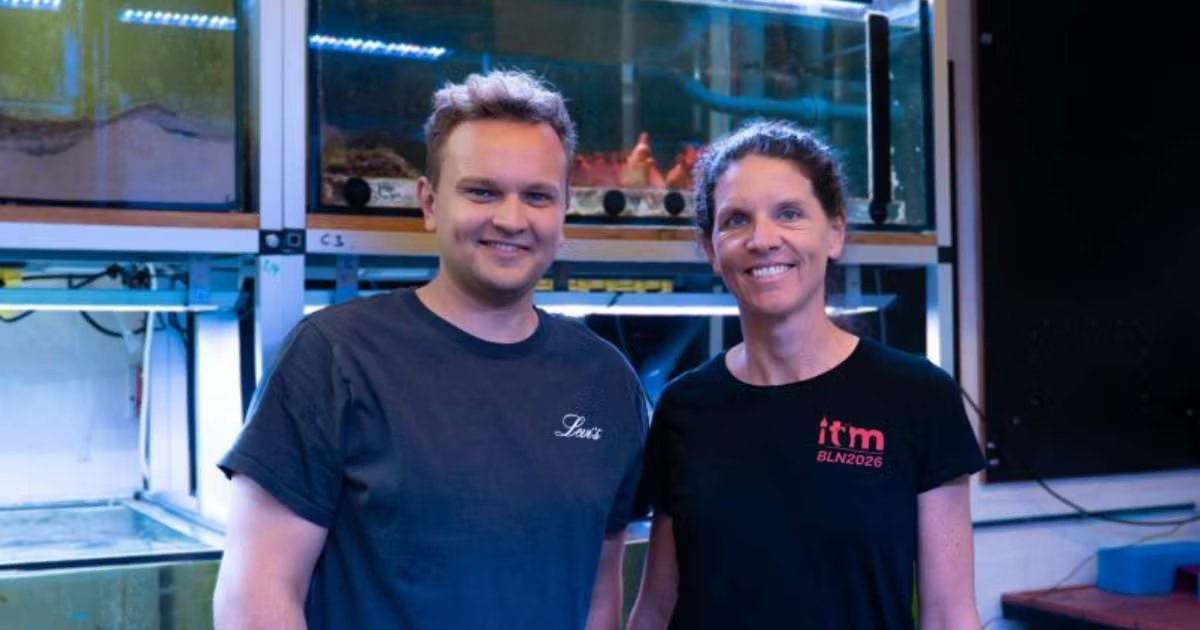
Future studies aim to identify which mechanical stimuli are actually perceived and how these are sensorially and neuronally processed. To achieve this, the research conducted at the Department of General Zoology and Neurobiology at Ruhr University Bochum combines marine biology, bioacoustics, and neurobiology to understand the effects of anthropogenic underwater noise in greater detail. The work has drawn international recognition: Til Böttner received the prize for the best presentation by an early-career researcher for his presentation of his research at the International Tunicate Meeting (ITM).