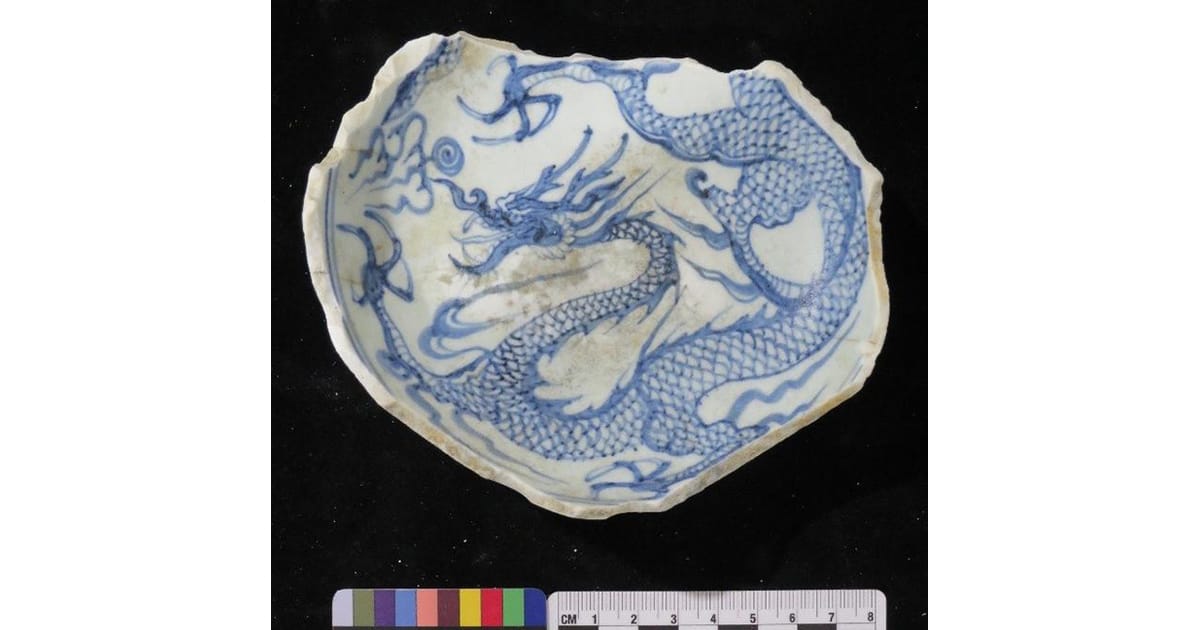
Most striking is the scale of the Yuan blue-and-white porcelain: the author Dr. Michael Flecker, from HeritageSG, a subsidiary of Singapore National Heritage Board, reports that the wreck is “the first ancient shipwreck ever found in Singapore waters”, and that its blue-and-white cargo exceeds that of any other documented shipwreck.
The recovered blue-and-white alone weighs about 136 kg, comprising over 2350 shards plus several intact or near-intact objects (about 3.9% of the ceramic cargo by weight).
Beyond blue-and-white from Jingdezhen, China—known for its history of ceramic production that peaked during the Ming and Qing dynasties—the cargo includes a wide variety of Longquan celadon, Jingdezhen qingbai (bluish-white glazed) and shufu (“Privy Council”) wares, Dehua whiteware, greenwares probably from Fujian, and Fujian Cizao storage jars and small-mouth jars.
Dr. Flecker noted that—even with relatively few intact pieces—the overall ceramic quality is often “superlative”, particularly for Jingdezhen blue-and-white and qingbai/shufu wares, as well as Longquan celadon.
The study also addresses the ship and its route. Although no hull survives, associated evidence supports identification as a Chinese junk. Flecker proposed the vessel likely loaded at Quanzhou of Fujian in the mid-14th century and was bound for the thriving entrepot of Temasek (port that preceded modern Singapore), making this tightly dated assemblage a valuable reference collection for comparing less-provenanced finds.