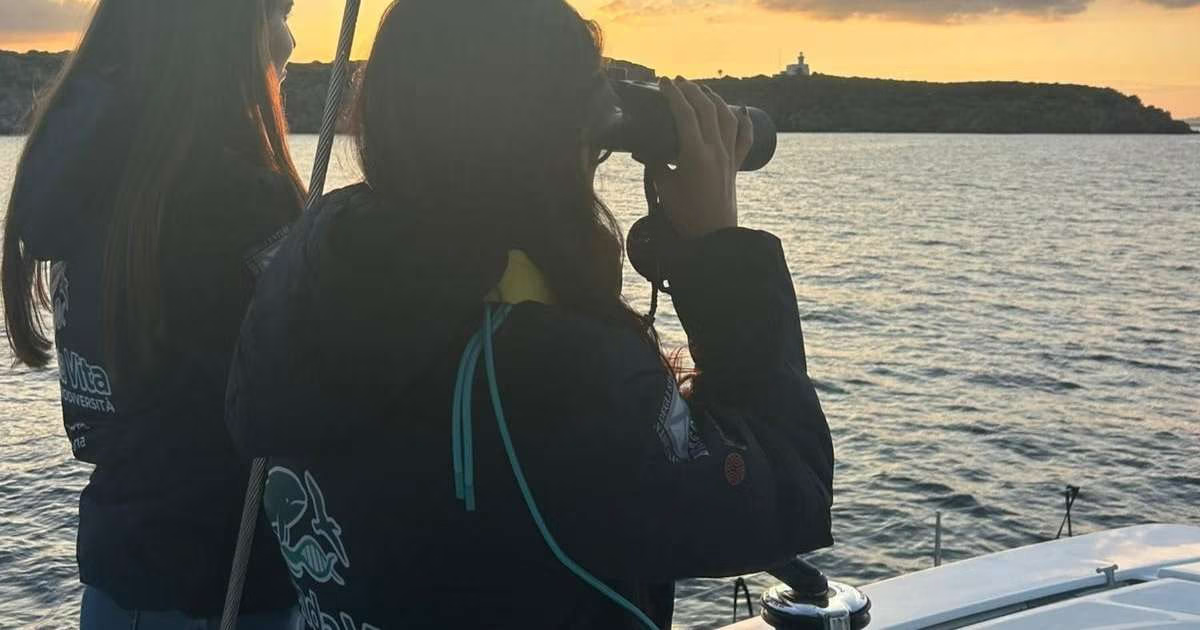
Until October 9, the Lagoon 46 catamaran provided by NSS Charter will circumnavigate Sardinia, calling at the island’s main Marine Protected Areas (MPAs): Capo Testa – Punta Falcone and Isola dell’Asinara, both partners of the expedition, followed by Capo Caccia – Isola Piana, Penisola del Sinis – Isola di Mal di Ventre, Capo Carbonara, and Tavolara – Punta Coda Cavallo. The route is more than an itinerary: MPAs are where scientific knowledge translates most directly into management and protection, and the data collected along the way are intended to become practical tools for those who work every day to conserve these environments.
“With Tracce nel Blu we want to link Sardinia’s Marine Protected Areas with a common thread, building a true Route for Biodiversity,” explained Alessandra Aielli, the expedition’s project manager, a marine biologist and environmental engineer. “It is a journey through different places connected by the same sea, to tell its value, involve the people who live it, and gather data that support knowledge and conservation. After last year’s experience between Sardinia and Corsica, this year we are also adding microplastics monitoring: a threat to marine biodiversity and to human health, about which there is still much to learn.”
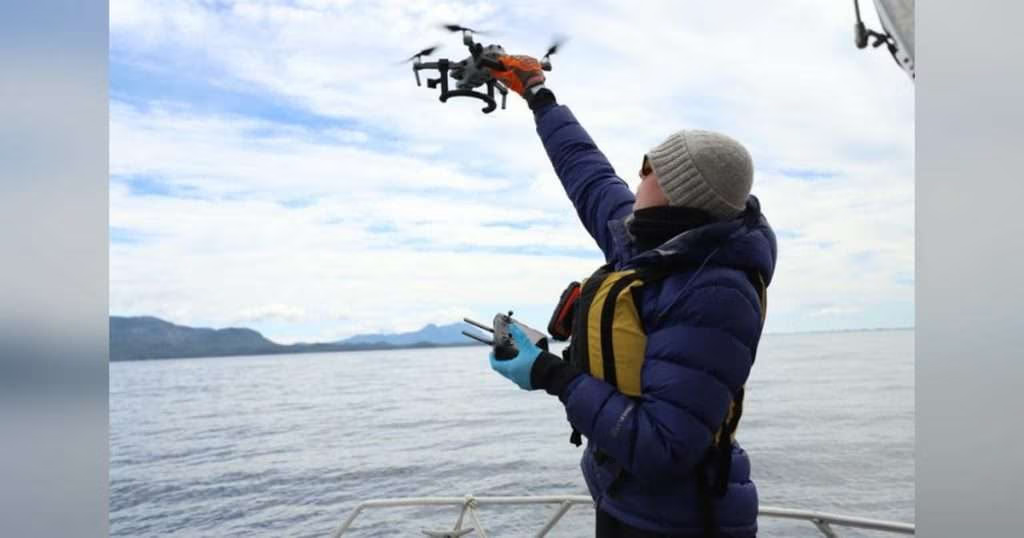
On board, three lines of research will run in parallel: cetacean monitoring, through visual observation, photo-identification, and acoustic recordings with a hydrophone, including at night, led by the MEDSEA Foundation; microplastics sampling, carried out by CNR-IRBIM; and the search for environmental DNA (eDNA) of the Mediterranean monk seal (Monachus monachus) at 21 coastal stations, with analyses performed in the laboratories of the University of Milano-Bicocca. Ten eDNA stations will coincide with the microplastics sampling points, allowing data to be integrated along the same route.
“Il Viaggio delle Balene was created to build, over time, an ever more complete understanding of our sea,” said Pieraugusto Panzalis, marine ecologist, team leader, and technical-scientific coordinator of the expedition. “With the Tracce nel Blu mission, we are continuing the work begun last year through an integrated research approach, combining visual and acoustic cetacean monitoring, microplastics analysis, and environmental DNA. Particular attention will be paid to the monk seal, a rare and elusive species: eDNA allows us to detect its presence or recent passage without disturbing the animals. Continuity of monitoring is essential, because only data collected over time with comparable scientific methods can help us understand how biodiversity is changing and identify the areas most in need of protection.”
The expedition is made possible by a multidisciplinary team of researchers from CNR-IRBIM, the University of Milano-Bicocca, and the MEDSEA Foundation, with expertise in marine ecology, molecular biology, pollutant research, cetacean monitoring, and science communication, working in close collaboration with Asinara National Park and the Capo Testa – Punta Falcone Marine Protected Area.
From Sea to Data for Conservation
Back in port, the data will be processed into a report on cetacean sightings and acoustic recordings, a georeferenced map of monk seal eDNA signals, and a qualitative and quantitative analysis of microplastics along the route. Validated datasets will feed scientific databases and conservation tools, and the results will be shared publicly with institutions, stakeholders, and local communities.
The 2025 Onda Vita expedition—five days, over 300 nautical miles, and 68 hours of integrated monitoring—recorded 52 events of intense biological activity, 18 acoustic detections of sperm whales, sightings of bottlenose and striped dolphins, and three positive monk seal eDNA detections.
The expedition can be followed on the project’s social channels, on Instagram at “Il Viaggio delle Balene,” and at ilviaggiodellebalene-ondavita.com.
The mission is supported by Fondazione di Sardegna, NSS Charter, Moby Traghetti, and Dilamar Sommozzatori.