The two organizations have signed a research agreement to jointly develop The Virtual Living Ocean. It will combine years of environmental DNA (eDNA) sampling by GMGI, a nonprofit based in Gloucester, Massachusetts, that addresses challenges facing oceans, human health, and the environment through innovative scientific research and education, with MITRE’s expertise in ocean technology and large-scale data systems. MITRE is a nonprofit headquartered in Bedford, Massachusetts, and McLean, Virginia, which operates federally funded research centers for the US government. Its BlueTech Lab in Bedford researches ocean technology, including autonomous underwater vehicles, underwater acoustics, and systems engineering and integration to enable systems to better understand the world’s oceans.
The Virtual Living Ocean’s foundation is the Living Ocean Atlas, a database combining eDNA data with physical and chemical ocean data, including temperature, pH, and satellite imagery. GMGI has begun building the Atlas in an area it has sampled seasonally for years at Stellwagen National Marine Sanctuary in the North Atlantic Ocean and other coastal sites. With The Virtual Living Ocean, the plan is to deepen these studies and expand them to other regions.
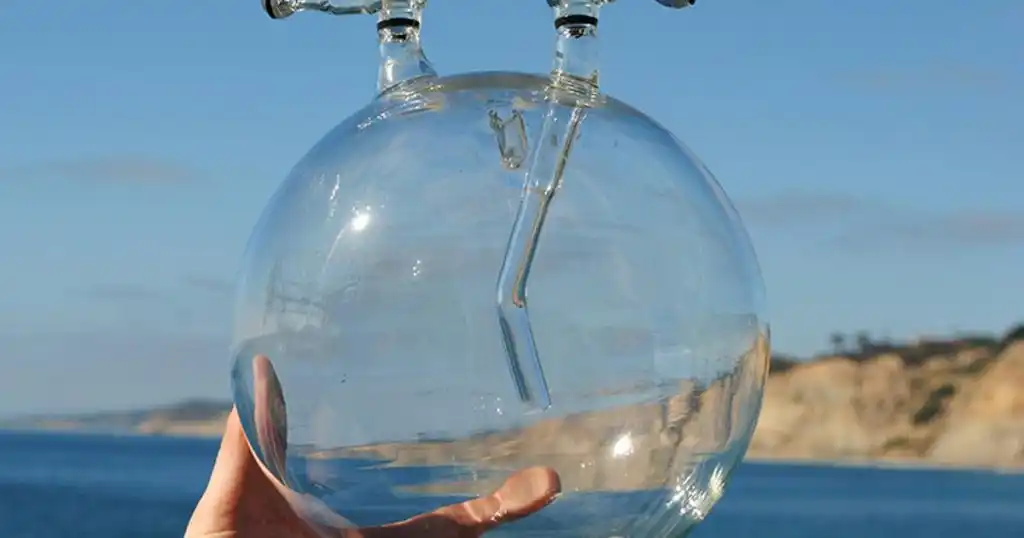
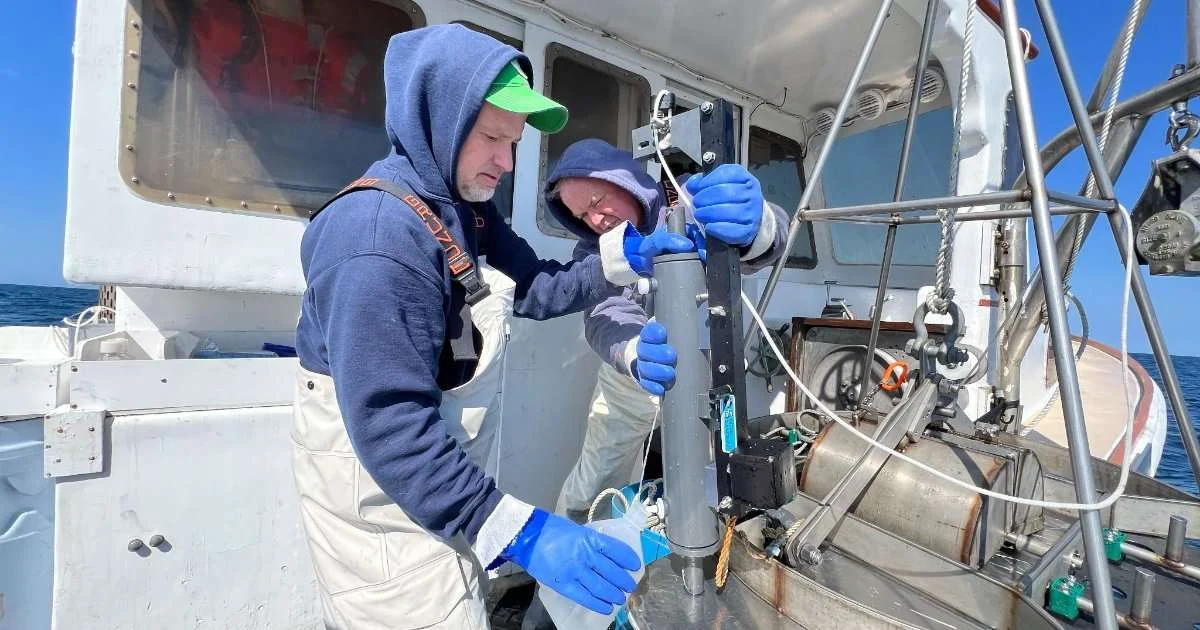
To collect eDNA, researchers take samples of ocean water and test them for genetic material that fish and other marine organisms shed into their surroundings, such as skin cells, scales, and waste, revealing which species have been present without needing to see or catch them. Recent advances studying genetic material through genomic testing and artificial intelligence now make it possible to combine that data at the scale required to build a living model of an ecosystem.
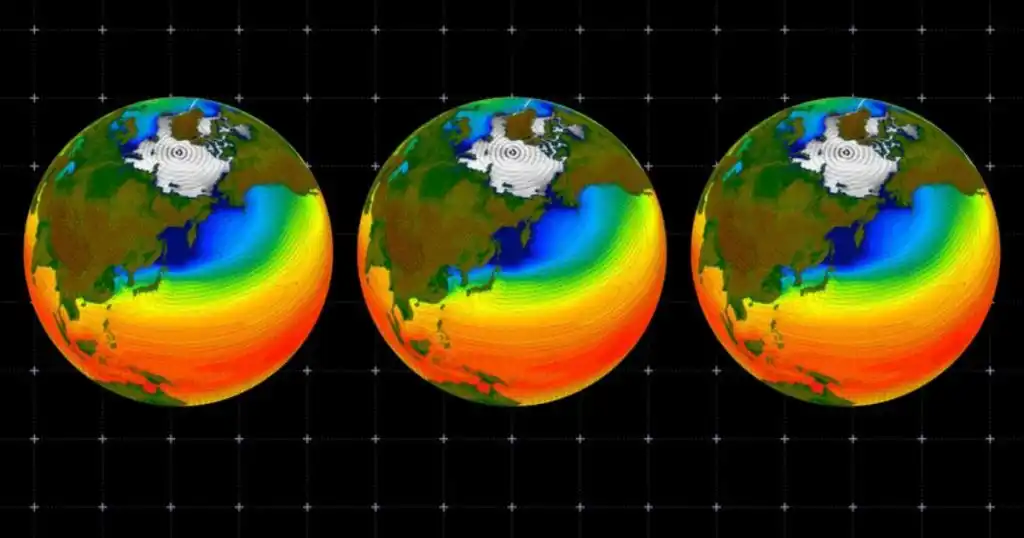
Designed for public and scientific use, potential applications of The Virtual Living Ocean include fisheries management, resilience and conservation planning, early detection of invasive species, biomedical research, and more. Once complete, it will also help to visualize ocean biodiversity, animal migration, and other changes over time in order to predict significant ocean trends with weather, human activity, and the overall changing ecosystem.
“Several technologies are converging at once, environmental DNA sampling, genomic sequencing and artificial intelligence, that together can help make sense of a system as complex as ocean life,” said GMGI’s Chief Scientific Officer Rick Horwitz, who based The Virtual Living Ocean concept for GMGI on data and cell science research he did previously at the University of Virginia and the Allen Institute for Cell Science in Seattle. “A lot of researchers are collecting ocean data right now, but most of it stays siloed and disconnected. This only works as a coordinated effort, and we’re actively looking for more partners and collaborators who want to help build a resource that shows not just where the ocean stands today, but where it’s headed.”
When GMGI approached MITRE to partner on The Virtual Living Ocean, Nick Rotker, MITRE’s Chief BlueTech Strategist, was intrigued. MITRE’s federal sponsors have identified eDNA as “a potentially powerful tool, but there was a lack of infrastructure and capabilities out there,” said Rotker. He said future research will depend on this kind of eDNA-based regional mapping. “Increasing our understanding of what is going on in the ocean is the goal to enable this broader vision.”
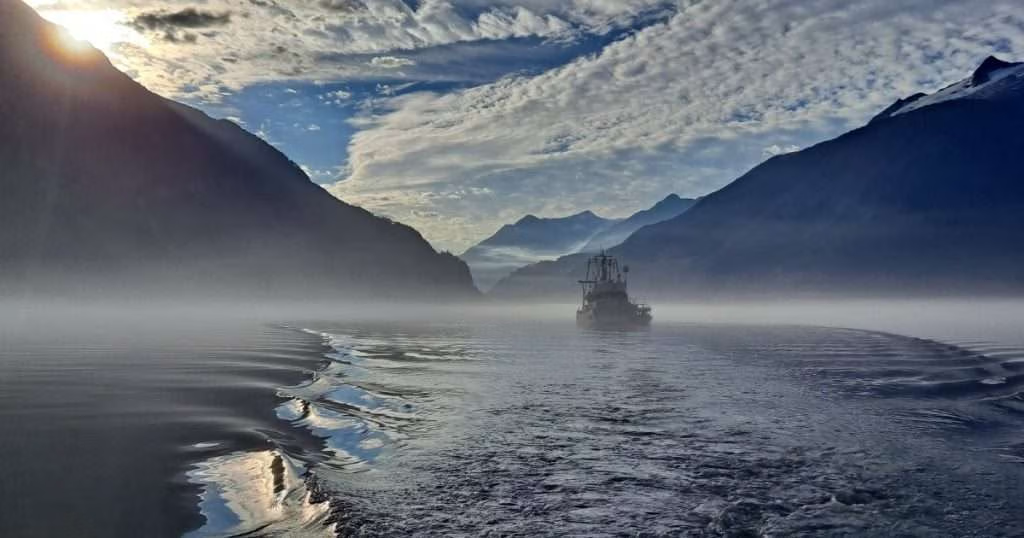
GMGI research scientist Matt Harke has spent several years tracking seasonal changes in ocean biodiversity using eDNA at Stellwagen National Marine Sanctuary, and research scientist Tim O’Donnell has studied where and when commercially important fish species are found, and how offshore wind construction affects their populations. Their work, along with that of other GMGI scientists, is what The Virtual Living Ocean is designed to bring together into one coordinated system.
“I always thought of eDNA as a tool to answer one specific question at a time,” said O’Donnell. “But the more research we’ve done across New England, the more I’ve realized those individual projects can be combined and applied at a much bigger scale. The Virtual Living Ocean is what happens when you connect all of that work together. You start being able to answer questions you never set out to ask in the first place.”
To create The Virtual Living Ocean, MITRE brings experience with system architecture, data analysis, visualizations, simulation, and digital twins, virtual models that mirror a real-world system and update in real time as new data comes in. The company has been working with AI-giant NVIDIA for several years now. Rotker said MITRE has been building out “a high fidelity, physics based, undersea maritime digital twin environment” that will be critical to The Virtual Living Ocean.
The Virtual Living Ocean’s success will depend on the participation of many partners, studying and sampling the ocean all over the region. One aspect that MITRE has developed through grant funding from Mass Tech Collaborative is the utilization of “Blue IVI Network,” an unclassified, secure network that allows partners to share data, as it would for The Virtual Living Ocean. So far, about 11 institutions are part of the network including academic, research, and defense organizations.
“To build an effective atlas and visualization capability, you need access to all the different pieces of data,” said Rotker. “A single, connected network that provides all the needed data and information is an important piece to make this accessible.”