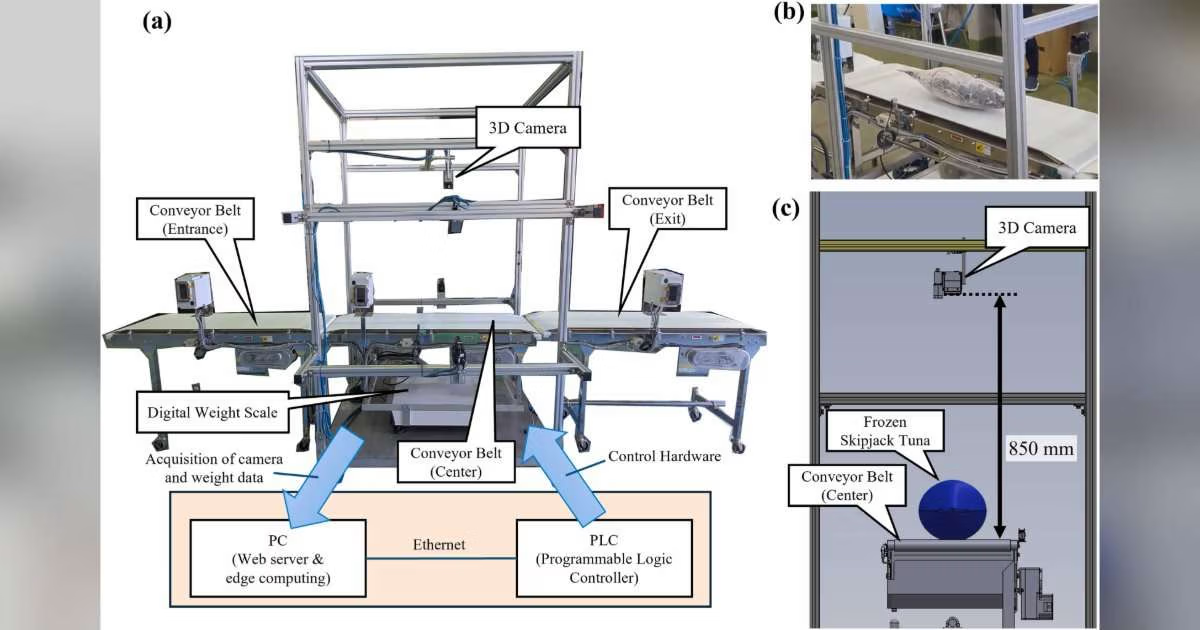
In this study, the researchers developed a system based on a three-dimensional (3D) time-of-flight camera to measure distance using reflected infrared light to acquire 3D scans of frozen skipjack tuna on a conveyor belt. The camera captures the surface of each fish as dense 3D point-cloud data, enabling accurate reconstruction of the contours of frost-covered fish. From these data, the researchers extracted body width, fork length, and body height. Body width is a morphometric parameter that has been difficult to obtain with conventional imaging methods, and its inclusion proved to be important for improving the accuracy of body-weight estimation. In this proof-of-concept study, the acquisition of the 3D point-cloud data was automated, whereas the morphometric parameters were manually extracted.
Combining these 3D measurements with machine-learning analysis yielded accurate, noncontact estimates of fish body weight, which agreed more closely with the measured weight classes than the classifications made by experienced market graders. These findings demonstrate the potential of 3D imaging for noncontact fish measurement and body-weight estimation. With further development toward automated operation, the technology could help reduce labor demands at fisheries and seafood-processing facilities while supporting more efficient and consistent management of marine resources.
To read the published article, visit: https://www.sciencedirect.com/science/article/pii/S0165783626001736?via%3Dihub