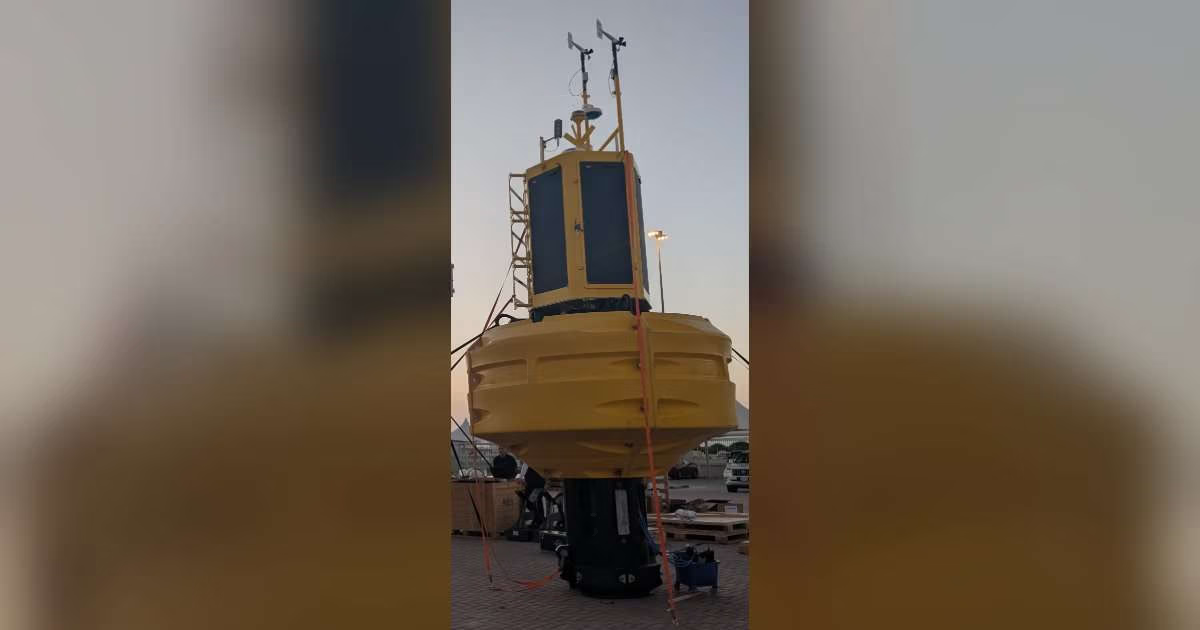
The Marine Observation Buoy is designed for deployment around naval ports, critical national infrastructure, military infrastructure, and commercial ports, helping operators monitor for potential intrusions both above and below the waterline. The platform can accommodate cameras, hydrophones, and a range of sensors, including systems for gamma-radiation and chemical detection.
Built around OSIL’s adaptable Data Buoy platform, the system can be configured to meet individual operational requirements. Customer-specified sensors can be integrated, while instrumentation can be deployed from near the surface to the seabed. The buoy can also be moored in a fixed position using single-point, dual-point, or compliant mooring arrangements where required.
For reliable operation in remote and demanding environments, the buoy can be fitted with up to six 160 W solar panels, battery backup, navigation and warning lights, and additional markings as required. A range of telemetry options—including UHF/VHF, GSM, GPRS, and satellite communications—can be selected according to the deployment location and application.
OSIL also provides a complete data telemetry solution, with desktop or web-based software packages enabling users to access collected data. The company’s flexible approach allows the Marine Observation Buoy to serve both security-focused monitoring requirements and broader scientific and environmental data-collection applications.
The 3.0 m Marine Observation Buoy provides organizations responsible for critical maritime assets with a configurable platform for continuous observation, data collection, and early warning, with the ability to tailor sensors, communications, and deployment arrangements to specific operational needs.