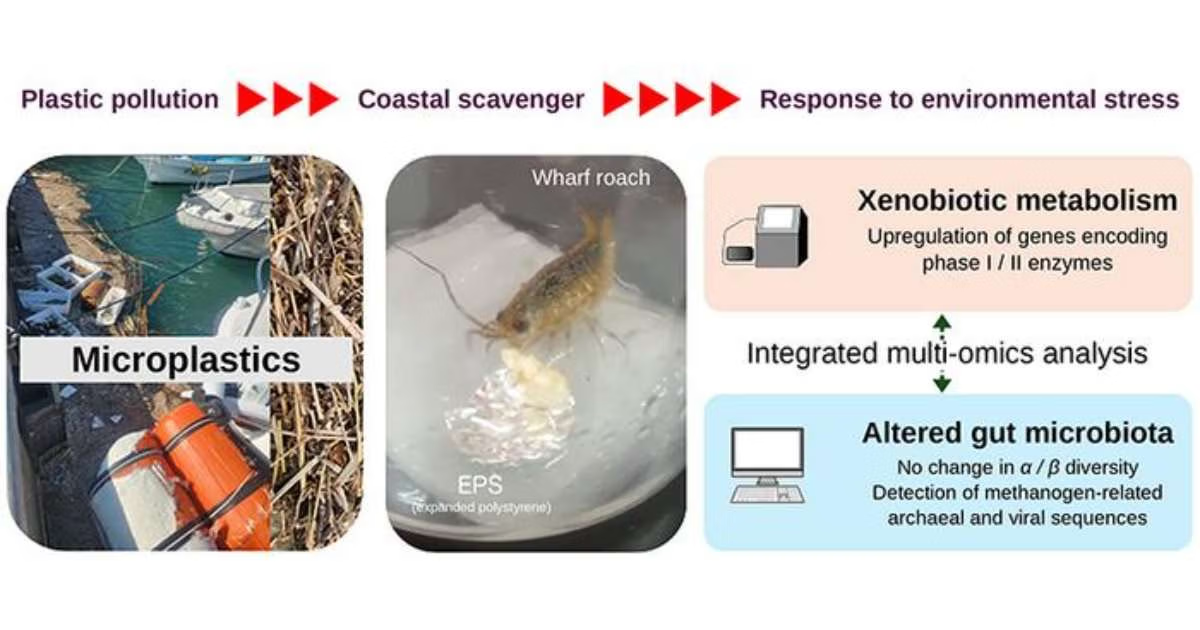
In coastal areas, EPS—commonly referred to as Styrofoam—are one of the major components of marine plastic pollution. They are prevalent because their low density and high buoyancy allow them to drift over long distances and accumulate on beaches.
Wharf roaches (Ligia spp.) are common coastal isopods that act as scavengers, consuming organic matter and contributing to nutrient cycling in shoreline ecosystems. They have also been found to consume the plastic pollution that washes up on the shore. This makes wharf roaches useful models for investigating the biological effects of EPS ingestion and a potential sentinel species for coastal plastic pollution.
A research team led by Professor Emeritus Yuji Oshima at Kyushu University’s Faculty of Agriculture conducted a laboratory exposure experiment to investigate the effect of EPS ingestion in wharf roaches. The researchers compared EPS-fed wharf roaches with a starved control group and used multi-omics approaches to analyze gene expression in the gut and the composition of the gut microbiome.
“Our earlier fieldwork showed that wharf roaches chew EPS and excrete it as much smaller fragments, suggesting that these animals can help turn large pieces of foam into microplastics. However, the biological effects of ingesting EPS in the animals themselves remain unknown,” said Oshima. “We wanted to find out whether swallowing foam comes at a biological cost for these shoreline scavengers.”
The researchers first examined whether EPS ingestion affected the lifespan of wharf roaches. Field-collected wharf roaches were divided into two groups: one group was given only pieces of a commercially available polystyrene foam board for one week, while the control group was given no food. EPS exposure did not significantly affect survival. Foam-fed wharf roaches lived for an average of 27.8 days, compared to 31.6 days for the unfed controls. However, this 3.8-day difference was not statistically significant, suggesting that EPS ingestion did not measurably reduce lifespan under the experimental conditions.
Gene expression in the digestive tract of EPS-fed wharf roaches showed higher expression of several genes involved in chemical defense. These include three key detoxification enzymes: cytochrome P450, UDP-glucuronosyltransferase, and sulfotransferase. This together represents both major phases of the conventional detoxification pathway: the initial chemical modification of foreign compounds and their subsequent conversion into forms that can be more readily excreted. A gene involved in DNA repair also showed higher expression, whereas several genes encoding digestive enzymes, including one involved in breaking down plant fibers, were expressed at lower levels.
Next, the researchers examined whether EPS ingestion changed the gut microbiome of the wharf roaches. Surprisingly, microbial diversity within individual animals and overall community composition did not differ across the four microbial domains examined. However, several rare organisms showed group-specific patterns. Three archaeal taxa—including Methanospirillum, a genus of methane-producing archaea—and one family of bacteriophages were detected in all three EPS-fed specimens but not in the controls.
“The foam-fed animals appeared healthy and had lifespans similar to those of the controls; however, their guts showed differences in the expression of genes involved in chemical defense. This tells us ‘no visible harm’ does not necessarily mean ‘no biological effect.’ Further work is needed to determine whether these gene expression differences lead to functional changes in the animals,” explained Oshima.
EPS is inexpensive, lightweight, and widely used in the fishing and packaging industries, and it can fragment quickly once exposed to the environment. The team’s findings provide another reason to manage EPS waste more carefully: shoreline animals do not simply live alongside stranded foam—they ingest it, fragment it into microplastics, and now we know it changes their gut microbiome. This highlights the importance of improving the design, recovery, and disposal of EPS products, as well as prioritizing coastal cleanup efforts.