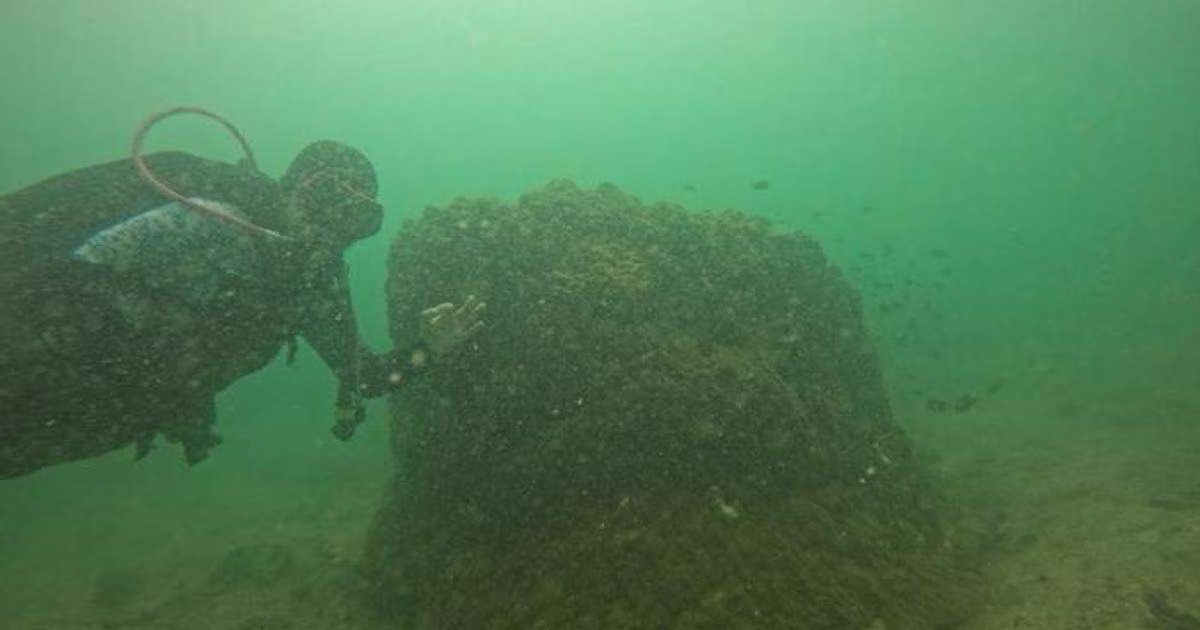
The Spermonde Archipelago, home to 120 coral islands, is a coral biodiversity hotspot in Indonesia. However, reefs face increasing pressure from pollution, destructive fishing, coastal development, and other human activities. Live coral cover has declined from 45% to 28% over the past two decades, underscoring the need for effective reef monitoring.
Several approaches are available for monitoring coral reefs: Line Intercept Transects (LIT) record substrate along measured lines; Underwater Photo Transects (UPT) estimate substrate coverage using transect photographs; and drone surveys capture broader reef views from above the water. But which approach works best under the dynamic conditions of the Spermonde Archipelago? Until now, no systematic comparison had been conducted.
Professor Jamaluddin Jompa at the Department of Marine Science, Hasanuddin University, and his colleagues evaluated these approaches across three representative islands in the Spermonde Archipelago, each with different water-quality conditions: Lae-Lae Island, with highly turbid water; Kodingareng Lompo Island, with moderate water clarity; and Lanyukang Island, with relatively clear water. They also conducted focus group discussions with 33 residents to understand local perceptions about reef degradation and identify conservation measures suited to local conditions.
The study was made available online on April 8, 2026, and will be published in Volume 9 of the journal Anthropocene Coasts on December 1, 2026.
“We aimed to provide an evidence-based foundation for conservation policies while enhancing the adaptive capacity of local communities and stakeholders in responding to evolving ecological challenges in the Spermonde Archipelago,” explained Prof. Jompa.
The results showed that coral reef conditions varied across sites with different water conditions. The LIT and UPT results showed better reef conditions in the clearer waters of Kodingareng Lompo and Lanyukang, where live hard coral remained relatively abundant. In contrast, the more turbid waters of Lae-Lae had more rock, coral rubble, and dead coral covered with algae. Drone mapping provided a broader view of the reefs but could not reliably distinguish different substrate types in the highly turbid waters of Lae-Lae.
Together, the findings highlight the complementary value of drone observations and underwater surveys. LIT and UPT can provide detailed information about reef conditions but require trained divers and specialized equipment, while drone mapping can survey larger areas without experienced divers but does not provide the same level of detail.
The focus group discussions showed that local communities were aware of the decline in coral reef conditions, although their understanding of the causes of the decline was more limited. More than half of the respondents considered reef conditions to be either deteriorating or severely deteriorating. However, only 26.5% were able to correctly identify different stages of coral health from images.
The discussions also showed that residents recognized local environmental problems and proposed tailored solutions. In Lae-Lae, where turbid and waste-affected waters were a major concern, participants emphasized waste management. In Kodingareng Lompo, they proposed combining patrols and enforcement with coral transplantation. In Lanyukang, where water clarity was higher, participants placed greater emphasis on controlling destructive fishing.
However, community readiness to participate in reef conservation and monitoring was limited. Only 29.4% of respondents reported a high level of readiness to participate, while half said they had never taken part in conservation activities organized by outside groups.
The researchers highlight the value of combining local ecological knowledge with scientific monitoring to inform appropriate conservation responses. They recommend simple monitoring tools, practical training, and financial support to strengthen community participation, alongside integrated coastal zone management, marine protection, and climate adaptation programs at the provincial and national levels.
Empowering communities with the knowledge, tools, and resources to participate could help develop conservation strategies that are better suited to the diverse conditions of Indonesia’s coral reef ecosystems. “Successful mitigation requires partnerships involving communities, government support, NGO training, and academic assistance,” Prof. Jompa noted.