Seafloor massive sulfide (SMS) deposits form around hydrothermal vents, where hot fluids circulating through Earth’s crust release metals that precipitate when they encounter colder seawater. These deposits can contain copper, zinc, iron, and other economically important elements and are increasingly being investigated as potential future sources of minerals.
The new research suggests that some SMS rocks have physical and chemical properties that could make them behave very differently from comparable mineral deposits mined on land.
An Unexpected Oxidation Reaction
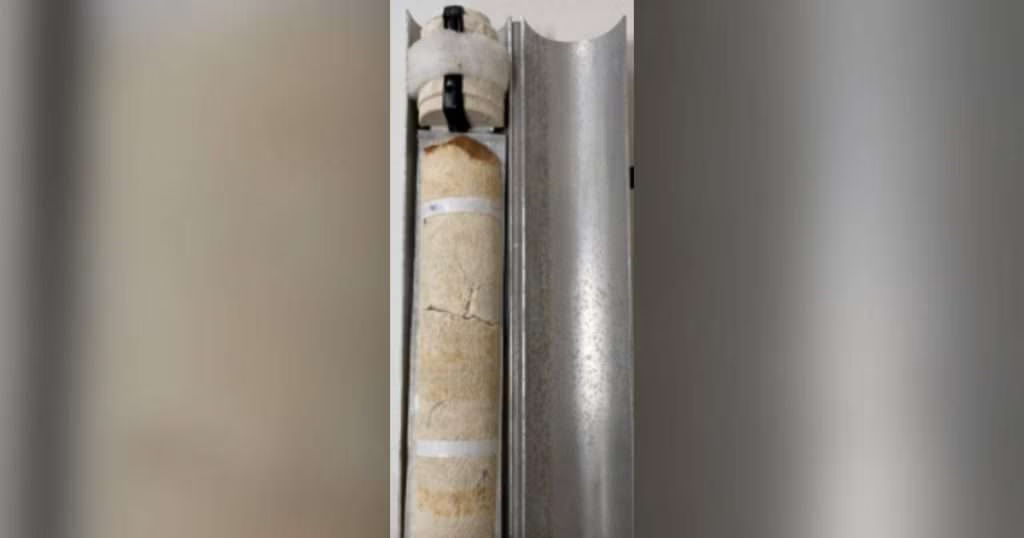
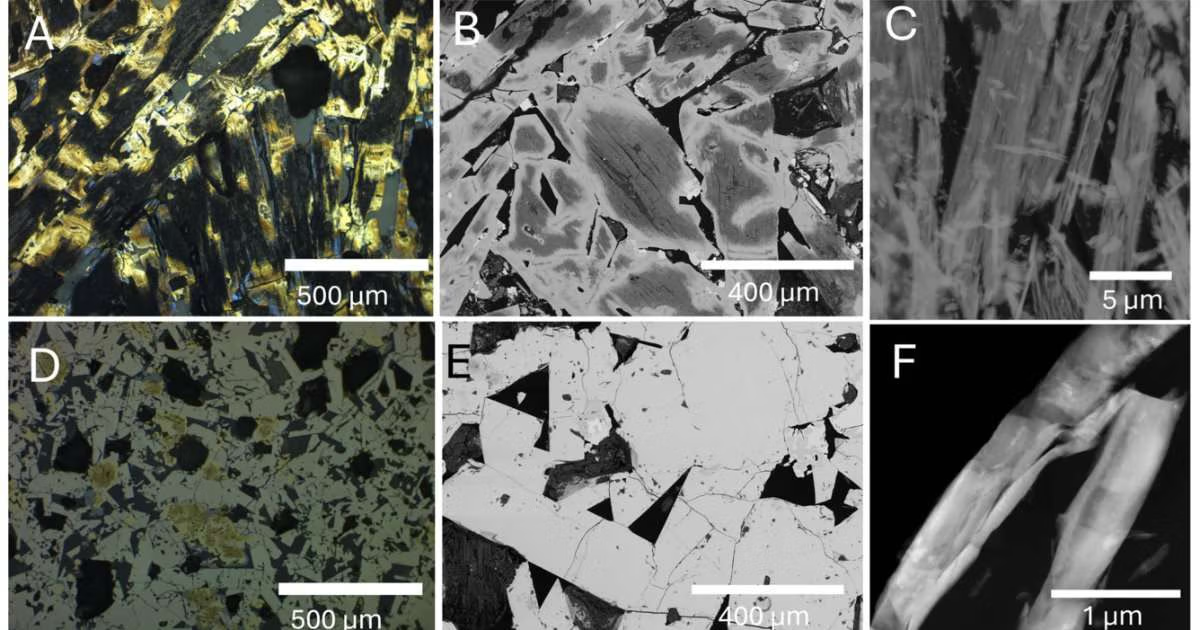
The researchers compared the mineralogy, chemical composition, and thermal behavior of Escanaba Trough samples that combusted during processing with rocks collected from the same area that did not.
The combusting rocks were composed primarily of nanocrystalline marcasite—a form of iron sulfide that had replaced the blades of an earlier mineral, pyrrhotite, preserving their original shape.
To better understand why the rocks heated up, the team analyzed how the samples responded to increasing temperatures using thermogravimetric techniques. They also used thermodynamic calculations to examine the amount of heat released during different metal sulfide oxidation reactions.
Previous work has shown that oxidation of the sulfide minerals can be exothermic, meaning it releases heat; this study found that marcasite, which is not often emphasized as a particular hazard, may be especially unstable. Under the right conditions, that heat can contribute to further self-heating of the material.
In the Escanaba Trough samples, the mineral characteristics appear to have created conditions conducive to this process, eventually leading to spontaneous combustion during laboratory handling.
Why Deep-Sea Sulfides May Need Different Safety Considerations
The finding is particularly relevant to discussions about potential mining of SMS deposits on the seafloor.
Metal sulfide deposits also occur on land, where ancient seafloor is exposed and are mined in some parts of the world as volcanogenic massive sulfide deposits. But the researchers found that the mineralogy and environmental conditions associated with the Escanaba Trough samples are sufficiently different that safety approaches developed for terrestrial deposits may not directly apply to deep-sea materials.
If SMS mining occurs, rocks brought to the surface would experience conditions dramatically different from those on the seafloor, including exposure to oxygen and changes in temperature, pressure, and moisture. Such changes could affect how sulfide minerals react and how much heat they generate.
The study therefore points to the value of conducting dedicated risk assessments for SMS deposits and developing engineering controls specifically designed to reduce the possibility of self-heating and spontaneous combustion.
Planning for Potential Hazards Associated with SMS Extraction
The researchers emphasize that the study does not establish that all seafloor massive sulfide deposits will spontaneously combust. Instead, it identifies a previously observed behavior in particular rocks from Escanaba Trough and demonstrates why the mineral characteristics of individual deposits matter when evaluating potential hazards.
As exploration of deep-sea mineral resources continues, understanding how seafloor rocks respond when they are removed from their natural setting will be an important part of assessing the technical and environmental challenges associated with any future development.
Read the study, Spontaneous combustion of metal sulfide minerals and implications for seafloor massive sulfide mining, in Scientific Reports.