
Oyster reefs are highly valuable habitats. They increase biodiversity, support fish production, and strengthen the natural functioning of marine ecosystems. This is precisely why restoring this habitat is a priority.
A Mobile Oyster Reef Restoration Unit
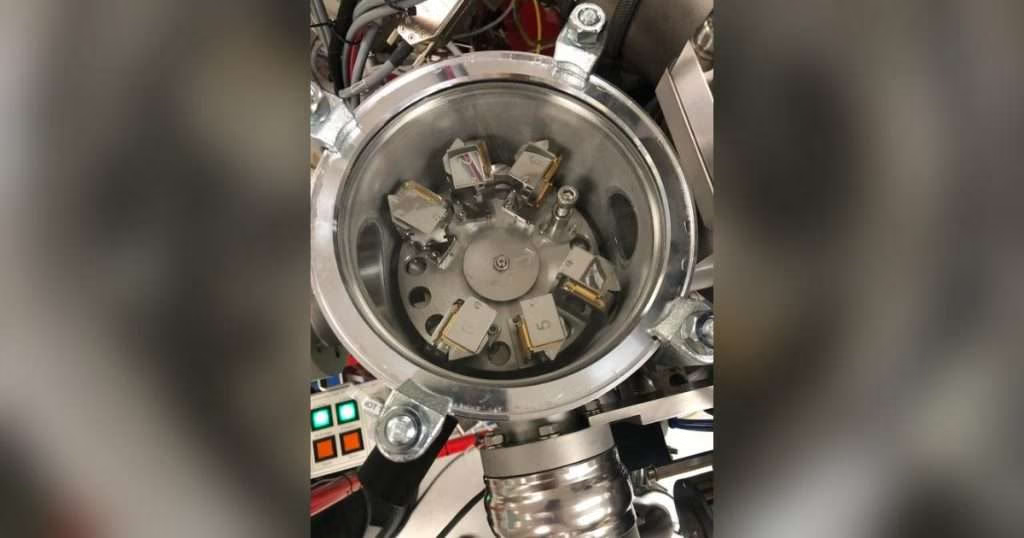
For this project, a custom oyster reef restoration unit was designed and built: a modular container-based installation that functions as a mobile and globally deployable oyster hatchery facility.
In this system, 400,000 oyster larvae were grown in just a few weeks, ready for deployment at sea. The system is fully operational on site and can be used worldwide for similar restoration projects.

Carefully Selected Location: The Dageraad Wreck Site
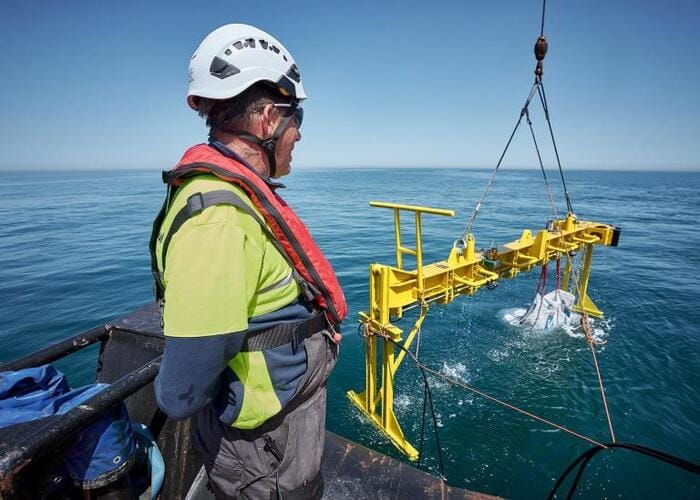
The stones were placed on the carefully selected Dageraad wreck site, a marine area in the North Sea with historical gravel beds and hydrodynamic conditions that limit sediment burial. The site also provides natural protection against beam trawling, which increases the chances of successful and long-term reef restoration.
European Cooperation
Restoring oyster reefs is a complex challenge that can only be achieved through collaboration. This operation is part of the European research project BLUE CONNECT.
The Belgian pilot is carried out together with Ghent University (ARC), the Royal Belgian Institute of Natural Sciences, the Flanders Marine Institute (VLIZ), and the Federal Public Service Health, Food Chain Safety and Environment.
This action builds on previous involvement in pilot projects such as Reefcovery, where knowledge on marine habitat restoration has been jointly developed with partners.
This project has received funding from the European Union’s HORIZON Innovation Actions under Grant Agreement No 101165675.