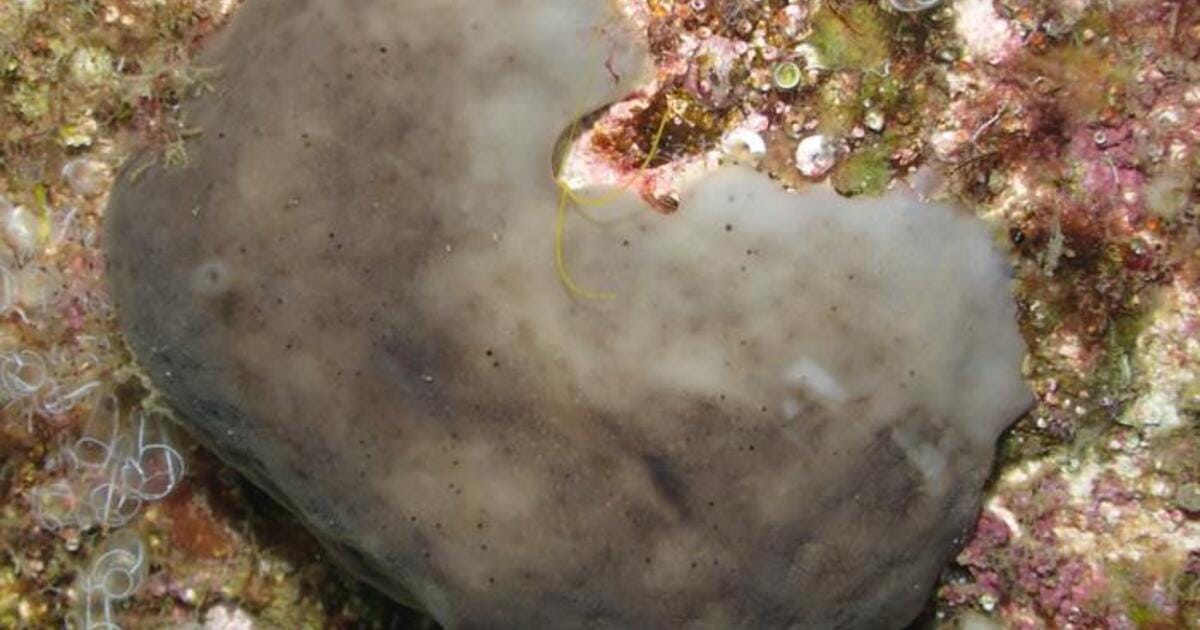
A new study published in Frontiers in Marine Science tested five species to assess their potential for use in the restoration of degraded harbor habitats. Among the species chosen was the chicken liver sponge Chondrosia reniformis, which demonstrated an outstanding ability to adapt to these challenging conditions and thrive.
The study was led by Dr. Manuel Maldonado from the Center for Advanced Studies of Blanes in Girona, Spain.
Sponges are true ecosystem engineers. Sponge populations filter thousands of liters of seawater daily, removing heavy metals, pathogenic bacteria, viruses, and organic particles while recycling nutrients through their symbiotic microbes. This doesn’t just improve water quality, but also delivers energy and organic matter to the food web. Sponges also provide shelter for worms, crustaceans, and juvenile fish.
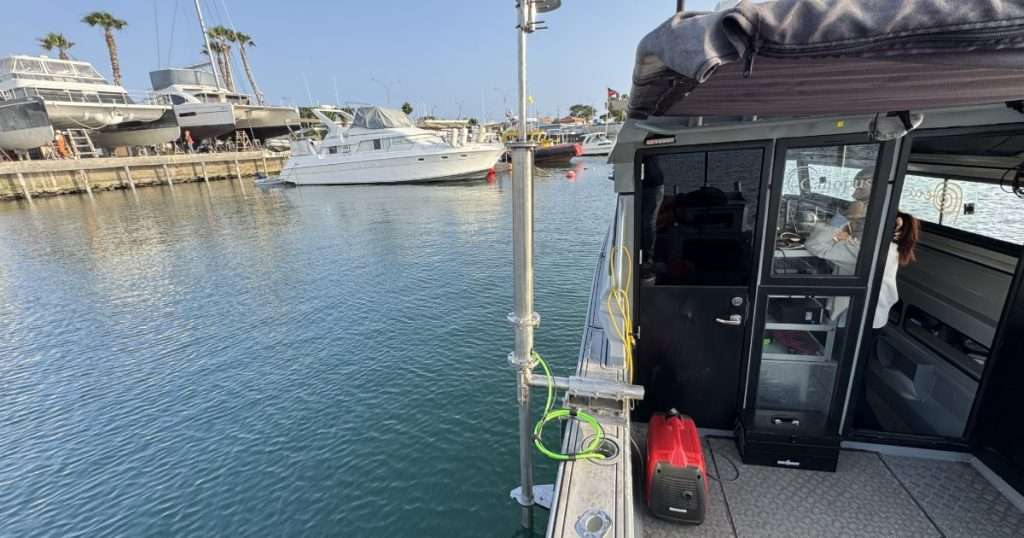
As a first step towards using sponges for the renaturalization of Mediterranean ports, Dr. Maldonado set out to identify the most pollution-tolerant species. To host their experiments, they chose Girona’s recreational port Marina Palamós. The authors had shortlisted five candidates, all abundant at low depths off Santa Anna Point, 30 km from Marina Palamós: Corticium candelabrum, Crambe crambe, Scalarispongia scalaris, Ircinia oros, as well as the chicken kidney sponge. These species are only distantly related and differ in key functional and anatomical traits, such as the presence or absence of an endoskeleton, its mineral composition, and the density of microbial symbionts in their tissue.
After collecting the sponges, the scientists transported them to the nearby Blanes marine research center and kept them, grown attached to ceramic plates, in 500-liter tanks with unfiltered running seawater. Over the course of 2024 and 2025, they transplanted these plates bearing a total of 42 sponges onto artificial reefs, made of metal grids coated in calcium carbonate and fixed to the underwater seawall at Marina Palamós. An exception was C. candelabrum, as every collected individual had failed to attach to the tank substrate and died in the laboratory. After transplanting the sponges, the authors regularly monitored their health and survival through underwater photography and visual close-up inspection.
All individuals of C. crambe, S. scalaris, and I. oros gradually shrank in size and lingered between 20 and 165 days before dying. In contrast, C. reniformis thrived and even reproduced asexually: 91.7% of the original animals survived in the port throughout the entire monitoring period of 455 days. The remainder of the original individuals of this species, as well as several offspring clones, were lost to follow-up through letting go from the substrate or ‘creeping’, a natural behavior where sponges reorganize their body into fragments for asexual reproduction and dispersal.
The authors concluded that chicken liver sponges are particularly resilient and an excellent candidate for the next phase of harbor restoration trials.
“Unlike many sponges, the chicken kidney sponge can ‘creep’ away if local conditions deteriorate—for example, when nearby organisms compete. It can also relocate from the exposed upper surface of a rock, where it is subjected to UV radiation, polluted sediments, and predators, to sheltered crevices where these stresses are greatly reduced. It also reproduces asexually by fission: this allows populations to expand rapidly and later reproduce sexually, increasing the chances of successful fertilization,” said Dr. Maldonado.
“Our next step is to monitor the transplanted sponges over several years. We are particularly interested in tracking shifts in their communities of symbiotic microbes—highly abundant in tissue of the chicken kidney sponge, a so-called ‘high microbial abundance’ species—to find out if these help them to tolerate pollutants. But we will also continue testing more sponge species.”