“Plastic pellets are small, but their footprint is vast because they often spill into our oceans and waterways,” said Oceana Senior Campaign Director Christy Leavitt. ”These tiny pieces of plastic are extremely difficult to clean up and contribute to the growing plastic pollution crisis that threatens our coasts, communities, and wildlife. The alarming number of pellets found show the need for urgent action. The more we know about the distribution of plastic pellets, the more information we have to make positive change. It’s time to push for solutions to safeguard our waters for future generations.”
“It’s clear that microplastics, including pellets, are polluting our environment and impacting wildlife, but it’s hard to gauge the scope of the problem. That’s why we organized the International Plastic Pellet Count,” said Celeste Meiffren-Swango, Beyond Plastic campaign director for Environment America Research & Policy Center. “By conducting a coordinated global count, we gain a better understanding of the extent of pre-production plastic pellet pollution, including where and how it spreads. By having a firmer grasp of the problem, we can come up with effective solutions.”
This year’s pellet count started on Saturday, May 2, and continued through the rest of the month. Volunteers signed up for existing events or created their own events and uploaded their results to Nurdle Patrol’s online database. Standardized protocols required combing waterways in 10-minute intervals, with all data logged into Nurdle Patrol to calculate the total counts.
Plastic pellet pollution is often most concentrated near sites where pellets are manufactured, used, or transported. That led some volunteers to look for nurdles near a plastic production facility along the Victoria Barge Canal in Texas. More than a million pellets were collected from in and along the waterway, including 715,000* by San Antonio Bay Estuarine Waterkeeper and hundreds of thousands more by Nurdle Patrol.
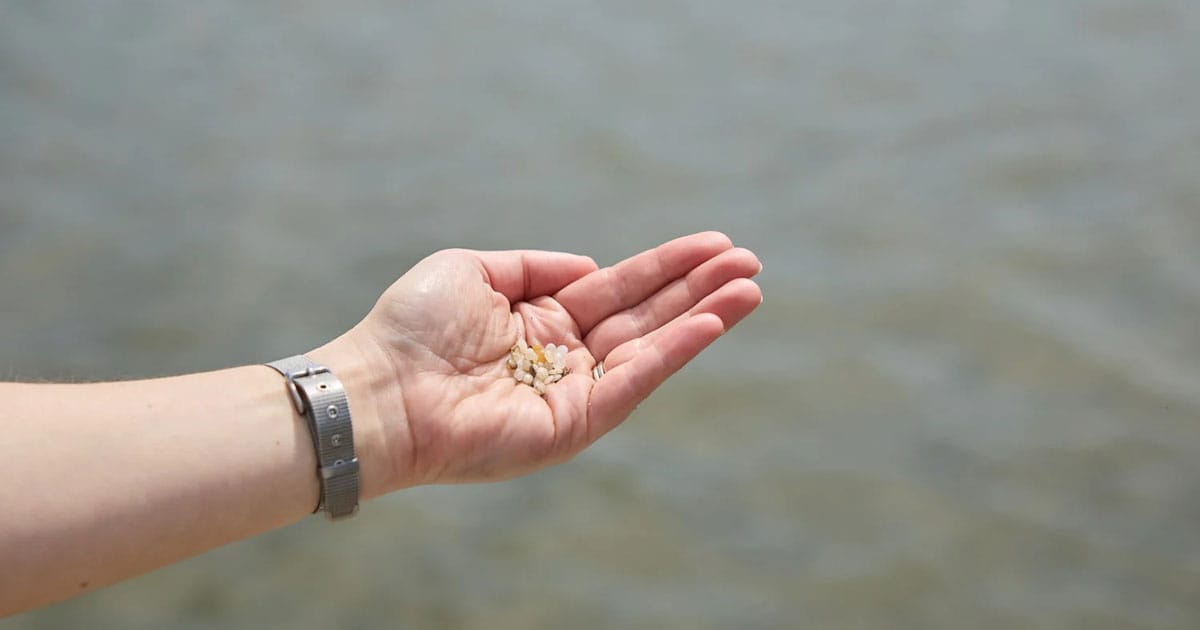
Plastic pellets are the building blocks of plastic production—melted down and molded into water bottles, plastic bags, and countless other items. They often spill during manufacturing and transport, as well as being released through permitted industrial discharges, littering our land and waterways. An estimated 10 trillion plastic pellets enter the oceans every year.
Like other types of microplastic that pollute our oceans, lakes and rivers, they pose environmental and potential public health threats. Plastic pellets can absorb toxic chemicals such as DDT, PCBs and mercury. These types of pollutants bioaccumulate, becoming more concentrated and more toxic as they move up the food chain. Birds, fish, turtles, and other marine animals sometimes mistake plastic pellets for food, which can cause them to starve to death.
*Because the sample collected was so large, San Antonio Bay Estuarine Waterkeeper cleaned and weighed the sample, deducted the weight of the bucket holding the sample, and then multiplied the sample weight (32.5 lbs) by 22,000 (the number of pellets in a pound) and got the number of pellets as 715,000. Additional pellets found at this site were collected by other volunteers.