Despite needed support from the National Science Foundation, Kelp Ark needs additional funding to complete collections before the Super El Niño takes hold, which is why the organization is asking the public to help close the gap through its Adopt A Kelp℠ program. Each donation will go directly to collecting and safeguarding a kelp “seed” for one full year in its biobank.
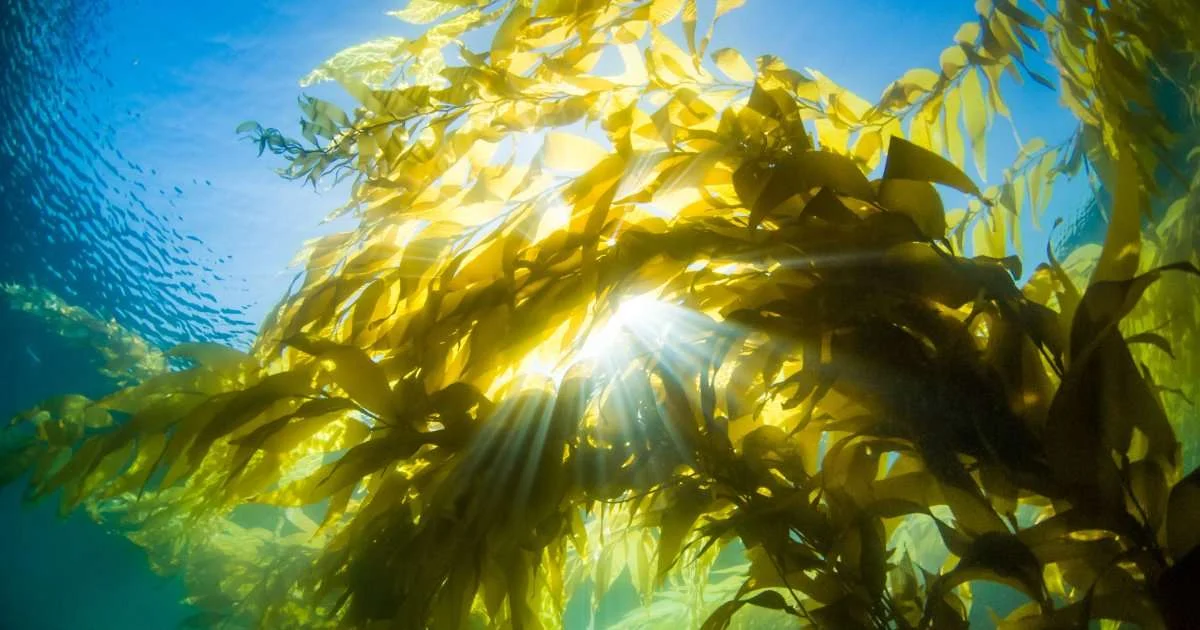
Kelp forests are among the ocean’s most productive ecosystems. They form underwater forests that shelter thousands of marine species, sequester carbon and nitrogen, and support coastal fisheries and tourism worth billions of dollars a year. Much of that value is invisible from shore, but the loss of kelp ripples through marine food webs and coastal economies alike.
The Problem: Marine Heat Waves Are Erasing Kelp Forests
Warming ocean conditions limit kelp’s distribution and productivity. The 2014–2015 marine heat wave known as “The Blob” wiped out more than 95% of Northern California’s bull kelp canopy in two years, a loss the region has still not fully recovered from. When a kelp forest collapses, its genetic diversity is lost, making it difficult to reestablish.
The Super El Niño expected to develop this summer is forecast to exceed the intensity of The Blob and last through 2027, threatening another wave of biodiversity loss across California’s remaining kelp forests.
“The urgency is clear: if we lose kelp biodiversity today, we lose restoration opportunities tomorrow,” stated Benjamin Grime, Ocean Recovery Scientist at The Nature Conservancy. “As kelp forests face increasing pressures from marine heatwaves, conserving genetic diversity through seed banking can help ensure that future restoration efforts in California are resilient, effective, and capable of supporting healthy coastal ecosystems in a changing ocean.”
The Solution: Preserving Kelp Outside the Water
Kelp biodiversity can be safeguarded ex situ, or outside the ocean, while conditions in the wild are too hostile for survival. Kelp Ark maintains living collections of kelp gametophytes, the microscopic, genetically diverse spores that can be stored indefinitely and regrown once conditions allow.
Operating out of a specialized facility in San Pedro, the conservancy stores kelp spores in enriched seawater media kept below 52°F under red LED lights, inducing clonal division that effectively immortalizes the kelp strains.
The Kelp Ark facility holds the largest living collection of East Pacific kelp in the world, with more than 2,600 specimens spanning dozens of kelp species preserved in its biobank, known as the Arkive. Each species carries genetic traits essential to rebuilding resilient, healthy ocean ecosystems.
Kelp Ark’s team is actively collecting kelp from sites across California to preserve these populations before the next marine heat wave threatens them. Through scientific collection, researchers gather kelp gametophytes and store them in the Arkive, where thousands of specimens await symbolic adoption. Each is labeled with its collection site, date, species, and other identifying data.
Kelp Ark is the only organization in California with a scientific collection permit to gather and store kelp across 32 sites before the Super El Niño intensifies, working with diving teams from USC, Get Inspired, San Diego State University, San José State University, Sonoma State University, Cal State Northridge, Cal Poly Humboldt, and UC Santa Barbara.
Adopt A Kelp℠ Program
Starting at just $30, individuals can sustain one kelp gametophyte in the Arkive for a full year. Kelp Ark’s team matches each donor to a unique specimen, tags it with the donor’s name, and issues an adoption certificate along with a trackable kelp ID number so donors can follow their kelp’s progress over time.
While Kelp Ark originally launched the Adopt A Kelp℠ program in October 2025, the organization hopes this relaunch will rejuvenate efforts given the state of urgency.
“Individual donor support is needed now more than ever to protect some of the most productive ecosystems in the eastern Pacific Ocean. It is critical that these kelp are preserved for future marine biodiversity and climate regulation,” said Kevin Gaines, Director of Operations at Kelp Ark. “Each kelp adoption directly corresponds to the protection of one ‘seed’, or gametophyte in our biobank. It’s incredible how tangible the impact of a single person can be on the future health of our ocean.”
Like any living organism, kelp gametophytes require care—regular seawater changes, nutrient replenishment, and carefully monitored light and temperature—to survive. Adoption donations fund that year-round care.
For more information on how to adopt or donate to Kelp Ark, visit https://kelpark.org/adopt-a-kelp/.