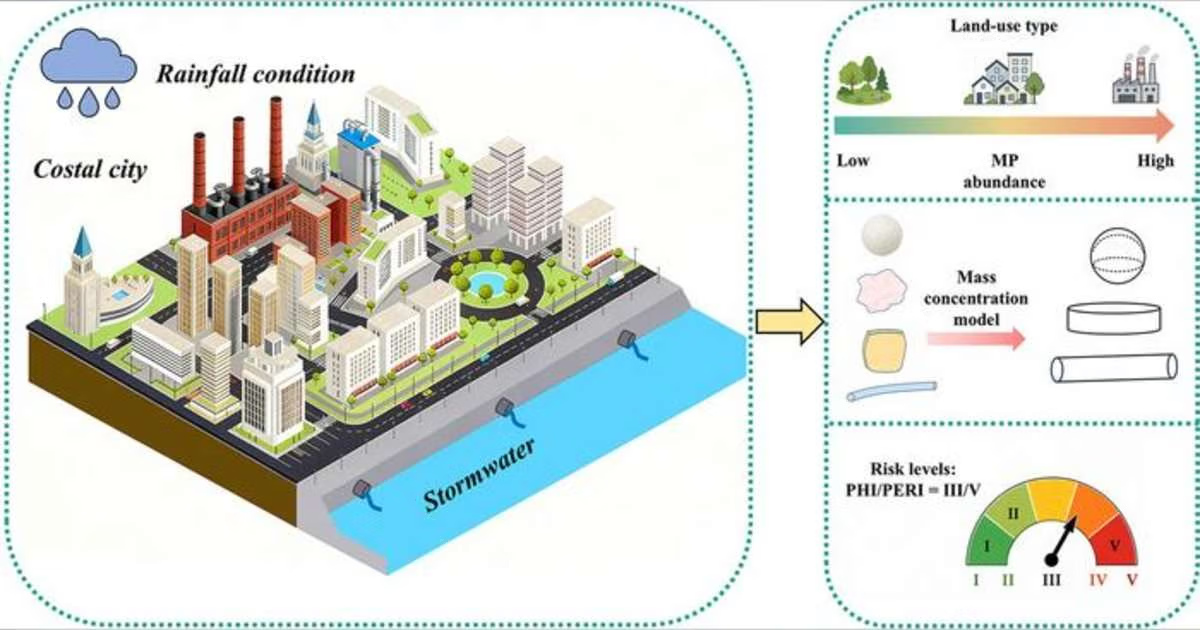
A new study published in the journal Emerging Contaminants provides an assessment of microplastic pollution in Macao’s stormwater system. Researchers from the Macau University of Science and Technology and their collaborators sampled six stormwater drains across industrial, residential/commercial, and ecological areas over two seasons, analyzing microplastic abundance, polymer types, mass loads, and ecological risks.
“Microplastics were present in every sample, with concentrations ranging from 0.86 to 53.03 particles per liter,” said Dr. Kai Zhang, corresponding author of the study. “Irregular fragments (nearly 57%) and black-colored particles (38%) dominated, and the most common polymers were polyethylene terephthalate (PET, used in textiles and bottles), polypropylene (PP), and polyethylene (PE).”
Notably, the abundance and characteristics of microplastics in stormwater drains are strongly influenced by land use. “Industrial areas had the highest concentrations—over 12 times higher than ecological areas—reflecting intensive human activities such as manufacturing, vehicle traffic, and wastewater discharge,” Zhang shared.
The study also estimated, for the first time, the mass of microplastics discharged from Macao’s storm drains—ranging from just a few grams to over 10 kilograms per day, depending on the site and season. While wet-season concentrations were generally higher, the difference was not statistically significant, suggesting that individual rainfall events may be more influential than seasonal patterns.
One of the more concerning findings comes from the risk assessment. “While the Pollution Load Index indicated only minor contamination, the Polymer Hazard Index and Potential Ecological Risk Index classified the microplastic pollution as ‘high’ to ‘extremely hazardous,'” said Zhang. “This is largely due to the presence of polyvinyl chloride (PVC)—a polymer with a high hazard score—which was detected at a stormwater pumping station, likely released from aging pipes and infrastructure.”
Further, the researchers found that microplastic abundance correlated negatively with dissolved oxygen levels and positively with rainfall from the preceding three days, highlighting the dynamic nature of stormwater pollution.
“These findings identify stormwater drains as a key microplastic conduit that has been largely underregulated,” Zhang explained. “Management strategies must consider land-use planning, real-time rainfall monitoring, and—critically—the material composition of drainage infrastructure itself to reduce the risks posed by microplastics in urban coastal environments.”