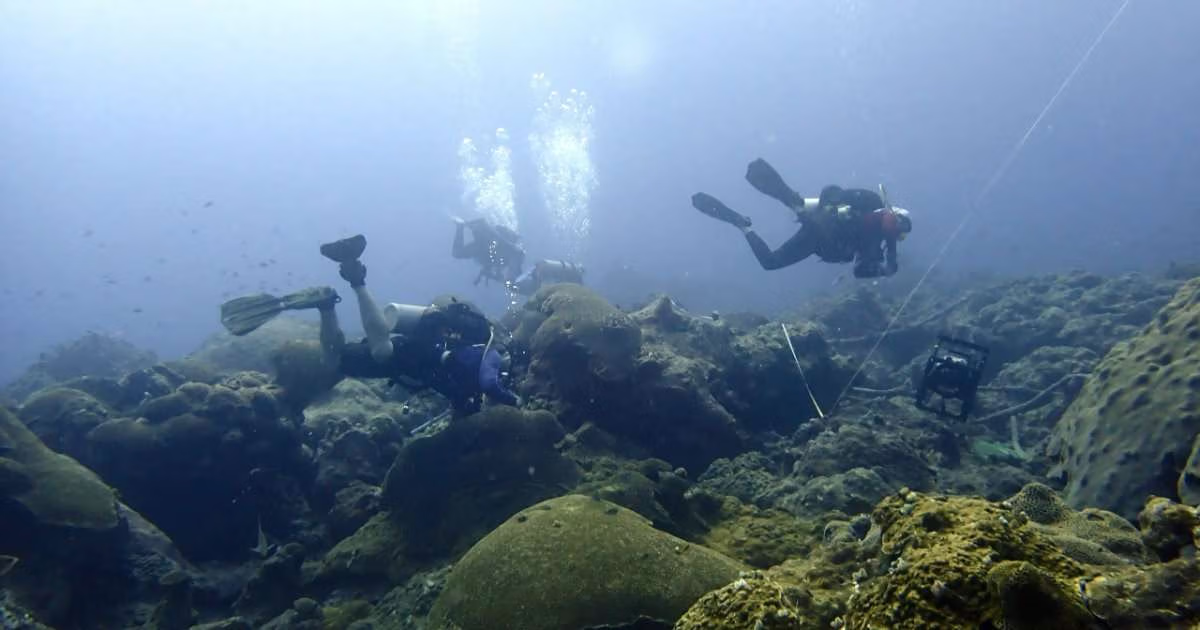
Five dive teams—a total of 26 divers from NOAA and partnering organizations—assessed and recorded the status of coral reefs and fish communities in the area, recording the following data:
- coral demography—coral species, abundance, size, and condition (old or new mortality and the presence of bleaching and disease)
- benthic cover—components on the ocean floor, including coral, algae, and bare sand
- fish assemblages—fish species, number of each species, and size of individuals
In addition, the team collected imagery, which will be used to create photogrammetric models (three-dimensional models created from overlapping photos) of the reef across the same areas where the in situ diver collected data.
The mission was a huge success, surveying 61 sites over a four-day period. These data, when combined with and compared to previous years’ data, provide status and trends of coral reef health over time and help inform conservation strategies when and where needed.
As part of NOAA’s routine coral reef monitoring cycle, a team deploys to Flower Garden Banks National Marine Sanctuary biennially to collect data for this ongoing record. Data are then made publicly available via a NOAA National Centers for Environmental Information archive. The data are used to summarize status and trends over time in a published technical memorandum and displayed in the National Coral Reef Monitoring Program Data Visualization Tool, among other data products.
NCCOS scientists led the mission by organizing the trip, partnering with the NOAA Diving Program and science staff from Flower Garden Banks National Marine Sanctuary, collaborating with partners from the US Environmental Protection Agency, National Park Service, and Texas A&M Corpus Christi, planning and implementing dive operations, organizing data, and serving as the point person on the ship for mission implementation. These monitoring efforts are co-led with NOAA’s Southeast Fisheries Science Center.
A dive team wraps up their fish and benthic surveys. Credit: Sarah Rojano, Research Planning, Inc. on contract with NOAA’s National Centers for Coastal Ocean Science.
Flower Garden Banks National Marine Sanctuary is one of 10 priority areas identified for monitoring by NOAA’s National Coral Reef Monitoring Program through an ongoing project, which is funded by NOAA’s Coral Reef Conservation Program and NOAA’s RESTORE Science Program.
The team will summarize the results of this mission in a report. View the 2024 summary report for Flower Garden Banks National Marine Sanctuary for findings from that mission.
This work is authorized under the National Defense Authorization Act, the RESTORE Act of 2012, and the National Marine Sanctuaries Act.