These estimates could increase the current economic value of nitrogen removal by up to $3,900 per hectare per year, which is 42% higher than previous estimates. These findings, published in PLOS One, have important implications for oyster reef design to improve water quality, as well as for developing a more comprehensive understanding of the environmental and economic benefits of oyster reefs.
“Oysters provide tremendous value to society in many ways, including regulating water quality,” said Anne Smiley, a postdoctoral researcher at the Institute for the Environment and lead author of the study. “Nitrogen removal, specifically, is a valuable ecosystem service that has been used to develop nutrient credit trading programs across the US Factoring in how oysters bury nitrogen in sediments would more accurately capture their value, support stronger water quality policies, and increase returns on investment of restoration projects.”
A single oyster can filter several gallons of water per day. Oysters filter nitrogen and deposit it on the ocean floor, where it gets buried in sediment. Too much nitrogen in the water can cause algal blooms and low-oxygen dead zones where sea life can’t survive and can become unsafe for humans. Oysters not only play a key role in maintaining water quality, they also stabilize the shoreline and provide a harvestable source of shellfish for human consumption.
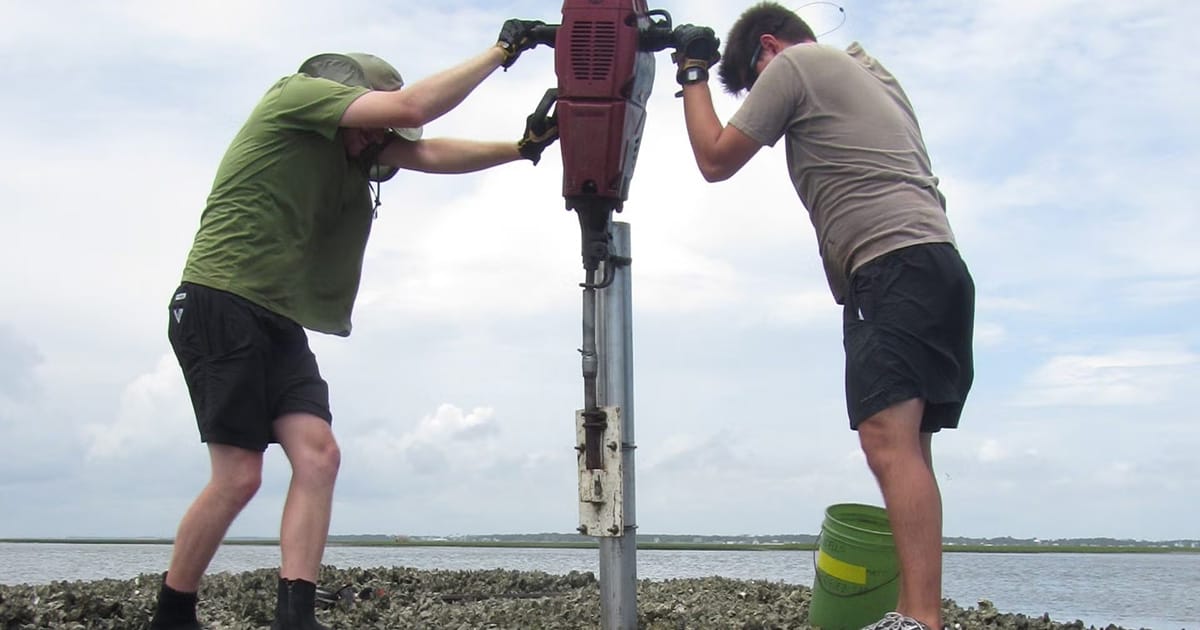
For this study, researchers measured nitrogen burial in restored oyster reefs in Back Sound, NC, in Carteret County, near Morehead City. They accounted for different environmental settings, such as oyster reefs that remain submerged underwater, reefs that are exposed at low tide, and reefs that are on open flats or salt marshes. They found that nitrogen burial rates were strongly linked to reef structure, and the taller, denser reefs buried nitrogen at higher and faster rates than shorter, less dense reefs.
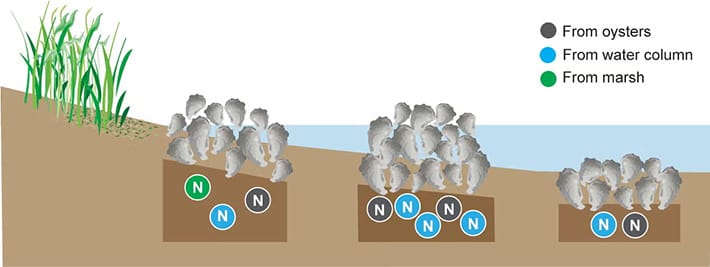
“We found that reefs that were located on open flats and exposed at low tide buried nitrogen at faster rates,” Smiley said. “If improving water quality through nitrogen removal is the goal, restoration efforts should prioritize this reef design.”
Oyster reef restoration is a costly undertaking, and measuring the return on investment has a lot of variables. Having these new measurements of nitrogen burial helps give a more complete assessment of the value of oyster restoration projects. Future oyster restoration projects can benefit from these findings for effective coastal management.
“This research improves our understanding of how oysters maintain water quality, supports a more complete account of the economic value they provide to society, and informs reef restoration to maximize environmental and economic benefits,” Smiley adds.
Carolina is a global leader in oyster reef research. UNC-Chapel Hill ranked second in the world for oyster reef research according to a study in Water.
“Anne’s new manuscript is an important contribution to our understanding of the role of oyster reefs to both coastal ecosystems and economies,” said Mike Piehler, Director of the Institute for the Environment and an author on the paper. “Carolina is a long-time leader in oyster reef research, and this study is a great addition to that body of work.”