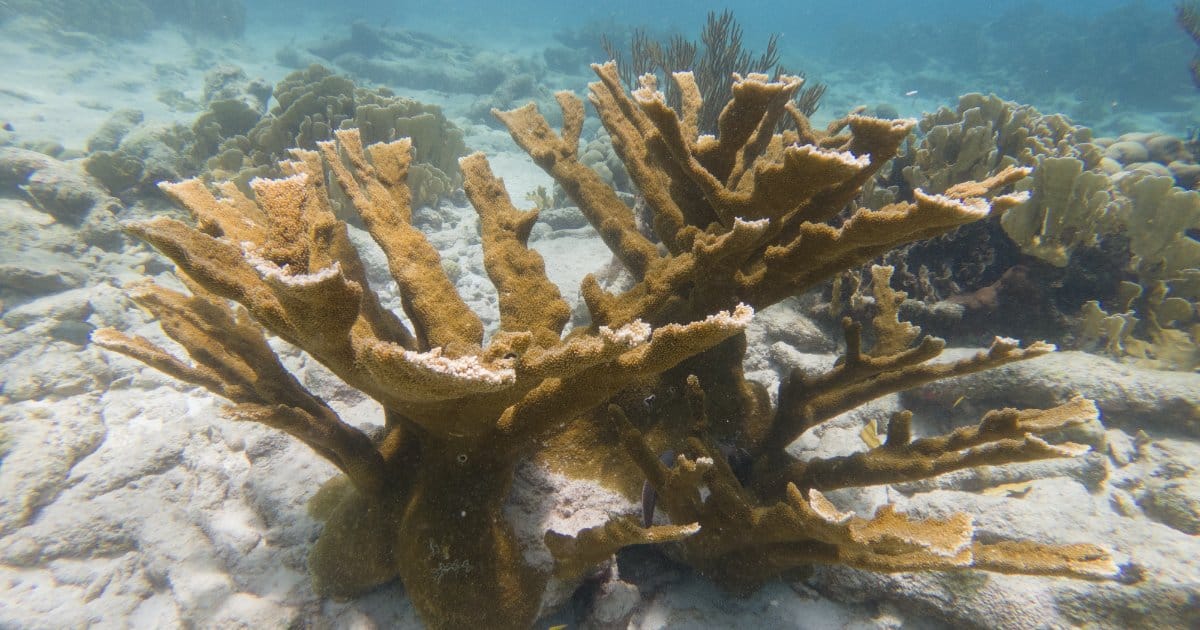
During a narrow spawning window that occurs just once each year, scientists will collect elkhorn coral (Acropora palmata) gametes released and fertilize them under controlled conditions. The resulting juvenile corals will be raised for future restoration efforts, helping preserve genetic diversity and strengthen the long-term resilience of Florida’s coral reefs. Once the dominant coral species on many shallow reefs, elkhorn coral plays a critical role in providing habitat for marine life and protecting coastlines from wave action.
The project, funded through NOAA’s Re5 (Resilient Reef Research, Rescue and Restoration) initiative, will result in juvenile corals from the wild being fertilized and raised in coral facilities for future restoration efforts. The Reef Institute’s West Palm Beach-based biobank provides resources for this effort, thereby helping preserve genetic diversity and strengthen the long-term resilience of Florida’s coral reefs. Often compared to “IVF for corals,” the process of assisted fertilization allows researchers to preserve and propagate coral populations facing mounting threats from climate change, disease, and warming ocean temperatures.
“Elkhorn coral is one of the most important reef-building corals in the Caribbean, but it is also one of the most vulnerable,” said Leneita Fix, Executive Director, The Reef Institute. “This annual spawning event gives scientists a rare opportunity to help secure the species’ future. By collecting and fertilizing gametes, we’re creating the next generation of corals that may one day help restore and strengthen reefs throughout Florida.”
Following an unprecedented global coral bleaching event in 2023, in which coral across the Atlantic, Pacific, and Indian Ocean basins suffered bleaching-level heat stress, The Reef Institute became one of two facilities serving as a biobank to save the genetics of elkhorn coral in Florida.
The Reef Institute is joining a Reef Renewal USA-led initiative alongside the University of Miami, Mote Marine Laboratory, The Florida Aquarium, SECORE International, and members of the Smithsonian Marine Station.