Extended periods of elevated water temperatures (>87°F) can cause corals to expel the beneficial algae (Zooxanthellae) that provide much of the coral’s energy through photosynthesis. This stress response, known as coral bleaching, weakens corals and can lead to mortality if high temperatures persist.
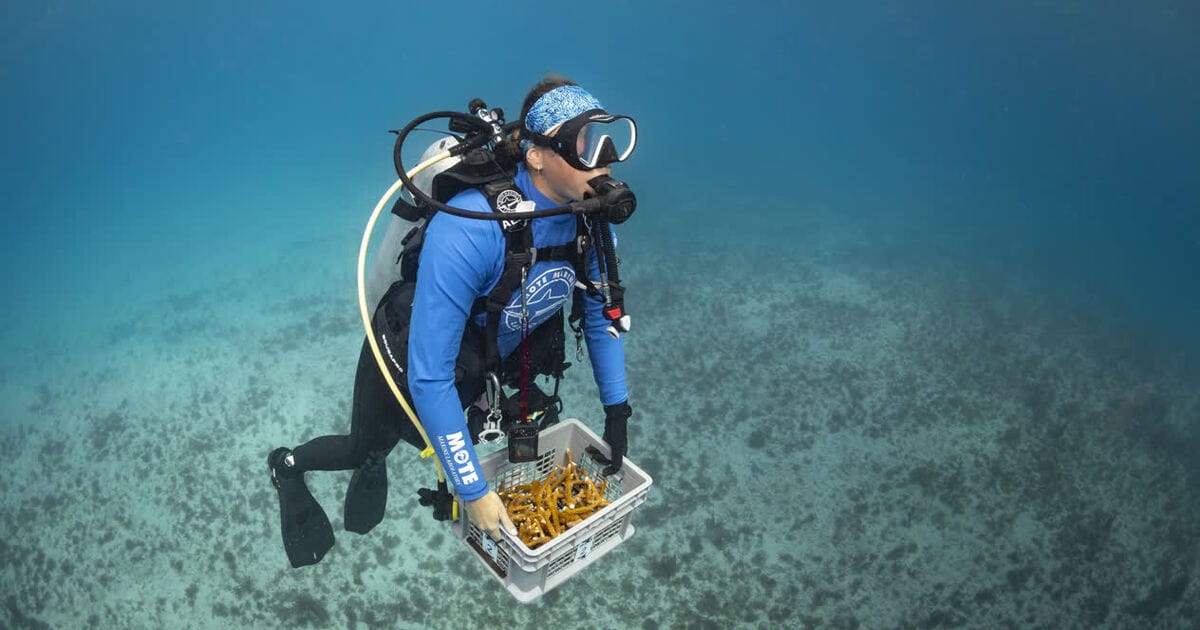
Mote scientists have significant experience from previous excessively high water temperatures, and have incorporated those lessons in our holistic science-based coral reef restoration strategy. Mote’s current coral rescue and relocation strategy was designed to protect valuable coral genotypes while providing optimal conditions for recovery until environmental conditions improve, and promising results are already evident.
“Our long-term investment in land-based coral restoration infrastructure allows us to respond quickly when ocean temperatures threaten our offshore nurseries,” said Dr. Michael P. Crosby, Mote President & CEO. “Protecting genetically diverse corals during these events is essential to advancing restoration science and ensuring we have resilient populations ready to return to Florida’s Coral Reef.”
Beyond safeguarding corals, the response also created a unique research opportunity. Mote scientists are evaluating how different coral genotypes resist and recover from the effects of prolonged heat stress, generating critical data that will strengthen resilience-based restoration efforts and help guide the future of restoration along Florida’s Coral Reef.
As part of this effort, Mote is strategically keeping and continuing to closely monitor representative samples of multiple coral genotypes in its offshore nurseries to evaluate how those different genotypes respond to, and potentially recover from, such unprecedented extreme temperature stress in nature.
Mote has been studying coral reef ecosystems for decades and is an international leader in the development of innovative and effective coral reef restoration technologies, including multiple breakthroughs identifying natural coral genotypes that are resilient to increased ocean temperature, acidification, and disease.
“Every extreme heat event provides an opportunity to improve our understanding of coral resistance and resilience,” said Dr. Jason Spadaro, Program Manager of Mote’s Coral Reef Restoration Research Program. “By combining field observations with controlled research, we’re identifying the corals and restoration approaches that will be most successful as ocean conditions continue to change.”
Supporting these efforts is Mote’s International Coral Gene Bank, one of the world’s largest collections of living Caribbean coral genotypes outside of the natural reef. The gene bank safeguards approximately 10,000 unique coral genotypes representing 34 species, preserving critical genetic diversity for conservation, propagation, future research, and restoration.
With significant philanthropic support, Mote has invested in coral reef restoration for over 30 years. As a result, Mote has been able to outplant more than 275,000 corals onto Florida’s reefs over the last decade and has nearly 75,000 additional fragments currently being grown among Mote’s Keys-based coral nurseries for future outplanting.
Thanks to support from DEP’s Office of Resilience and Coastal Protection and through close collaboration with Monroe County, Mote has utilized grant funding to strengthen emergency coral care and restoration capacity.