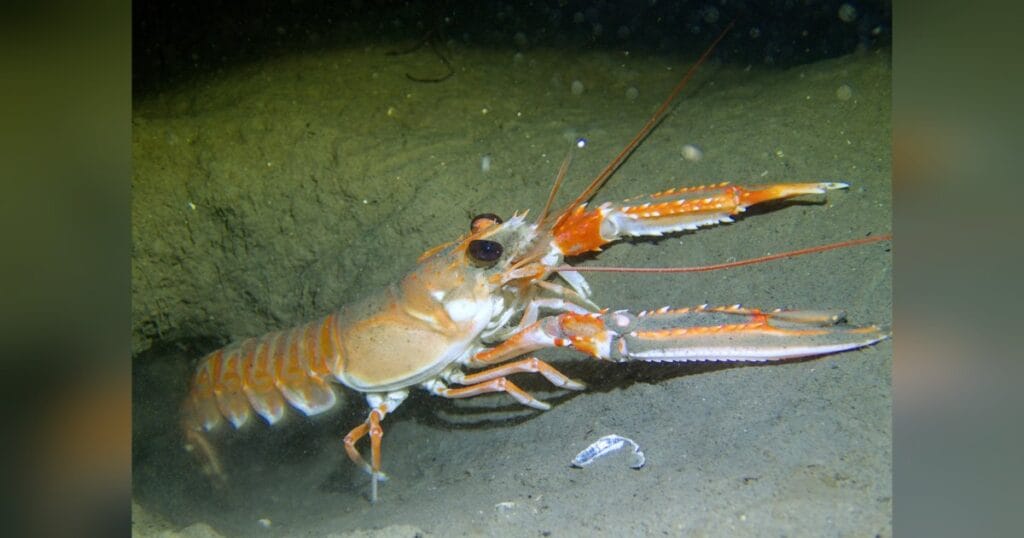
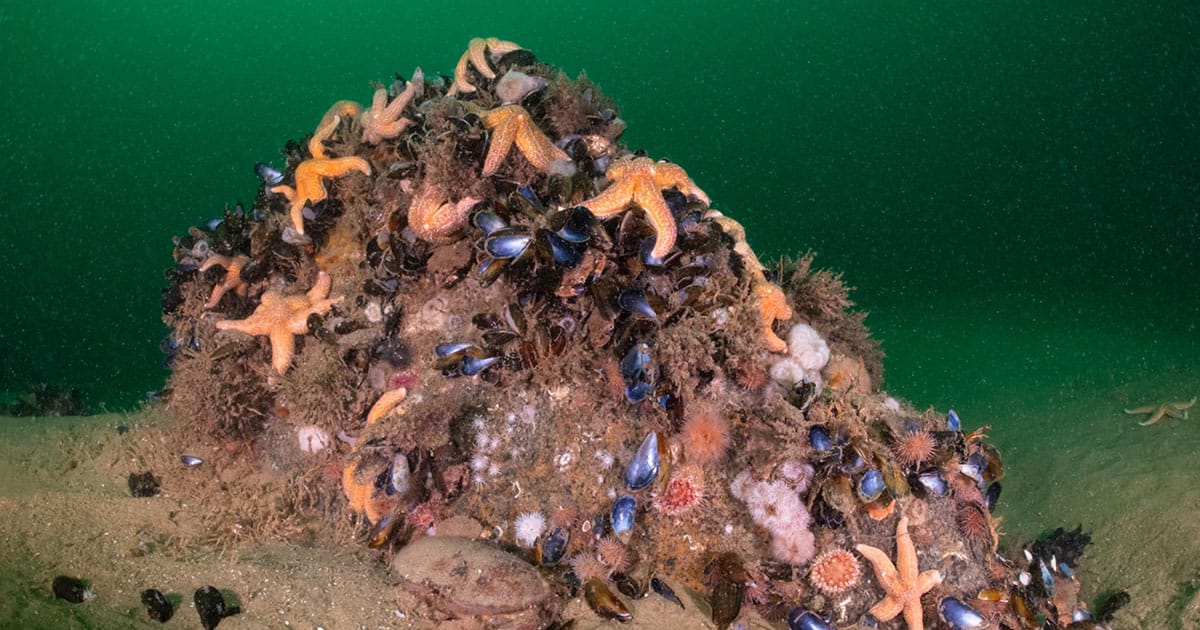
Eleven organizations are working together in the project, led by the Royal Netherlands Institute for Sea Research (NIOZ). Over the next four years, ReefCreate-XL will investigate which reef structures are suitable for large-scale use and can help kickstart underwater life. Hard structures such as oyster reefs are vital nurseries for biodiversity at sea. Over recent decades, however, they have almost completely disappeared due to human activities, climate change, and disease.
Large-Scale Deployment
During this preparatory year, the project team will design and improve different reef structures, which will be tested under natural conditions in the North Sea in 2027. Pilots will take place offshore at the Frisian Front, a protected nature area north of the Wadden Islands, about a day’s sailing from Harlingen. The development of the new reef structures and their impact on marine life will then be closely monitored for two years.
The project will offer valuable insights into how reefs can be rolled out at scale, in collaboration with contractors, consultants, researchers, and NGOs connected to the maritime infrastructure sector, helping to give biodiversity in the North Sea a strong boost.
From Startup to Scale-Up
Thanks to the pioneering work of various organizations and initiatives, a great deal of knowledge about reef restoration has been gained in recent years. “At the same time, we still lack the scale needed for real nature restoration. This project changes that by building on existing knowledge and working together with partners in the maritime infrastructure sector,” said Nienke Oostenbrink, Project Manager at Nature Regeneration North Sea. “It gives us the momentum to move from experimentation to standardization, from startup to scale-up.”
Fruit Trees on the Seabed
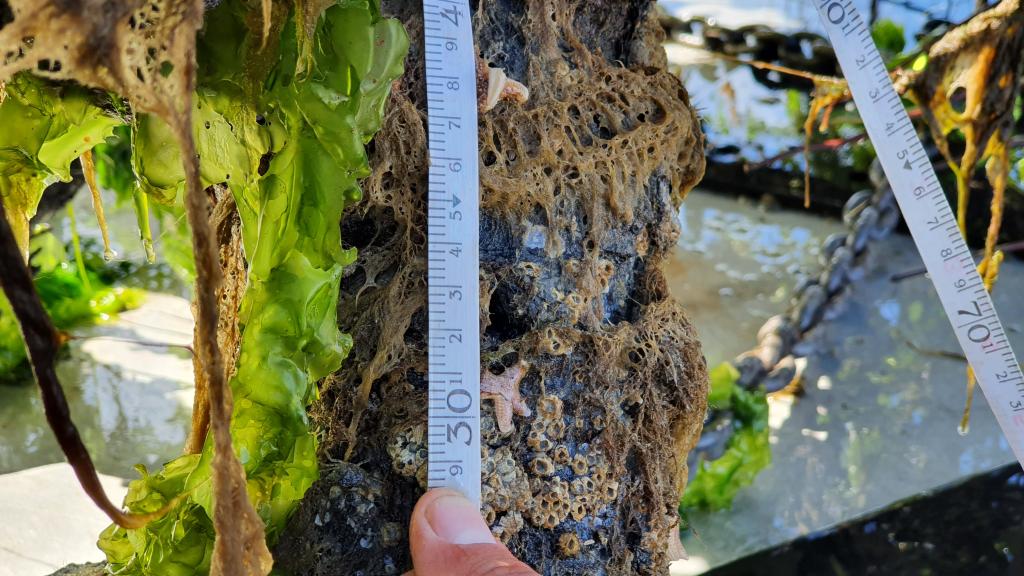
This year, under the motto ‘learn by doing’, the project team will continue developing existing reef structures by testing and improving them for large-scale use. Examples include ‘treereefs’: discarded fruit trees that act as wooden reef structures and attract underwater life. Or ‘spat on substrate’, where millions of young oysters are attached to stones. Based on the results, the final designs will go into production. At the same time, all necessary preparations are being made to place the reefs on the seabed next year and monitor them closely.
Solving the Reef Design Puzzle
Because reef restoration is still a relatively young field, designing reefs that meet the requirements of biodiversity, regulations, and scalability is a complex puzzle.
Oostenbrink explained: “To roll out reef restoration measures on a large scale, it is important that the structures can be installed safely and efficiently at sea. At the same time, they need a natural 3D structure that attracts a wide range of marine life and supports the ecosystem.”
Major Steps Forward for the North Sea
Pauline Kamermans, senior researcher at Wageningen Marine Research, said: “Restoring reefs on the seabed of a rough sea is pioneering work. As we go, we’ll learn from the pilots which reef restoration methods work best in open waters. These new reef structures can help increase biodiversity in the North Sea.”
Edwin Kardinaal, Team Lead Marine Ecology at Waardenburg Ecology, said: “ReefCreate-XL gives us the opportunity to scale up our earlier small-scale pilots. We are very curious to see how reef restoration activities perform under offshore conditions in the open sea.”
The following organizations are participating in ReefCreate-XL: the Royal Netherlands Institute for Sea Research (NIOZ), Wageningen Marine Research, Waardenburg Ecology, Van Oord Ocean Health, EcoShape, The Rich North Sea, Naturalis Biodiversity Center, Delft University of Technology, Stichting Zeeschelp, ARK Rewilding Nederland, and Stichting Doggerland. With funding from Nature Regeneration North Sea.