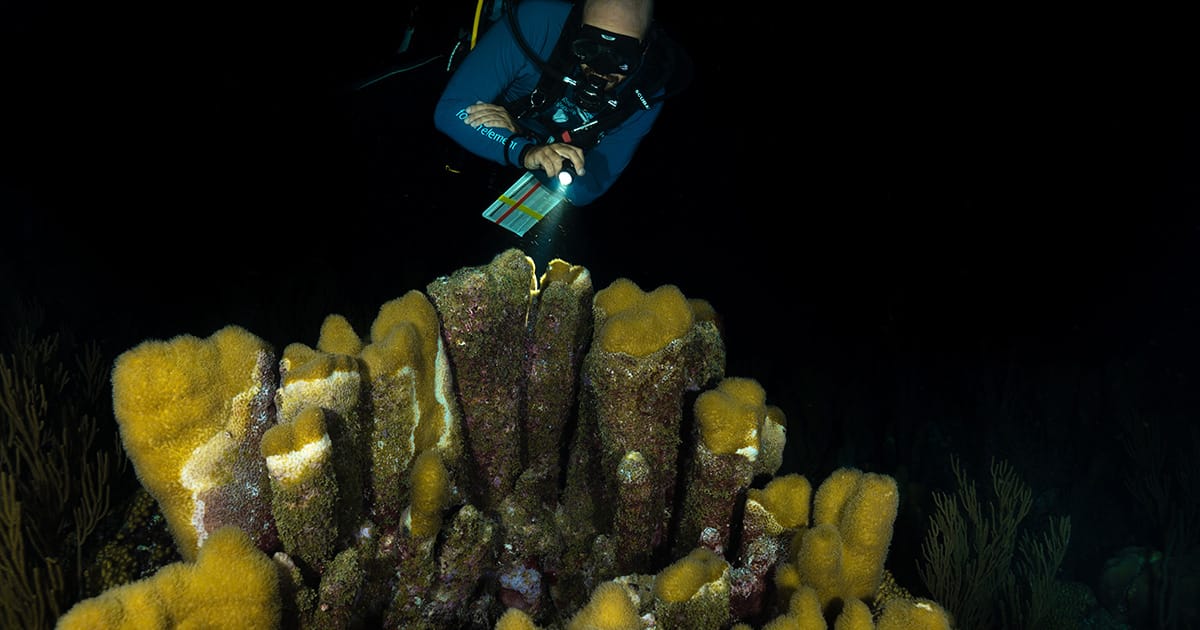
Pillar coral populations on Bonaire have declined sharply in recent years due to the spread of SCTLD and consecutive marine heatwaves, leaving only scattered colonies that are often too far apart to reproduce naturally. As the “canary of the reef,” this species is highly sensitive to ocean change and often the first to show signs of stress. Without intervention, pillar coral faces functional extinction on the island—as has already happened in Florida and elsewhere in the Caribbean.
“Helping pillar corals reproduce here is more than just a milestone for us—it’s a lifeline for a species that is vanishing from Bonaire’s reefs,” said RRFB’s Lead Restoration Technician Cheyenna de Wit.
Last week’s success underscores the critical role of active coral restoration. While improving water quality and reducing local stressors are essential, they cannot alone save dying species like pillar coral.
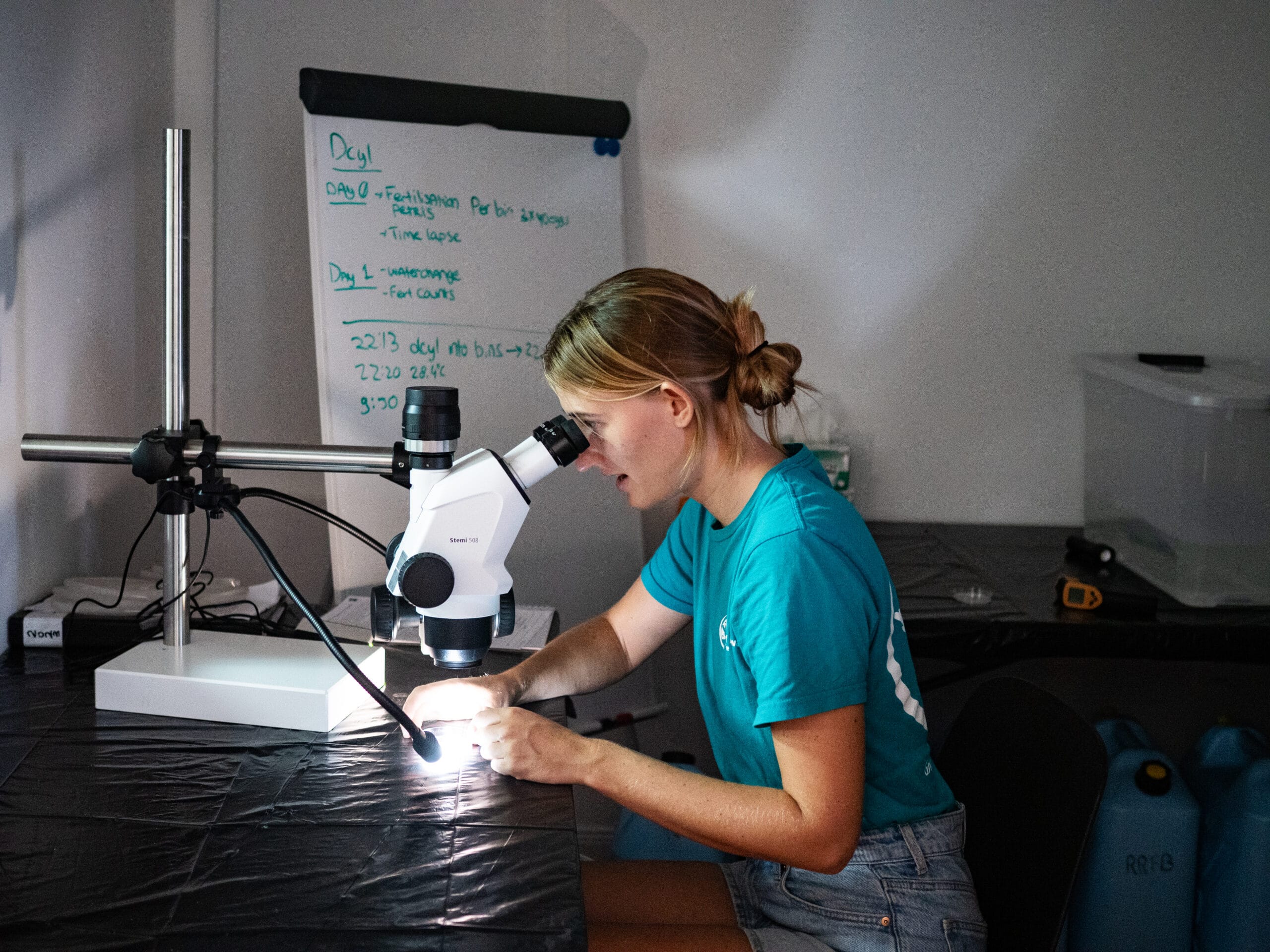
Growing research has shown that coral breeding and fragmentation, techniques that underpin RRFB’s work, can give corals a better chance to survive changing ocean conditions. In two recent landmark studies, scientists found that heat-tolerance can be passed from parent corals to their offspring, and that young, lab-reared corals show greater resilience to bleaching than wild colonies.
By applying these research-backed techniques at scale, RRFB produces tens of thousands of young corals each year. In addition to pillar coral, their team produced 56,000 staghorn coral larvae last week and raised over 26,000 young grooved brain coral earlier this year.
This work is made possible through the support of Openbaar Lichaam Bonaire (OLB) and the Dutch Ministry of Agriculture, Fisheries, Food Quality, and Nature (LVVN) via the Nos ta Biba di Naturalesa project. It’s also part of a collaboration with SECORE International and FUNDEMAR aimed at testing new coral breeding technologies across the Caribbean.