Now, new research published by scientists at UC San Diego’s Scripps Institution of Oceanography, UC Riverside, San Diego State University (SDSU), and the National Science Foundation’s (NSF) National Center for Atmospheric Research (NCAR) reveals that the Tijuana River is polluted and releasing large amounts of hydrogen sulfide—a toxic gas commonly known as “sewer gas” because of its association with sewage and rotten egg odor.
Scientists measured peak hydrogen sulfide concentrations that were about 4,500 times higher than typical for an urban area. The study also identifies hundreds of other gases released into the air by the polluted Tijuana River and its outlet to the ocean, which may contribute to poor air quality throughout the region.
The study, in the journal Science and supported by the NSF, the National Oceanic and Atmospheric Administration (NOAA), and the Balvi Philanthropic Foundation, links poor river water quality with declining air quality in the area.
“Our results validate the voices of the community who have been saying for many years that air quality near the Tijuana River is a problem,” said Benjamin Rico, a doctoral candidate in atmospheric and analytical chemistry at UC San Diego and lead author of the study.
Symptoms reported by residents of South Bay communities are consistent with those associated with hydrogen sulfide exposure. The health effects of long-term hydrogen sulfide exposure are not fully understood, but the California Office of Environmental Health Hazard Assessment sets a chronic exposure limit of 7.3 parts per billion (ppb). On the other hand, the one-hour standard set by the California Air Resources Board is 30 ppb, a level based on odor, not health.
“This level is too high for chronic exposures, as 30 parts per billion is already associated with headaches, nausea, respiratory symptoms, and other adverse health effects, particularly among vulnerable populations,” said Paula Stigler Granados, an environmental health scientist at SDSU’s School of Public Health. “Framing this solely as an odor issue severely underestimates the true public health risks from repeated exposure to toxic gases at concentrations of this level.”
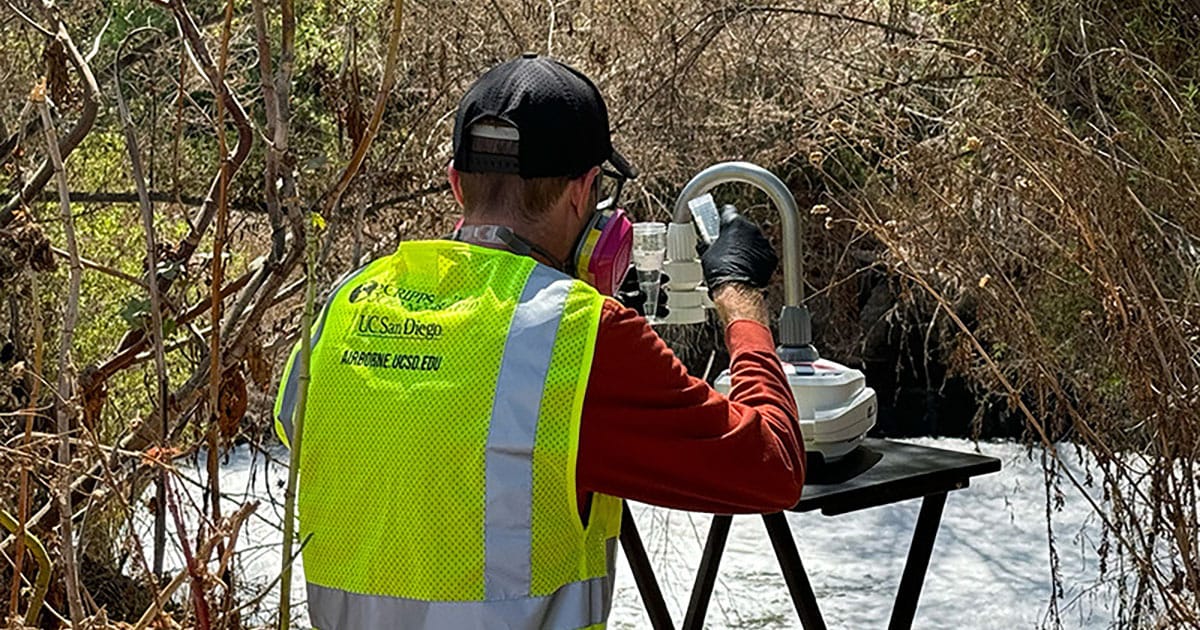
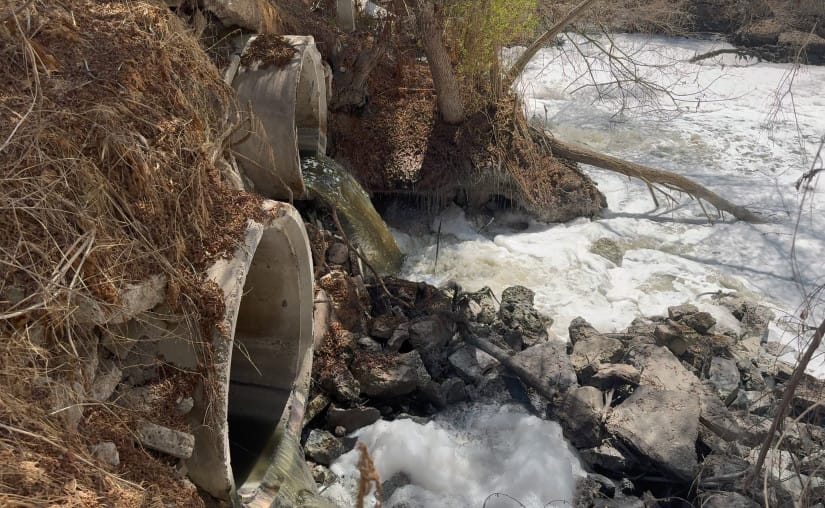
To understand whether Tijuana River pollution was affecting air quality, the study authors installed carefully calibrated air quality monitoring instruments in the community of Nestor, in San Diego’s South Bay, beginning in September 2024. The researchers selected the specific location within Nestor after consulting with community members, who identified a frothy, turbulent stretch of the river near Saturn Boulevard as a source of particularly strong odors.
The team measured concentrations of various air pollutants for about three weeks and combined those measurements with river flow data and atmospheric models to track how far the air pollutants spread into nearby communities.
During the study, air quality monitoring instruments recorded hydrogen sulfide concentrations reaching peaks of 4,500 ppb for at least one minute and averaging 2,100 ppb for an hour; the latter nearly 70 times the one-hour standard set by the California Air Resources Board. The highest hydrogen sulfide levels occurred at night, when winds typically decrease.
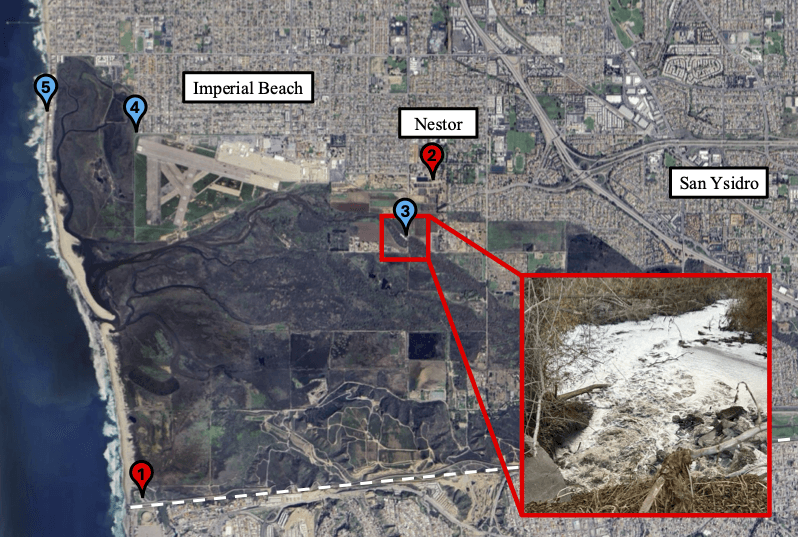
From September 1-10, 2024, residents near air quality monitoring sites in Nestor—next to Berry Elementary School—were exposed to hydrogen sulfide levels that exceeded the one-hour (average) air quality standard set by the California Air Resources Board for between five and 14 hours each day. In addition to hydrogen sulfide, the equipment detected hundreds of other gases, some of which had established exposure limits due to their health effects. Further monitoring is needed to track the concentrations of these other gases and determine if they exceeded the exposure limits.
“We show here that while hydrogen sulfide is an excellent indicator of wastewater impacting area residents, there are multiple sources of waste entering the Tijuana River and a multitude of other hazardous gases that area residents could be inhaling,” said Kelley Barsanti, an atmospheric chemist at the National Science Foundation’s (NSF) NCAR, who led the analysis of the additional gases detected at the site.
On September 10, 2024, the Tijuana River’s flow rate dropped dramatically—from between 40 and 80 million gallons per day to less than 5 million gallons per day—reducing concentrations of hydrogen sulfide and many other gases for the remainder of the study period. Although authorities have not announced official changes in river management, the study authors inferred that “on September 10, a pumping station in Mexico was activated.” The activation of this station diverted the wastewater flow, keeping it on the Mexican side of the border.
It’s worth noting that the rapid decline in hydrogen sulfide concentrations following this diversion helped confirm that the river was the source of the air pollution. Atmospheric modeling that showed the extent of hydrogen sulfide in nearby communities also revealed that the measured pollution patterns could only be explained by considering the river as the source of the emissions and taking its flows into account. Finally, the number of odor complaints emanating from South Bay communities spiked on the days when the highest hydrogen sulfide concentrations were measured. These multiple lines of evidence strongly establish the polluted river as the source of the toxic gases and foul odors that residents had reported for years.
“This study reveals a direct route of exposure to airborne pollutants—from polluted rivers to the air we breathe,” said Kimberly Prather, the study’s principal investigator and an atmospheric chemist at Scripps Institution of Oceanography and the UC San Diego Department of Chemistry. “For the first time, we have shown that poor water quality can profoundly degrade air quality, exposing entire communities to toxic gases and other pollutants. These findings validate the experiences of residents who have endured this crisis for decades, and also underscore the urgent need for action to protect public health in San Diego and in vulnerable communities around the world.”
As a temporary but immediate solution, researchers recommend continuing, expanding, and intensifying the outreach of a San Diego County program that offers free air purifiers to help residents breathe cleaner air at night while they sleep. Beyond air purifiers, the San Diego Air Pollution Control District (SDAPCD) has created an online air quality dashboard that displays current hydrogen sulfide levels to help residents limit their exposure when concentrations are high. The SDAPCD also sends alerts to all residents when hydrogen sulfide levels exceed 30 ppb. In addition, SDSU researchers are continuing their community survey to measure the health impacts associated with this issue.
In the long term, the authors hope that quantifying a problem that residents of San Diego’s South Bay have been highlighting for decades will help motivate government officials to address the issue of contaminated water, which is the primary cause of poor air quality. Such a solution would involve modernizing water treatment infrastructure on both sides of the border and updating policies governing river management.
The study also considers updating global air quality models to account for emissions from polluted water bodies, as more than half of the world’s population lives near rivers, lakes, and oceans that could face similar problems.
Tijuana River’s Toxic Water Pollutes the Air. (Video credit: Scripps Oceanography)
“Our results show how water and air mix and exchange with each other,” Prather noted. “Air, water, and soil can influence each other, and people can be exposed through different pathways. We need to take this into account if we’re going to protect people from rising pollution levels.”
Prather said federal funding was critical in linking basic science with real-world community impacts. Prather’s aerosol research has been supported by the NSF through the Center for Aerosol Impacts on Chemistry of the Environment. Advances in laboratory-based aerosol research made this community-based research project possible. UC San Diego received federal NOAA Community Projects funding, managed by US Rep. Scott Peters (CA-50), to further investigate the conditions that lead to the aerosolization of pollutants and pathogens, and how far they can travel, in order to understand their potential public health impacts. “For decades, our region has endured the dangerous public health effects of raw sewage and industrial waste in the Tijuana River,” said US Rep. Scott Peters (CA-50). “This peer-reviewed study clearly and convincingly links water pollution to poorer air quality. I secured federal funding for this study so that Scripps Institution of Oceanography and its partners can better understand how these toxic pollutants affect the air we breathe. I will continue to work for binational infrastructure solutions that strengthen public health and coastal resilience.”
In addition to Rico and Prather of UC San Diego, the study was co-authored by Barsanti of NSF’s NCAR; William Porter and Karolina Cysneiros de Carvalho of UC Riverside; and Stigler-Granados of SDSU.