Acoustic Tracking Study Reveals Fish Behavior at Flower Garden Banks Sanctuary

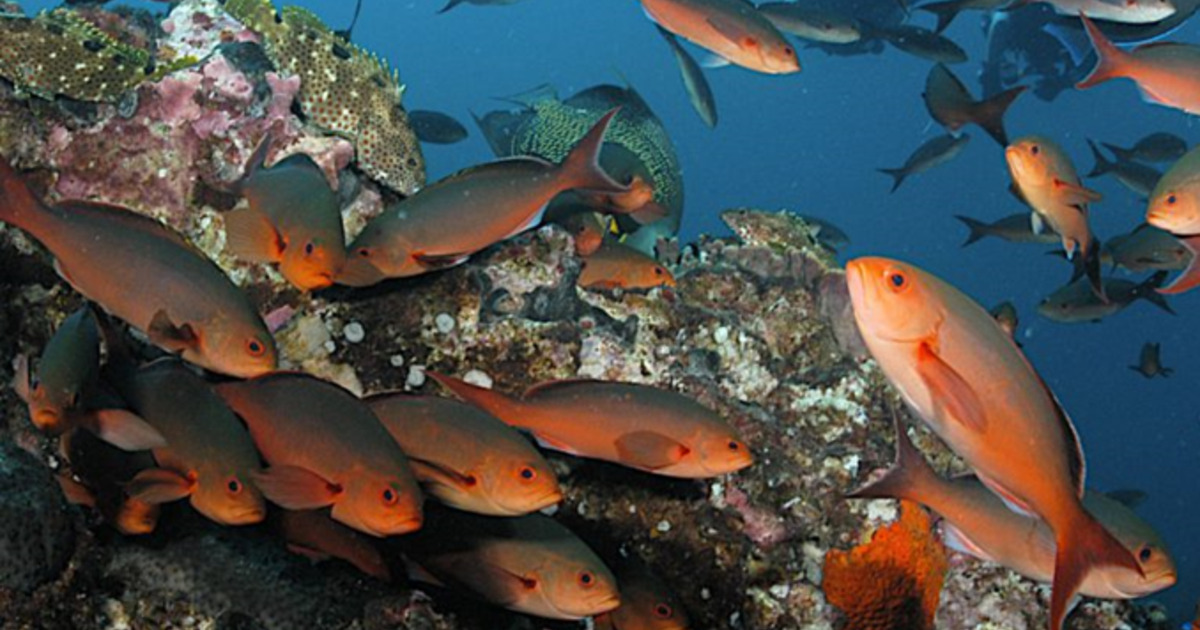
The Atlantic creolefish is one of the species tracked for the project.
The Atlantic creolefish is one of the species tracked for the project. (Image credit: G.P. Schmahl, NOAA)
Scientists are working to understand how fish use the banks and reefs of the Flower Garden Banks National Marine Sanctuary, located 80 to 125 miles off the coasts of Texas and Louisiana. Current information is sparse, compromising efforts to effectively protect habitats that many fish, including commercially valuable species, depend on for their survival.

The researchers developed a video that describes how they are using acoustic technology to track fish movements and study fish behavior. The video also shares some of the team’s findings to date. For example, Red Lionfish, an invasive species; Gray Snapper; and Graysby use the same habitat but at different times of the day, which may help decrease competition for important resources.


Fish Movements on the Flower Garden Banks. (Video credit: MSU Marine Fisheries Ecology)

Understanding how and when fish use different habitats is critical to informing management decisions. Project findings will help sanctuary managers design and implement measures that help protect commercial and recreational fisheries in the region.

The project is funded by the National Centers for Coastal Ocean Science (NCCOS) and led by Texas A&M University. The video was produced by collaborators at Mississippi State University’s Marine Fish Ecology group.
latest edition
By translating complex ocean data into actionable strategies, the applied marine science community plays a pivotal role in ensuring the long-term resilience of coastal environments while bolstering the global Blue Economy.

got marine science news?

Send us your latest corporate news, blogs, or press releases

Search