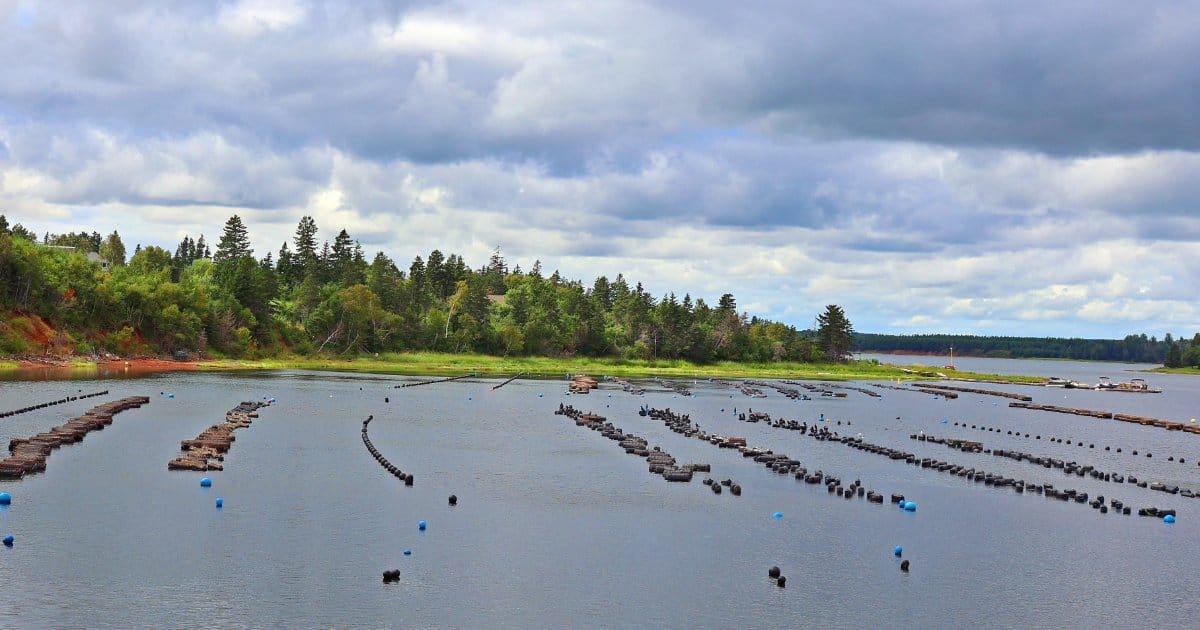
The Honorable Joanne Thompson, Minister of Fisheries, announced the launch of the Oyster License Retirement Grant Program. This time-limited, voluntary program is designed to ease pressure on severely depleted wild oyster stocks by supporting an orderly transition for affected harvesters in Prince Edward Island, Nova Scotia, and New Brunswick who are highly dependent on oyster harvesting as a source of fishing income. The program addresses pressures specific to the wild fishery, while other federal supports continue to assist commercial oyster growers.
Eligible license holders who apply for the Program receive $40,000 in exchange for the permanent retirement of their wild oyster license (s) and/or permit(s). Active wild oyster license holders, including holders of spring permits, fall licenses, and/or unspecified mollusk permits, can apply. If approved, a harvester’s wild oyster fishing access (through license (s) and/or permit) would be permanently retired, and they would not obtain oyster fishing access for 10 years. This is in keeping with the program’s goal of stabilizing the wild oyster population for long-term recovery.
Program applications will open in September, and further information will be provided in the coming weeks.
“Oysters have been harvested in Atlantic Canada for generations, and the diseases moving through these populations are a serious threat to that. I know this is a hard moment for the people who make their living on the water. For harvesters who decide the time is right to permanently retire a license or permit, this program is there to support that decision. It also takes pressure off the wild population while our scientists keep working on the diseases. These are small operations in small communities, and they need a path forward,” said the Honorable Joanne Thompson, Minister of Fisheries.
“In PEI, we understand wild oysters are a core part of our communities and the livelihoods of families who have depended on these waters for generations. The impacts of MSX and Dermo have been devastating, and this voluntary buy-back program will provide support to affected harvesters as they consider their next steps, alongside broader investments that are supporting the industry as it adapts and rebuilds. By continuing to work together, we can help lay the foundation for a strong and sustainable future for the PEI oyster industry,” said the Honorable Heath MacDonald, Minister of Agriculture and Agri-Food.
“Oyster fishing has supported families here for generations. Disease has hit our harvesters hard, and this program is about allowing those wild oyster fishers who wish to exit from the fishery the means to do so, while ensuring a stable future for those wild oyster fishers who depend on this fishery for their livelihoods,” said Bobby Morrissey, Member of Parliament for Egmont.
Quick Facts
- Prince Edward Island produces over 90 percent of all wild oysters in Atlantic Canada, with some harvesting taking place in Nova Scotia and New Brunswick. Wild oyster harvesting accounts for between 25 and 30 percent of PEI’s oyster sector, with landed value estimated at $6.8 million in 2024.
- MSX and Dermo (also known as Perkinsosis) pose no risks to human health or food safety, but can cause decreased growth rates and increased oyster mortality. They do not affect other bivalves in Atlantic Canada, including mussels, scallops, or clams.
- MSX was first confirmed in PEI in July 2024, and Dermo was first confirmed in PEI in July 2025.
- To help manage the spread of disease, Fisheries and Oceans Canada regulates movements of oysters through the Introductions and Transfers licensing program, in collaboration with provincial authorities and the Canadian Food Inspection Agency.
- In order to be eligible for the Oyster License Retirement Grant Program, license holders must demonstrate at least a 50 percent dependency on wild oyster landings for their fishing revenue and report at least $3,600 in verifiable oyster landed value. This is to ensure those most affected by the decline in wild oysters can access support.
- Last year, Fisheries and Oceans Canada announced approximately $1 million in funding to advance MSX science research and co-chaired the 2024 MSX Science Summit with the Province of Prince Edward Island to identify scientific knowledge gaps and priorities for further research.
- Access to the quahog fishery will not be impacted by the license retirement program.