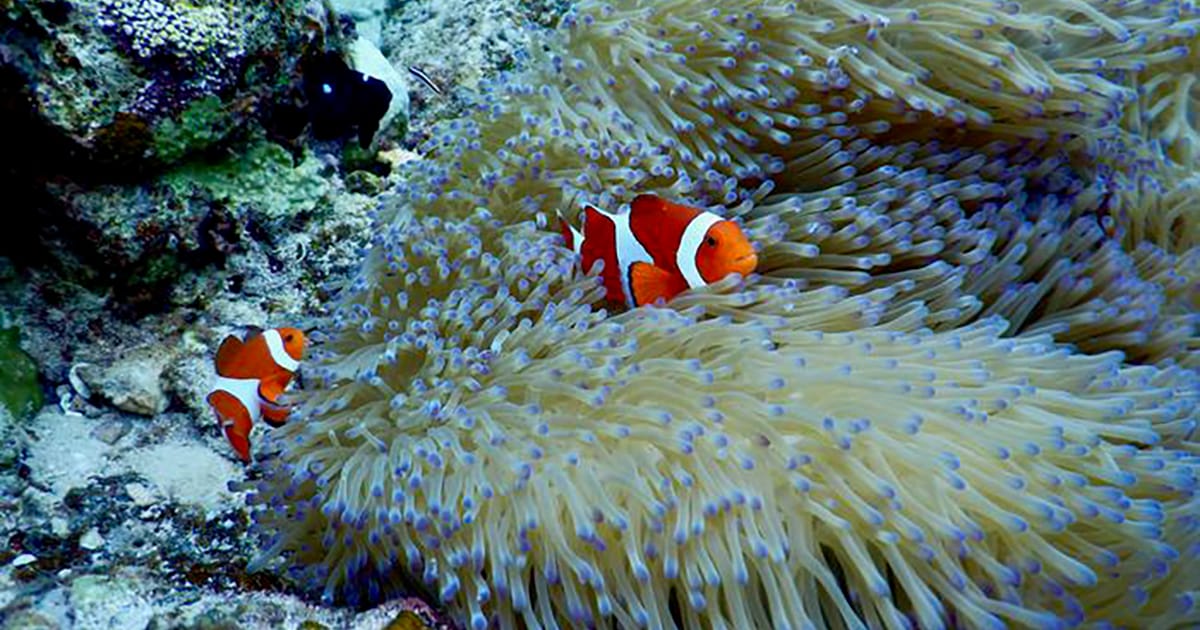
A popular symbol of coral reefs, clownfish (Amphiprionini) have long been studied for their mutualistic relationship with sea anemones. This association provides them with protection from predators thanks to their host’s stinging tentacles. “Until now, it was thought that the adaptive radiation (or ecological diversification) of these fish was mainly dictated by the fact that they live in association with certain species of anemones,” explained Manon Mercader, a postdoctoral marine conservation ecologist at the Okinawa Institute of Science and Technology (OIST, Japan). But the study we conducted shows that the reality is more nuanced.”
By studying fourteen species of clownfish, the scientists identified the existence of “eco-morphotypes”—distinct ecological and morphological profiles—independent of host specialization. For example, some large fish with well-developed muscles expend less energy for swimming and regularly swim away from their anemones. Conversely, smaller species with a slenderer morphology and a more energy-intensive metabolism remain constantly close to their host.
This result overturns the classic model that contrasts “specialists”, clownfish that live in only one or two anemones, with “generalists”, those that can associate with up to ten anemones. “Our analyzes show that swimming ability and exploratory behavior are not related to the number of anemones a species can occupy,” summarized Bruno Frédérich, co-author of the study and researcher at the Laboratory of Evolutionary Ecology at the University of Liège. “Diversification has also occurred along another axis: dependence on the microhabitat, i.e., on the anemone itself.”
The team used a variety of tools to reach these conclusions: observation of behavior in the wild, swimming speed tests, oxygen consumption measurements, hydrodynamic modelling using 3D micro-scans, and muscle analysis using microtomography. “Thanks to this integrative approach, two main morphotypes can be distinguished: the ‘adventurous’, which are good swimmers capable of covering long distances at low energy cost; and the ‘sedentary’, which need more energy to swim and stay confined to the anemone,” continued Manon Mercader. “A third intermediate type, represented in particular by the species Amphiprion frenatus, may also exist.”
By reconstructing the evolutionary tree of the species studied, the researchers show that these morphotypes appeared independently on several occasions, evidence of evolutionary convergence. This result makes clownfish a textbook case for illustrating adaptive radiation, alongside Darwin’s finches and African cichlids.
“This discovery also has ecological implications,” explained Bruno Frédérich. “The ability or inability to move away from the anemone could influence diet, social dynamics, or interactions with the host. It could also play a role in cohabitation between species, a common phenomenon among clownfish.”
For the research team, this work is part of a broader effort to understand the mechanisms that create and maintain biodiversity. In 2018, the same laboratory published a study on the evolution of color patterns in clownfish. With this new publication, the Amphiprion genus is establishing itself as a model of choice for studying the links between form, function, and ecology.