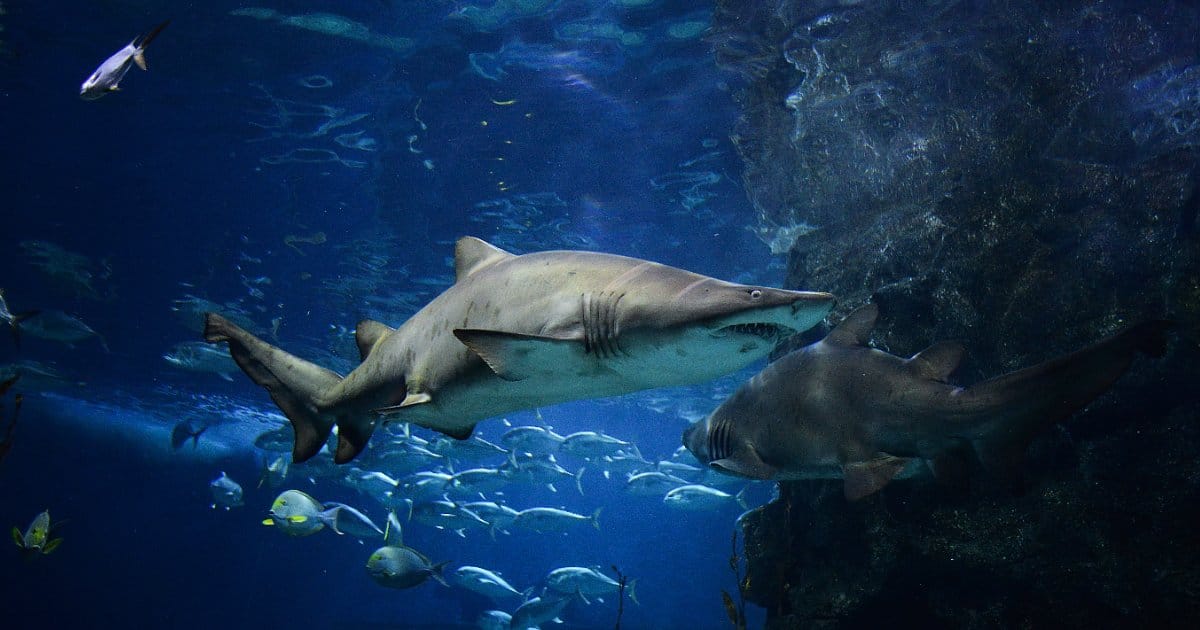
The Northwest Atlantic population—including sharks that congregate in Delaware Bay—is considered healthier than populations elsewhere due to decades of US fisheries protections. However, researchers note that no formal stock assessment has been completed for this population, meaning scientists do not know whether current removals are sustainable.
Historically, US aquariums collected only one or two sharks every few years. Since 2018, however, private collection companies have dramatically increased harvests under scientific collection permits intended for public display. Between 2018 and 2024, 80 sand tiger sharks were collected from Delaware waters—representing roughly 27% of all sand tiger sharks currently displayed in aquariums worldwide.
Nearly 90% of sharks collected from Delaware Bay in recent years were exported overseas rather than remaining in US aquariums. From 2021 to 2024, the largest destinations included China, the United Arab Emirates, South Korea, and Thailand, raising questions about allowing foreign institutions to benefit from sharks protected through decades of US conservation efforts.
Researchers conclude that without better scientific data and stronger oversight, the expanding international trade in wild sand tiger sharks risks conflicting with the very conservation goals that have helped protect one of the species’ last relatively stable populations.