Marine plastic waste poses direct threats such as ingestion and entanglement but can also transport attached organisms to distant locations. Plastic can remain at the sea surface longer than natural drifting materials such as wood or seaweed. Consequently, marine plastics represent a growing pathway for dispersing organisms to new regions.
This is the first study to combine information from the organisms attached, chemical records of past environmental conditions preserved in shells, and ocean current simulations to trace a single small piece of ocean plastic.
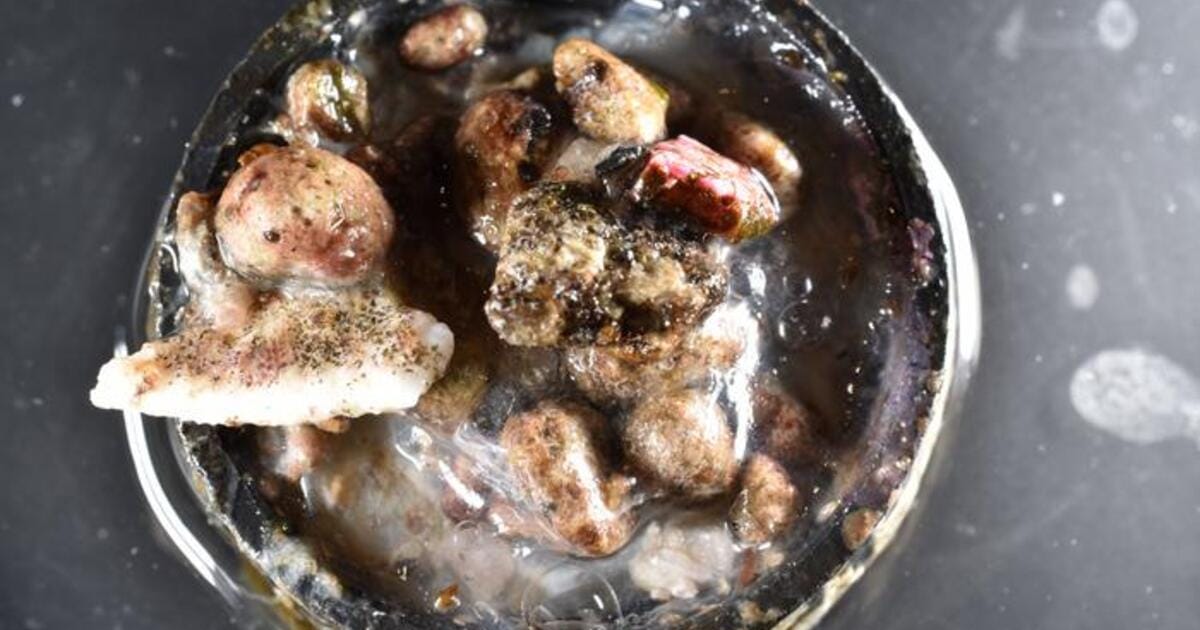
Bottle Cap Habitat Engineered by a Worm
Nine taxonomic groups and 307 individuals were found, including tiny tube-building worms, bryozoans (tiny colonial filter-feeders), gooseneck barnacles, foraminifera, flatworms, and larger polychaete worm species. About three-quarters of the individuals were tiny worms that build coiled calcareous tubes.
“The most striking colonist was a polychaete worm, Eunice bipapillata, which had built a nest that transformed the cap into a complex three-dimensional habitat. Inside, we found organisms that normally live in southern tropical waters,” said Naoto Jimi, lead author and lecturer at Nagoya University’s Sugashima Marine Biological Laboratory. “Geographic range extensions of some species may be occurring under the radar, so if this waste can be properly disposed, we may reduce the number of non-native species carried into new habitats.”
Evidence to Trace the Origins and Drift Route
The researchers investigated where the cap originated, the water temperatures it had passed through, and whether those temperatures matched the sea surface temperatures along drift paths predicted by ocean current simulations. Three sources of evidence were used:
1. Biofouling community: The coexistence of coastal seafloor and reef species as well as typical open-ocean foulers (organisms that attach to floating objects in the ocean) suggested that the cap had passed through both coastal and open-ocean environments.
2. Foraminiferal stable isotopes: Foraminifera, single-celled organisms that build intricate shells, record ambient water temperature as they grow their shells. Stable isotope analysis measures the ratios of isotopes of an element to obtain clues about the environment an organism has experienced. Analysis of different parts of the shells suggested that the specimens had experienced warmer waters before reaching the collection site, where the water temperature was about 22 degrees Celsius.
3. Ocean current modeling: Using surface drift current simulations, virtual particles were released into ocean current models to reproduce possible drift paths of debris. They indicated that the cap likely drifted from the northern Philippines on the Kuroshio system and reached the collection area in at least 70 days and up to several months.
Small Plastics, Big Consequences
This study shows that when ecosystem engineers such as tube-building worms colonize small plastic fragments, these plastics may serve as shelters and transport vehicles that allow multiple organisms to survive together. This may result in entire biological communities reaching new regions.
“The marine plastic problem should therefore be considered not only from the perspectives of aesthetic damage, ingestion, and entanglement, but also from those of biogeography and invasive species risk,” said Jimi. “Multi-method reconstructions of the drift history of marine debris may support future estimation and control of invasive species pathways originating from ocean waste.”
The researchers conclude that future research should quantify how frequently small plastics host organisms found at the bottom of marine habitats, identify which taxa are most likely to survive during drift, and evaluate ecological outcomes if debris-borne organisms arrive and establish in new environments.