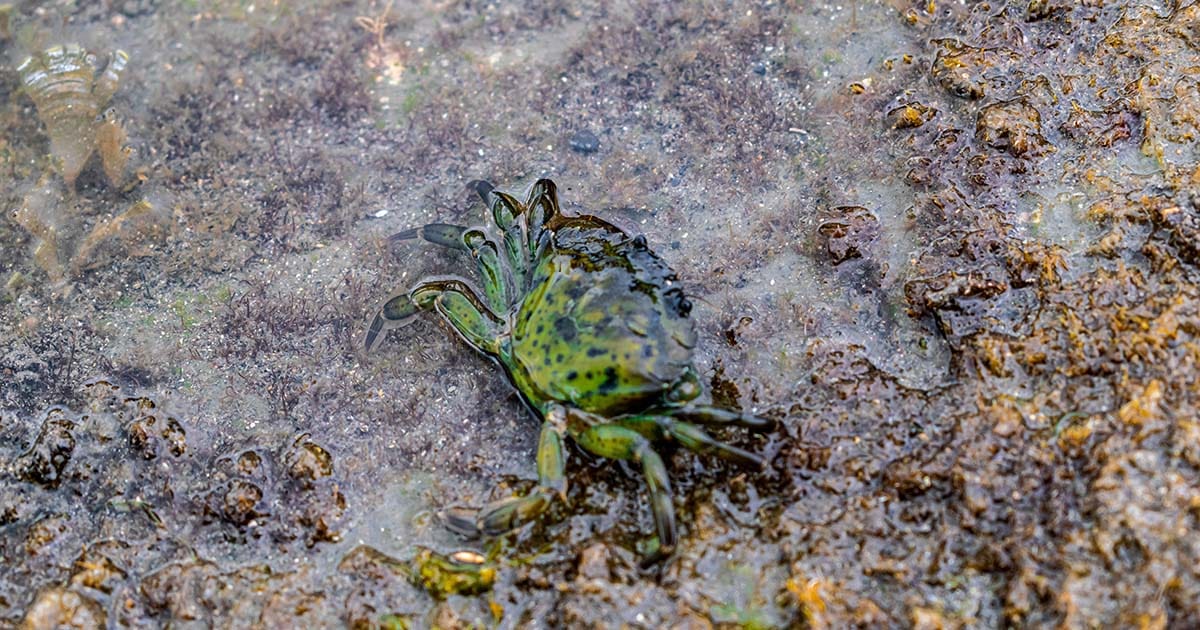
As part of that collaboration, the Minister of Fisheries, the Honorable Joanne Thompson, announced the launch of a one-year commercial fishery pilot in Southwest New Brunswick to support the control of invasive European Green Crab. The fishery is anticipated to open in Spring 2026.
This commercial fishery pilot for European Green Crab will mitigate the negative impacts the species has on native ecosystems and shellfish fisheries and will have clear license conditions to minimize the risk of spread. The fishery will also provide economic opportunities for Indigenous communities and local harvesters. Harvested European Green Crab may have a variety of uses, including as bait in the lobster fishery.
Prevention is the most efficient and cost-effective way of managing aquatic invasive species. The potential costs and benefits of alternative management measures are carefully assessed and only considered for established populations of invasive species where eradication is no longer possible. In line with this approach, the commercial fishery pilot for European Green Crab reflects a balanced consideration of ecological, social, and economic factors. In this case, the harvesting of this established species can provide economic opportunities through commercial fisheries, use as bait, incorporation into bioplastics, and soil enrichment products.
“European Green Crab is a serious threat to local ecosystems and the shellfish fisheries that so many people rely on in Southwest New Brunswick. By opening this commercial fishery pilot, we are taking a practical step to reduce its presence and impact, while creating new economic opportunities for Indigenous communities and local harvesters. This is also welcome news for lobster harvesters, who will have access to an additional source of bait from harvested European Green Crab,” said the Honorable Joanne Thompson, Minister of Fisheries.
Quick Facts
- Harvesters in Southwest New Brunswick who, in 2025, held and actively fished a commercial license for another species, were designated under a communal license, or were verified by DFO as having historically harvested dulse, and are eligible for the required license to fish commercially for European Green Crab.
- Those who would like to apply for a license are invited to email: [email protected].
- Aquatic invasive species are freshwater or marine plants, animals, algae, and microorganisms introduced outside their natural or past distribution. They have significant negative impacts on the environment, economy, society, and human health.
- Important measures to prevent the spread of European Green Crab are outlined in the conditions of license for this fishery to help protect our waters from further impacts of this aquatic invasive species.