Budget documents, released today, announced an expansion to the previous program, with $25.1 million over the next four years, thus expanding the Initiative to other coastal areas around Western Australia, the Torres Strait, and the Arafura and Timor seas.
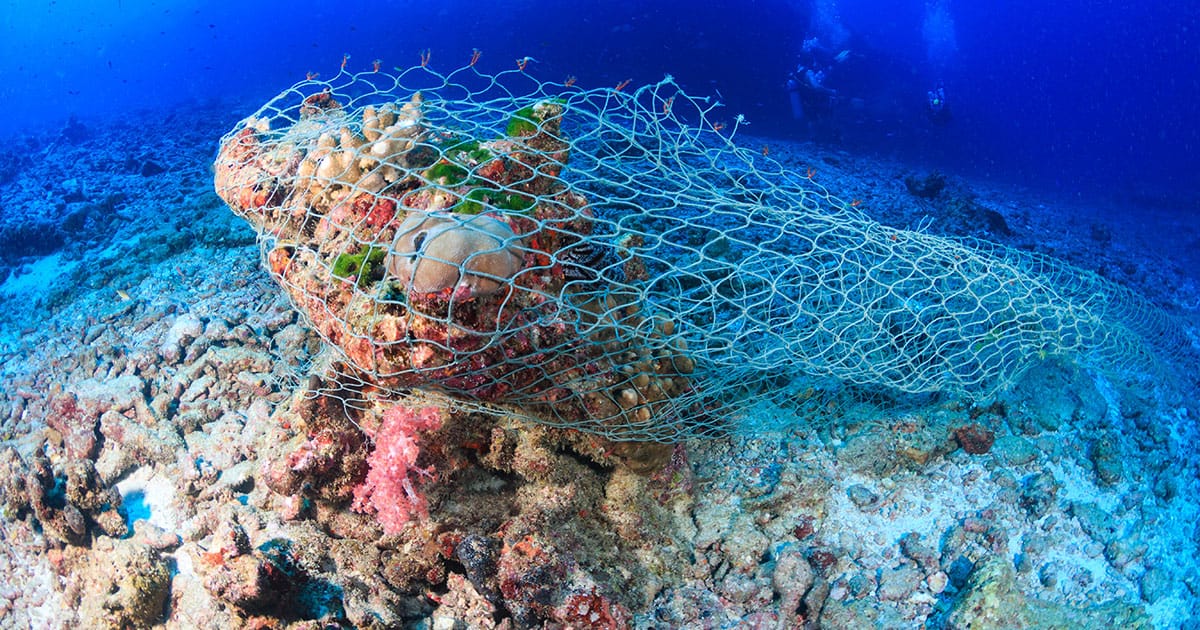
Managing Director Anissa Lawrence said the announcement reflects an important recognition of the essential role Rangers play in protecting Sea Country, safeguarding marine life, and maintaining Australia’s first line of defense against ghost nets—abandoned, lost, or discarded fishing gear.
“For more than 20 years, our GhostNets Australia program has supported Indigenous-led solutions to the ghost nets crisis,” Ms. Lawrence said.
“This continued funding ensures Rangers can remain on Country, doing the highly skilled, labor-intensive work of locating, removing and tracing the deadly fishing gear that continues to wash ashore.”
To date, through the Australian Government Ghost Nets Initiative, 24 Ranger groups and nine coordinators have been supported to patrol thousands of kilometers of remote coastline, removing more than 800 ghost nets and over 140,000 kg of marine debris since 2021. These efforts have also helped to safeguard marine life and Sea Country, while supporting local employment and cultural connections. Today’s announcement offers the opportunity to expand these efforts into Western Australia and the Torres Strait.
Dhimurru Aboriginal Corporation, which delivers the Ranger program on the Yolŋu country of northeast Arnhem Land, welcomed the announcement. Executive Officer Stephina Salee said, “This funding gives our Rangers the certainty and support they need to continue caring for Sea Country and responding to the continuous threat of ghost nets and marine debris along our coastline.
“Ghost nets are dangerous for turtles, dugongs, and other marine species that are central to our culture,” she continued.
“This funding recognizes the scale of the problem and the vital role Indigenous Rangers play in protecting marine environment. With a four-year funding commitment, we can keep creating jobs, building skills, and looking after Country for future generations.”
The expanded commitment to address ghost nets across the Arafura and Timor Seas reflects a growing recognition that the issue must be addressed and move beyond ongoing cleanups, and include efforts to “turn off the tap” at the source.
Ms. Lawrence said the regional expansion supports a system-wide approach that OceanEarth Foundation has worked closely with government and partners to progress over recent years, demonstrating how long-term change can be achieved when prevention and clean-up efforts are designed to operate together. “If we want to move beyond perpetual clean-ups and towards meaningful transformation, we need approaches that operate at system scale, alongside ongoing investment in frontline action. This commitment ensures that source-based solutions and on-ground action can continue in parallel, as they must.”
“The continuation and expansion of funding also preserves the technological advancements and capability built under the Initiative, including drone monitoring, the Ranger App, and world-leading debris tracking systems that help trace ghost nets back to their origins and inform international prevention efforts,” she said.
Australian Marine Conservation Society Plastics Campaign Manager, Cip Hamilton, welcomed the expanded commitment, saying that the funding boost and broader coastal coverage were a vital step forward.
“This $25.1 million investment over four years is a strong and welcome commitment that will help detect, remove, and dispose of deadly ghost nets and other marine debris across a wider stretch of northern Australia.
“The expansion of the Initiative into more coastal areas is critical to protect marine life and support Indigenous Rangers who are on the frontline of tackling plastic pollution.
“However, unnecessary delays over the past six months left Rangers and supporting organizations in limbo, unsure whether this critical work could continue. That uncertainty should never be repeated.
“Until global solutions are achieved, including a strong and binding Global Plastics Treaty, ongoing government support is essential to stop ghost nets and other plastic pollution from continuing to threaten marine species and wash up on these once-pristine coastlines.”
Sea Shepherd Australia also acknowledged the importance of continued support. Remote Marine Debris Campaigner Grahame Lloyd emphasized that the relentless arrival of ghost nets and debris from domestic and international sources means the work of Rangers cannot pause without consequences for marine wildlife. Their presence in the Country provides a rapid response capability in areas where no other teams operate.
“Today’s announcement helps ensure that decades of local knowledge, capability, and community-led innovation are not lost,” Ms. Lawrence continued.
“Rangers are not just cleaning up our coastline—they’re contributing data that supports global solutions, strengthening remote livelihoods, and protecting one of the world’s most ecologically important marine regions.”
All four organizations look forward to continuing their partnership with the Indigenous Ranger groups, each other, and the Australian Government to secure long-term solutions to ghost gear and marine debris.