
This grant will support the development and advancement of ropeless fishing technology, which is crucial to promoting sustainable fishing practices while reducing marine life entanglements. Teledyne Benthos, EdgeTech, Inc., and the Sea Mammal Education Learning Technology Society (SMELTS) have been at the forefront of developing and testing ropeless fishing gear since 2018. The funded project is focused on modifying commercial equipment to enable these organizations to collaborate on a common user interface and associated acoustic transducer for vessel or portable use. The focus will be the interoperability between transponders and acoustic modems developed by Teledyne Benthos and EdgeTech. Gear marking will also be improved through directional measurements, enabling a common interface with Teledyne Raymarine chart plotters and enhancing usability, making ropeless fishing gear more accessible to end users.
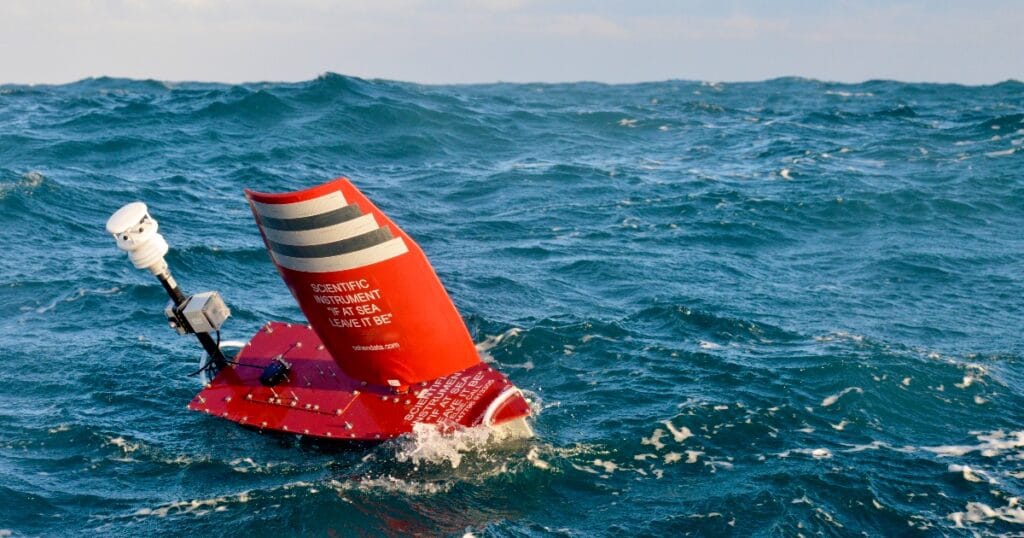
Richard Riles, SMELTS with a lobster raft. (Image credit: Teledyne Benthos)
Teledyne Benthos acoustic modems are the backbone of the ropeless fishing system. They facilitate reliable subsea communication that provides the information needed to deploy and retrieve gear without the traditional ropes and lines that can entangle marine life, including North Atlantic right whales and other cetaceans.
Developing a universal deck box used with an associated transponder will allow for a robust method for gear marking and retrieval. The transponders emit acoustic signals that are then detected by the vessel’s deck box, enabling precise location marking and ensuring a seamless operation between Teledyne Benthos and other devices. The integration of a chart plotter provides a user-friendly interface that is designed to meet practical users’ needs in real-world conditions, making it efficient for everyday use.
Teledyne Benthos will continue to work with deck box and transducer developers to test ropeless fishing gear by addressing interoperability requirements and improving gear marking technology to provide a viable and sustainable alternative for the fishing industry.
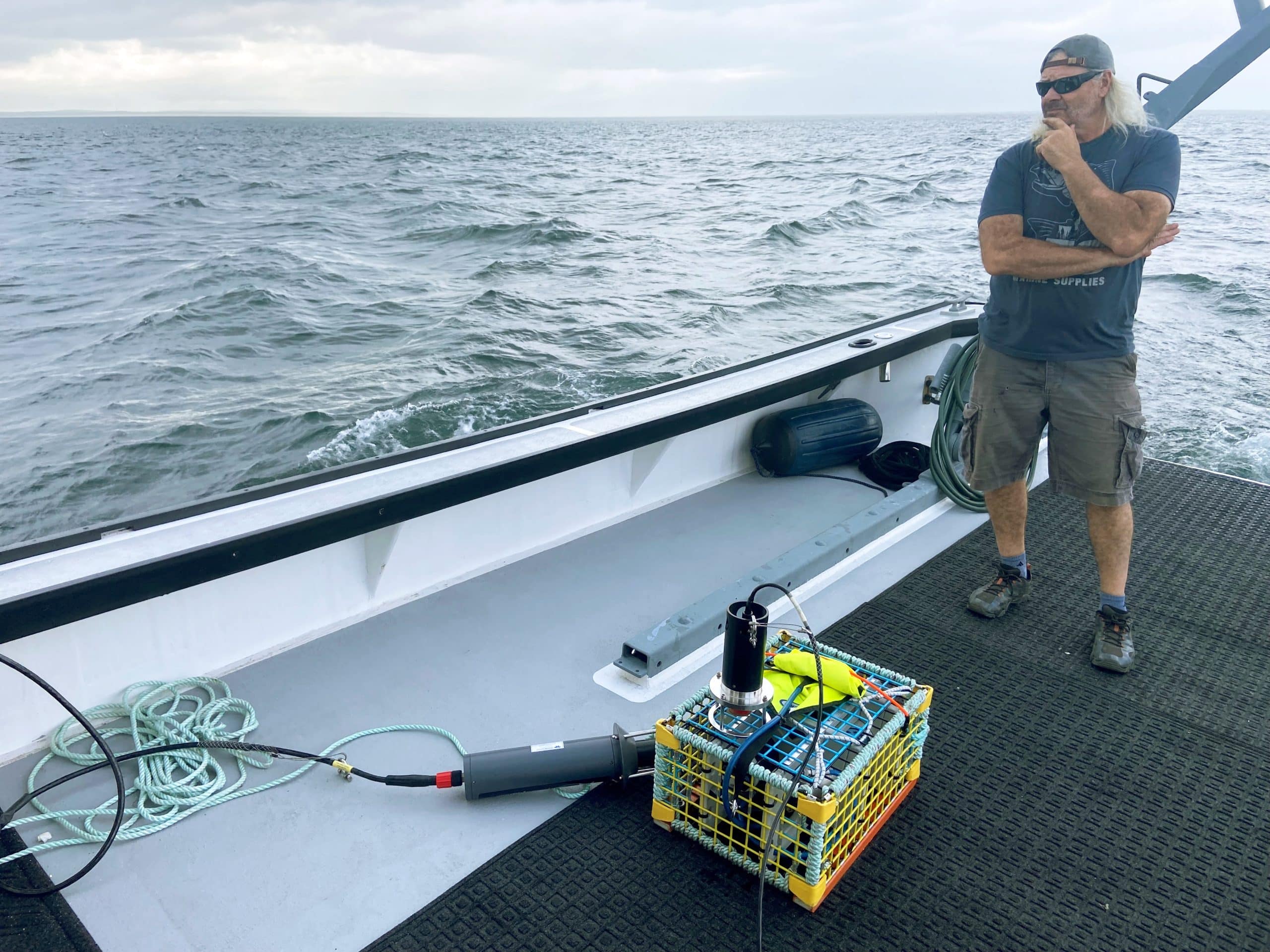
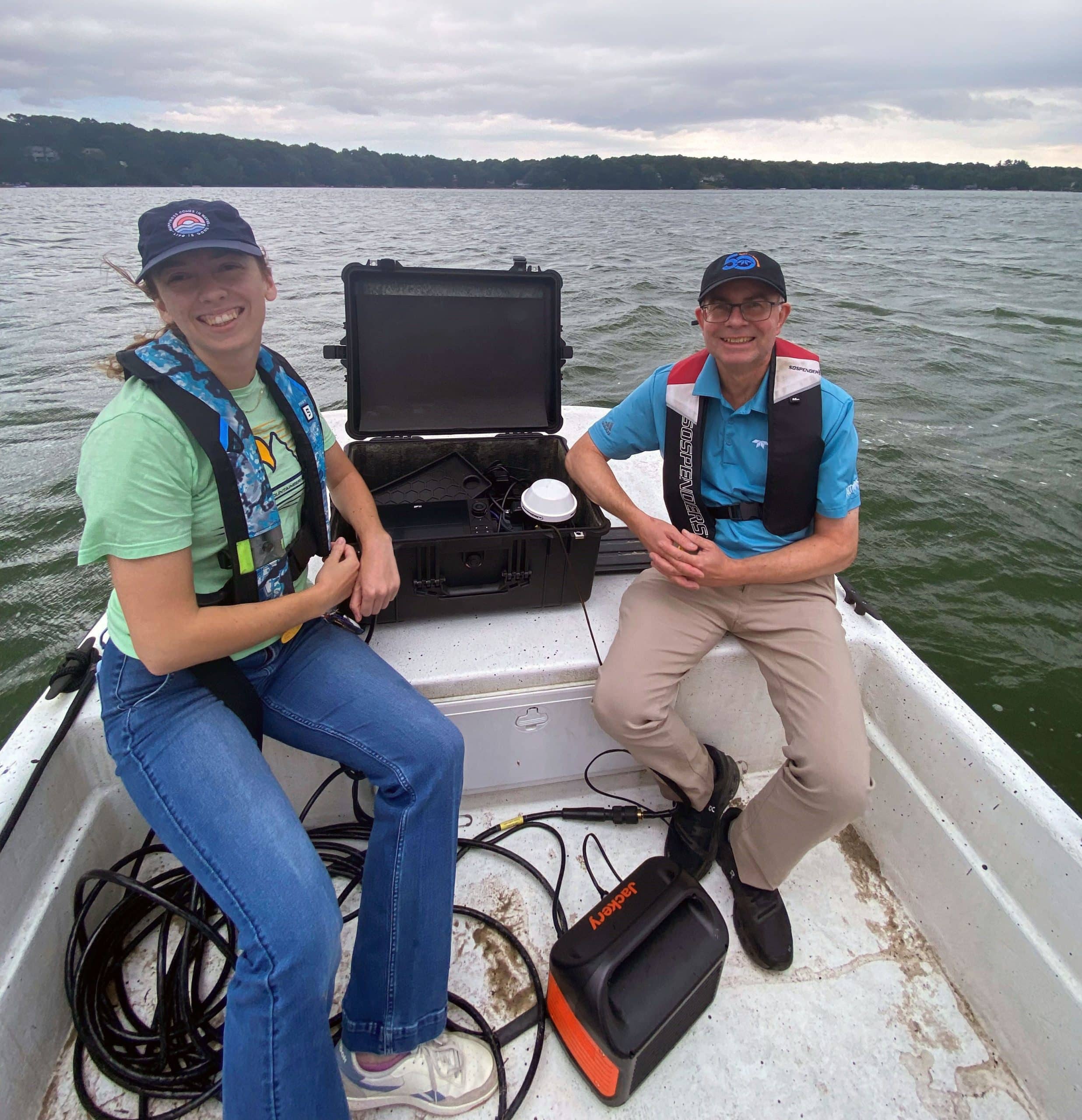
Isabel Husted, Teledyne Intern, Bob Melvin, Chief Engineer. (Image credit: Teledyne Benthos)
Teledyne Marine’s Chief Engineer, Bob Melvin, stated, “We are excited to be taking a significant step forward in innovative fishing technology. We are committed to providing the fishing industry with reliable and efficient tools while continuing to protect marine life and be responsible stewards of the ocean environment.”
This project is made possible through a grant from the National Fish and Wildlife Foundation and will be executed in partnership with Edgetech and SMELTS.