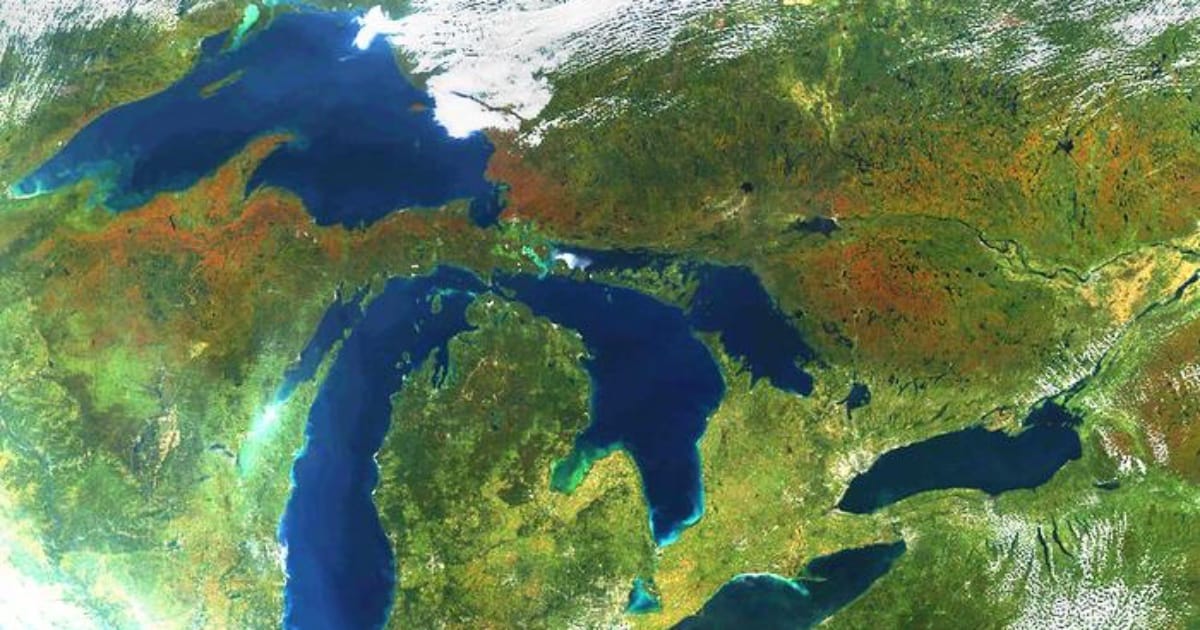
Drawing on examples from across the Great Lakes Basin, researchers at the Centre for Ecosystem Management (CEM)—together with scientists from the Department of Fisheries and Oceans, Cornell University, Great Lakes Fishery Commission, and the Ontario Ministry of Natural Resources—highlight the importance of what ecologists call “portfolio effects”: the stabilizing influence that arises when ecosystems contain a diversity of species, habitats, and ecological interactions operating across multiple levels of ecological organization. These portfolio effects arise because ecosystems contain natural variation at multiple nested scales, from habitats and populations to species and entire energy pathways. Much like a diversified financial portfolio reduces risk, ecological diversity can buffer ecosystems against environmental change and help maintain the production of natural resources over time.
“Ecosystem resilience is not just about having many species, but about maintaining the variation within and across scales that helps the individual organisms, species, and ecosystems persist and adapt,” lead author Dr. Kayla Hale explains.
Human activities such as land transformation, invasive species, and intensive resource extraction often reduce this natural variation. As habitats and biological communities become more homogeneous, ecosystems lose their ability to absorb disturbances through these portfolio effects, creating less predictability in their functioning and increasing the risk of widespread ecological decline.
Variation among habitats, on the other hand, means that disturbances rarely affect every part of a landscape in the same way, allowing intact areas to buffer and support those that are under stress. At the same time, variation among populations, species, and ecological strategies enables biological communities to reorganize under new conditions while continuing to perform essential ecosystem functions, like the production of natural resources. By reinforcing one another across scales, these different types of portfolio effects help ecosystems absorb disturbance and adapt to changing environmental conditions.
“This work highlights biodiversity and habitat heterogeneity as a form of natural insurance,” said Hale. “Protecting this variation helps maintain the capacity of ecosystems to respond to both expected and unexpected environmental challenges.”
The findings have implications for conservation, ecosystem management, and policies aimed at maintaining ecosystem services in a rapidly changing world. The authors conclude that conserving and restoring this diversity of habitats, species, and interactions may be one of the most effective strategies available for both helping ecosystems adapt to ongoing global change and ensuring their ability to function reliably for future generations.
The study, Managing for resilience with ecological structure: Portfolio effects in the Laurentian Great Lakes, was conducted in part by researchers at the Centre for Ecosystem Management and contributes to a growing body of work examining how ecosystems respond to multiple, interacting global stressors. This work was supported by the Great Lakes Fishery Commission and the Directorate for Biological Sciences (National Science Foundation). It was published in Frontiers in Ecology and the Environment on June 25, 2026.