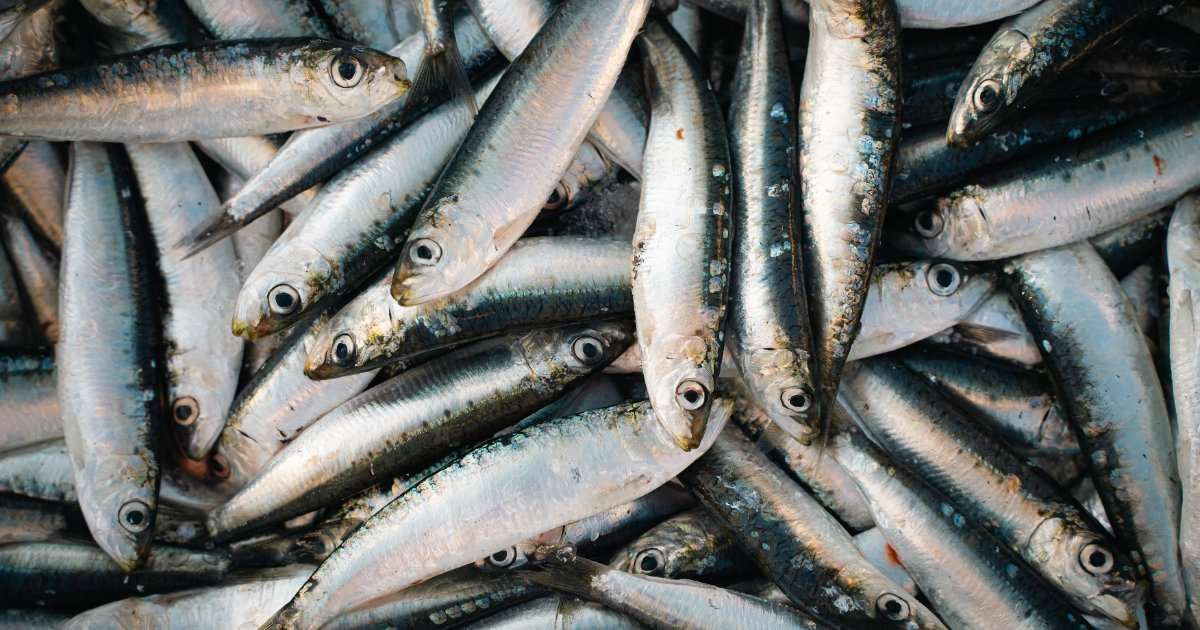
Humphries, professor and chair of the Department of Fisheries, Animal and Veterinary Sciences in URI’s College of the Environment and Life Sciences, will spend the spring semester at the Instituto Português do Mar e da Atmosfera in Lisbon. There, he will work with researchers to develop models that predict how sardine and anchovy populations respond to rapidly changing ocean temperatures.

The fellowship builds on Humphries’ decades of research examining the connections among fish populations, marine ecosystems, and coastal communities. While much of his previous work has focused on international development and fisheries in low-income countries, the Fulbright opportunity will allow him to apply his expertise to a new context and set of challenges.
The opportunity took on new urgency after cuts to USAID funding in 2025 impacted the research program Humphries had built for more than a decade, prompting him to look for new directions for his work.
“Being selected as a Fulbright Scholar means a great deal to me because it gives me the chance to pivot—to chart a new direction for my research going forward,” he said.
Advancing sustainable fisheries
In Portugal, sardine and anchovy fisheries are woven into the fabric of daily life—sustaining livelihoods on the water as well as on land in processing plants, canneries, and markets. These traditions stretch back many generations and that deep dependence is part of what drew Humphries to Portugal.
Working with Susana Garrido and colleagues at the institute, Humphries will develop forecasting tools to help fisheries managers make informed decisions as ocean temperatures continue to cause changes in fish populations.
The research builds directly on Humphries’ previous work, where his focus has long been on understanding how fish populations, the environment, and human use interact as a whole rather than in isolation. “This project lets me apply that same systems thinking to a new region and a new set of species,” he said.
Expanding opportunities
Humphries expects the Fulbright to create lasting opportunities for URI students and faculty through international partnerships. “This connects URI more directly to the International Council for the Exploration of the Sea’s Working Group on Small Pelagic Fishes,” he said, “which could open doors for students and colleagues working on fisheries issues and small pelagic fish around the world.”
Beyond the research, Humphries says there’s a lot he’s excited about. “Academically, I’m looking forward to learning from the European approach to ecosystem-based fisheries science and management, which tends to be more institutionally integrated into policy and modeling than what we typically see in the US,” he said. “Personally, my family and I are excited to live in Lisbon and experience Portuguese culture together, especially the grilled sardines.”
This story was written by Anna Gray in URI’s College of the Environment and Life Sciences.