
The study was conducted by a diverse team of international scientists. Published in the journal BioScience, the research comes at a critical time: around the world, key global nature goals are slipping out of reach due to a lack of funding and political will. Including the UN target to restore 30% of degraded ecosystems by 2030.
Embed Smart Biodiversity Requirements
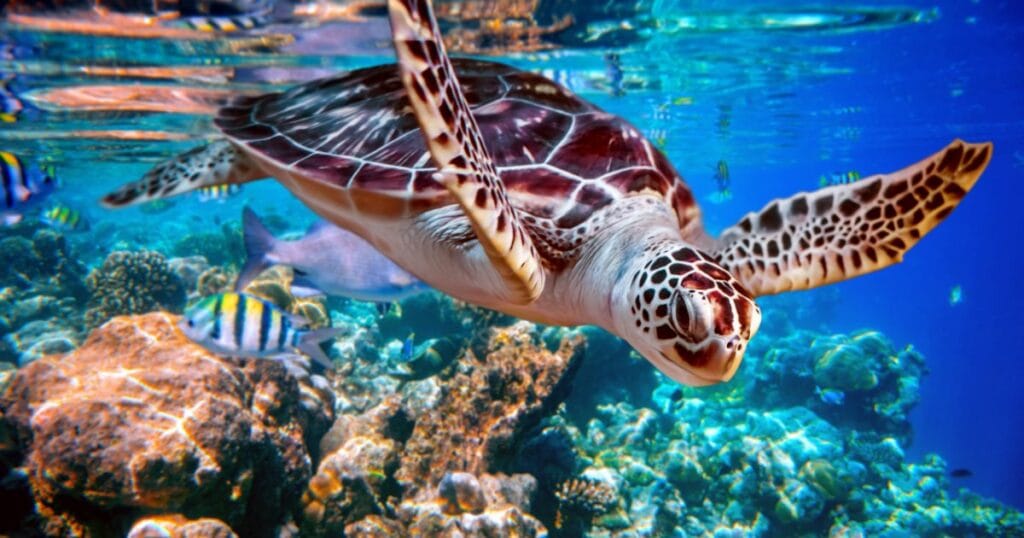
The researchers found that dedicating just 1% of the global offshore wind investments from now till 2050 could fund the restoration of millions of square kilometers of marine ecosystems, such as coral reefs, mangroves, seagrass beds, and oyster reefs. “Offshore wind has a unique opportunity to not only support the energy transition but also become the first marine industry to make a net-positive contribution to large-scale ecosystem restoration,” said lead author Christiaan van Sluis (The Rich North Sea). “By embedding smart biodiversity requirements in offshore wind licensing and tendering procedures now, we can reverse biodiversity loss with just a fraction of the total investment.”
Nature Restoration Pays Off
Restoring marine ecosystems not only benefits plants and animals but also people. Healthy seas and coastal habitats absorb carbon, protect shorelines, and support fish populations. According to the study, every dollar invested in ecosystem restoration can return $2 to $12 in societal benefits. This is especially relevant as the offshore wind sector is set to grow exponentially, from 56 gigawatts in 2021 to an estimated 2,000 gigawatts by 2050. “If we structurally integrate marine restoration into this expansion, we can actually meet our biodiversity targets,” said Van Sluis.
Embedding Restoration in Policy
The authors urge governments to make marine restoration a standard requirement in offshore wind policy. This includes mandating that a fixed percentage of project investments be allocated to marine biodiversity, through licensing conditions or non-price criteria in tendering. With the sector expanding rapidly, nature restoration should be structurally integrated into policy.
Restoration in Tendering
The Netherlands, Denmark, and the United Kingdom already have centralized tendering systems that are well-suited to include biodiversity criteria. An internationally coordinated and legally embedded approach would enable economies of scale, fair competition, and prevent marine ecosystems from falling victim to price-driven decision-making.
“At Van Oord, nature-inclusive design and construction are key themes. Including non-price criteria in tenders has worked well in several Dutch projects. The time is right to scale up marine restoration in the global rollout of offshore wind,” said Karen Vennik, Commercial Director Offshore Energy and Ocean Health at Van Oord.