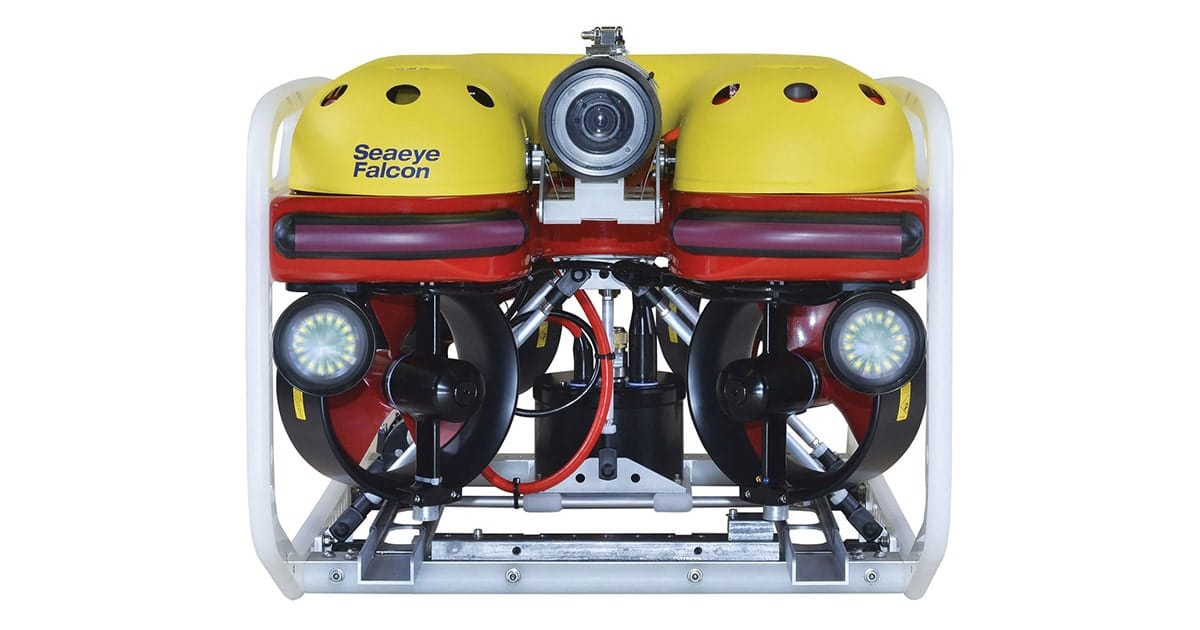
Tokyo based systems provider Marimex says Japan’s wind power construction operators value the Falcon for being a compact and powerful robot that is ideally suited for shallow waters and strong currents.
The small footprint of the meter-sized Falcon is also important for offshore energy operators as construction is carried out using fleets of small service vessels needed in shallow waters.
Growth in Japan’s offshore wind power construction comes as the Japanese Government seeks to achieve carbon neutrality by 2050.
Marimex says that the Falcon’s broad operational capability means that not only can it be used for preliminary surveys, but also for post-construction maintenance monitoring and many other applications.
As the world’s top selling robotic vehicle in its class, the Falcon has a reliability record covering over a million hours underwater.
The success of the highly portable Falcon comes from combining intelligent control architecture with five powerful thrusters to enable precise maneuverability in turbulent waters amongst complex structures, whilst loaded with a wide range of cameras, sensors, and tooling, typically found on much larger robotic vehicles.