Using more than two decades of satellite observations, researchers analyzed changes in microalgae net primary production—the process by which microscopic marine plants convert sunlight and carbon dioxide into organic matter, which forms the foundation of marine ecosystems.
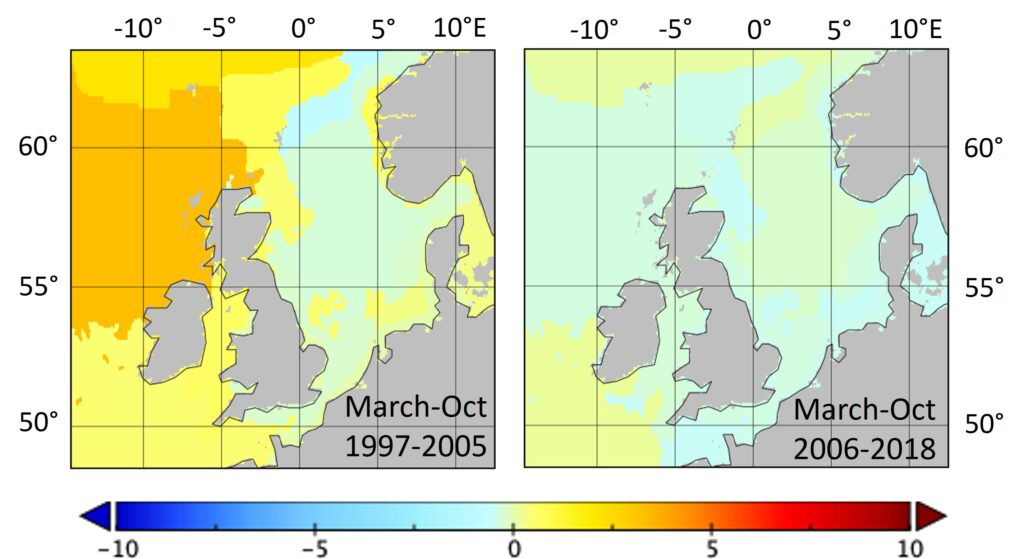
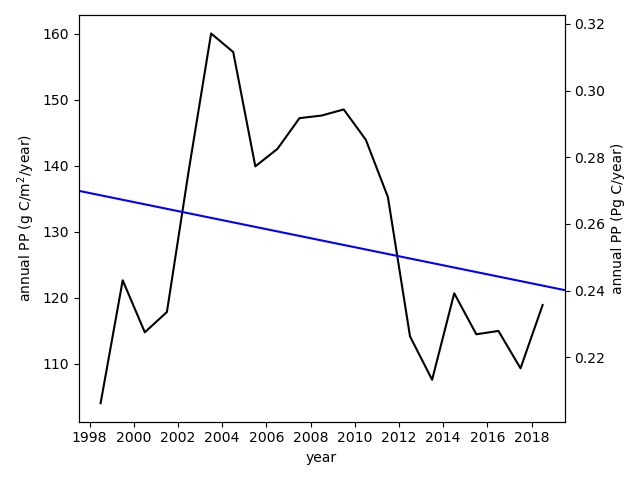
The study, led by PML’s Dr. Gavin Tilstone and Dr. Peter Land, examined satellite data spanning 1997 to 2018 and found that, after a brief period of increasing productivity in the late 1990s and early 2000s, primary production declined steadily across much of the region, particularly in north-west European coastal waters, the Irish Sea, North Sea, western English Channel and parts of the Norwegian Sea.
The research links these declines primarily to changes in sea surface temperature and mixed layer depth—key physical properties that control how nutrients and light are distributed in the upper ocean.
Dr. Gavin Tilstone, Bio-optical Oceanographer at PML, said: “While the ocean may appear to be one giant body of water, it is often divided into layers based on temperature. As the ocean warms, these layers become stronger and less likely to vertically mix—a process known as thermal stratification.”
“This matters because the mixing of ocean waters helps transport nutrients from the depths to the surface, where phytoplankton can use them to grow. When that supply is reduced, microalgae productivity can decline.”
Dr. Peter Land, Remote Sensing Scientist at PML, added: “In many regions, warming surface waters and altered mixing are reducing the conditions phytoplankton need to thrive. This limits the energy entering marine food webs and can have huge knock-on effects for fish stocks and ecosystem services.”
In some areas, the timing of peak productivity has also shifted earlier in the year, with the traditional spring bloom occurring weeks sooner than in previous decades. This seasonal shift could disrupt the synchrony between phytoplankton, zooplankton and fish larvae, and potentially affect recruitment success in fish populations.
While the overall picture shows a net decline, the study highlights strong regional variability. Some areas, such as the Celtic Sea, showed stable or even increasing productivity, underscoring the complexity of ocean responses to climate-driven change.
“These regional differences are crucial,” said Dr. Tilstone, “Global averages can mask what’s really happening at local and regional scales—which is where ecosystems, fisheries and coastal communities actually feel the impacts.”
By grouping the north-east Atlantic into regions with similar seasonal and physical characteristics, the team was able to identify where the decline in productivity is most pronounced, and which environmental drivers are influencing this most.
Microalgae play a vital role in the biological carbon pump, helping transfer carbon from the atmosphere into the ocean interior. A sustained reduction in primary production could weaken this natural carbon sink, reducing the ocean’s natural ability to drawdown and sequester CO2 and buffer climate change.
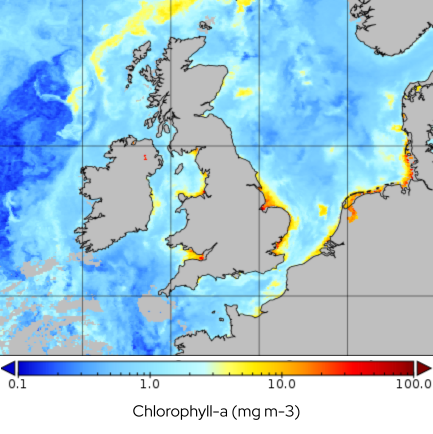
The authors caution that the satellite record is still relatively short in climate terms but stress the importance of maintaining long-term Earth observation programs to detect and understand these trends. They are conducting further work in the most productive ecosystems of the Atlantic Ocean using approximately 30 years of satellite data to assess whether the patterns they have discovered in the North-East Atlantic are similar in other parts of the Atlantic Ocean.
“With continued satellite monitoring, we can better track how climate change is reshaping ocean productivity and identify regions most at risk,” said Dr. Land. “That knowledge is essential for managing marine ecosystems in a changing climate.”
Dr. Tilstone added, “A concerted research effort on determining the capacity of regional seas to continue to regulate the climate is required, in the shadow of climate extremes such as more and prolonged heat waves, decreasing seawater pH and an increase in oxygen minimum zones in the ocean.”
The study provides one of the most detailed regional assessments to date of long-term changes in ocean productivity in the north-east Atlantic, which includes the western English Channel where PML maintains a 120-year-old data time-series (Western Channel Observatory), offering critical evidence for policymakers, marine managers and climate scientists.
As pressures from ocean warming, altered circulation and stratification continue to grow, understanding how the base of the marine food web is changing will be key to safeguarding fisheries, carbon cycling and ocean health in the decades ahead.