Marine heatwaves are individual extreme events in which sea temperatures are unusually high for at least five days. They occur when strong solar radiation or warm air heats the water or when ocean currents carry unusually warm water in.
“Recent studies show that the number of marine heatwaves has also increased significantly in the Arctic over the past few decades,” said Dr. Marylou Athanase of the Alfred Wegener Institute, Helmholtz Centre for Polar and Marine Research (AWI).
In a new publication, the climate researcher has summarized the current state of scientific knowledge, which highlights just how little these heat events are researched. While research into marine heatwaves has seen a surge worldwide in recent years, studies in the Arctic remain scarce, and there is no comprehensive assessment of their characteristics, drivers and impacts, or how these factors interact.
“Yet in the Arctic, even a temporary rise in temperature of a fraction of a degree can have cascading impacts on the heat-sensitive polar ecosystem, and possible implications for the global climate system,” said Dr. Athanase.
The available data show that the duration, intensity, and frequency of marine heatwaves in the Arctic have increased significantly since the 1980s. During such extreme events, sea surface temperatures can be up to four degrees Celsius above the seasonal average.
“The marginal seas of the Arctic are consistently emerging as hotspots,” explained Dr. Athanase. “Here, surface heatwaves are becoming up to 0.6 degrees hotter per decade and occur about twice as frequently as the global average. Estimates across all Arctic sectors range from one to three events per year.”
Deeper below the surface, between 50 and 500 meters, heatwaves are similar or even more intense. On the seabed, however, they show hardly any increase in frequency or intensity; in some regions, there is even a decrease. Above all, the duration of marine heatwaves in the Arctic is increasing faster than anywhere else in the world, ranging from around 10 to 40 days depending on the region. The longest event on record occurred in the Barents Sea in 2016: for over 480 days, temperatures at the surface and on the seabed were a good one degree Celsius above average.
What Drives Marine Heatwaves in the Arctic
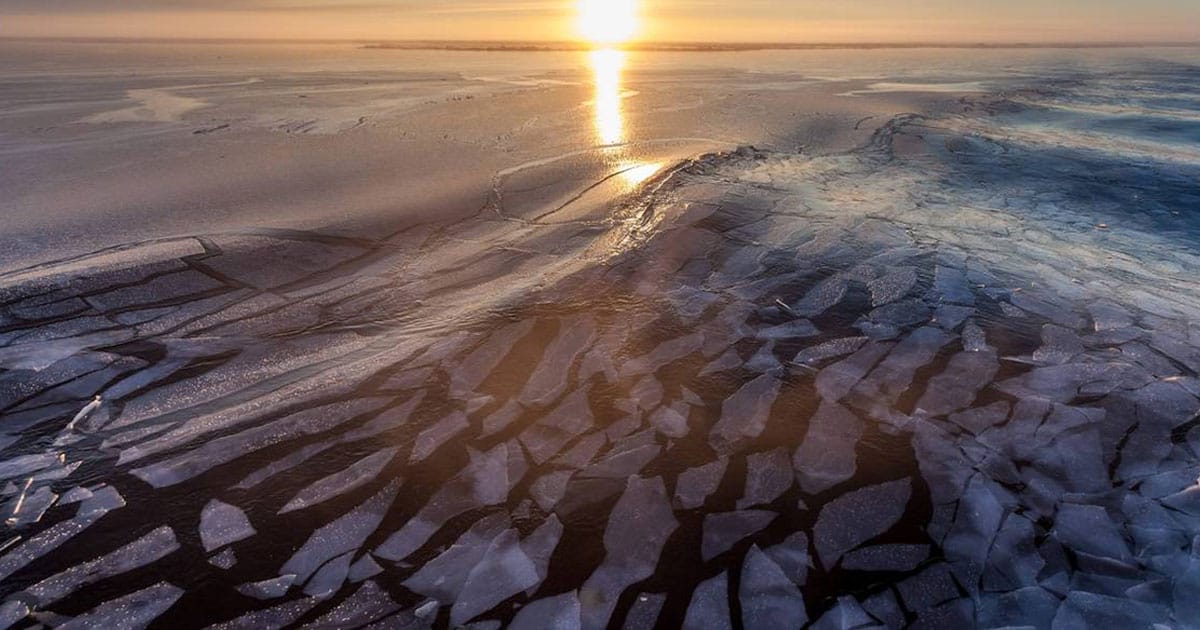
In the Arctic, there are climate processes that have no equivalent at lower latitudes: the presence of sea ice, altering heat fluxes between the atmosphere and the ocean, and the injection of ocean heat stored deep below the Arctic surface represent a previously overlooked class of influencing factors.
“Two interlinked mechanisms in particular are driving the increase in marine heatwaves: the general warming of the ocean and the decline in sea ice,” said Dr. Athanase. “Heat input from the atmosphere to the ocean in the Arctic depends largely on sea ice. When it melts in summer, the sea surface can absorb more solar radiation, which in turn intensifies warming via the ice-albedo feedback.”
For example, during the marine heatwaves of 2007 and 2020, the Arctic Ocean absorbed almost twice as much solar energy as is usual in summer due to the extremely low sea ice cover.
Melting sea ice has yet another, amplifying effect: the fresh water released by ice melt forms a shallow layer on top of the salty ocean water. This layer is so thin that even a small amount of heat input is enough to raise its temperature far beyond normal levels.
“Model simulations estimate that this effect sustains marine heatwaves at the surface, prolonging and intensifying them by a remarkable 20 percent on average,” said Dr. Athanase.
In the Arctic Ocean, marine heatwaves can also be driven from the depths, which differs fundamentally from other oceans. Unlike at lower latitudes, where the warmest waters sit at the surface, in the Arctic, warm waters flowing in from the Atlantic circulate in the deeper layers. Storms in autumn or winter stir up the sea, mixing and potentially carrying this stored heat from the depths to the surface. Estimates suggest that such upwelling of warm water is responsible for around one-fifth of all marine heatwaves at the Arctic surface.
Not all contributing factors can be found in the ocean; cloud cover also influences both the onset and the intensity of marine heatwaves.
“In non-polar oceans, heatwaves are often linked to a feedback loop between low clouds, solar radiation and sea surface temperature,” said Dr. Athanase. “Higher temperatures reduce cloud cover in the lower layers of the atmosphere, allowing more solar radiation to reach the surface. This intensifies the warming and, consequently, the marine heatwaves.”
In the Arctic, however, this mechanism works differently. Although stronger solar radiation also raises sea surface temperatures during the summer, higher temperatures and expanded ice-free ocean areas here lead to evaporation and more cloud cover, not less. While more clouds reduce the amount of solar radiation reaching the surface, this cooling effect can be offset by two factors: as sea ice retreats, the dark ocean surface absorbs more solar energy; and the cloudy atmosphere also radiates more heat back down to the surface.
“In fact, the recent increases in summer and autumn heatwaves at the sea surface coincide with moderate increases in cloud cover,” said Dr. Athanase. “But whether it is ultimately increased sunlight or cloudiness that plays the bigger role in driving Arctic marine heatwaves is still an open question for us.”
“As global warming progresses, future simulations suggest that the Arctic will experience some of the world’s sharpest increases in the frequency and intensity of marine heatwaves,” said Dr. Athanase. However, there is still a lack of research specifically tailored to polar conditions.
“With our study, we are completing the global picture of marine heatwaves by adding the ‘Arctic piece of the puzzle’. And we are doing so at a time when this region is changing faster than any other ocean.”