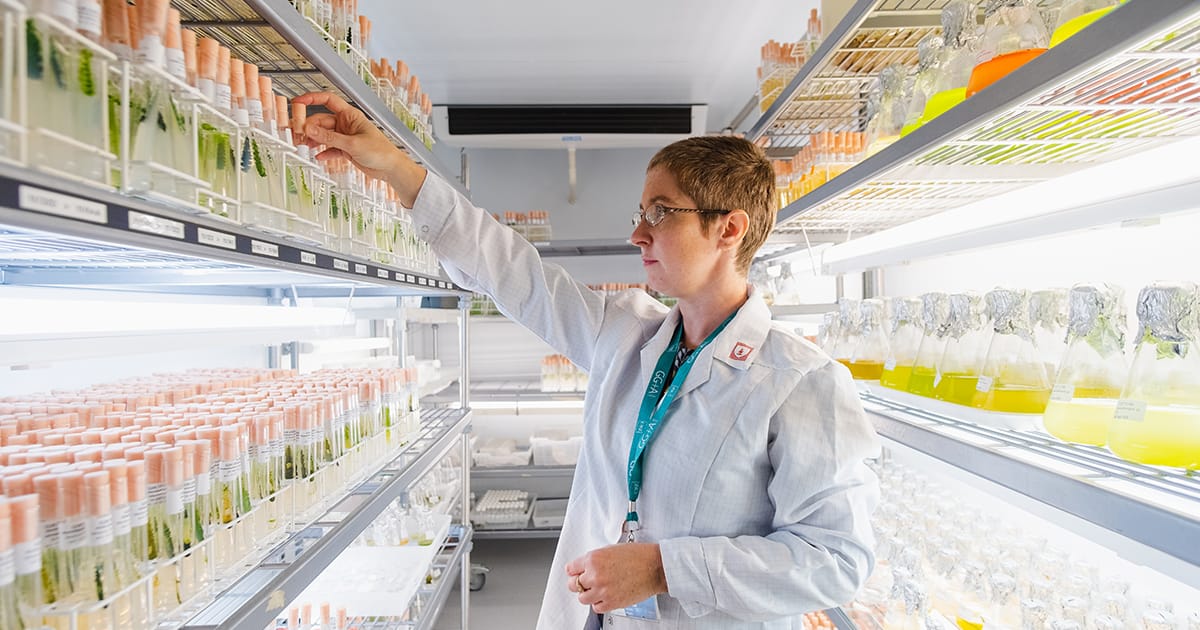
Algae researchers from 18 global research institutes have co-authored a report published in the European Journal of Phycology that highlights the need for a coordinated European effort to preserve seaweed genetic diversity against a backdrop of rapid species loss.
The report recommends a European-wide biobanking strategy to ensure food security, biosecurity, and biodiversity conservation. This would include forming a European Board of Macroalgal Genetic Resources to link existing biobanks and create a centralized digital databank of biological resources from across the continent.
Seaweeds, or macroalgae, are important habitats and food, helping to keep the ocean ecosystem alive. Large kelps form underwater forests that protect many species. Seaweeds also contribute to the planet’s oxygen production and take up carbon dioxide from the atmosphere.
Macroalgae produce natural products that can be used in cosmetics, biomaterials, food, and agricultural feed and are helping to grow the global biotechnology industry.
However, in an ocean that is getting warmer and more acidic, many seaweed species are struggling to adapt and survive and this loss of genetic diversity in the seaweed population is a worry, say experts.
Prof. Laurie Hofmann, a marine biologist at the Alfred Wegener Institute, Helmholtz Centre for Polar and Marine Research (AWI), who led the expert group proposing a European biobanking strategy, said: “Expanding seaweed cultivation in Europe can help contribute to many of the United Nations Sustainable Development Goals by supporting food security, biotechnological applications, and restoration.
“But in order to safely and sustainably support the expansion of the industry and prevent biodiversity loss in Europe, a coordinated strategy for preserving macroalgal genetic resources is critical.
“We have started consolidating information on all of the seaweed strains currently held in European collections and can see that the number of species represents only 15% of European biodiversity. Considerable financial investment will be required to improve this number, but we can start by building upon existing infrastructure and by prioritizing species of ecological and commercial importance.”
One example of macroalgae biobanking can be found at the Culture Collection of Algae and Protozoa at the Scottish Association for Marine Science (SAMS), an ocean research charity in Oban.
CCAP holds more than 3,000 strains of ocean and freshwater algae, including Europe’s largest public collection of seaweeds. With around 40% of its entire collection cryogenically preserved, it is also a global leader in cryopreservation of these organisms.
AWI and SAMS each hold around a third of the total number of seaweeds biobanked on the continent. This means that 66% of the entire European collection is within two institutes.
CCAP curator Ceci Rad-Menéndez is a co-author of the new report and said biobanks like her own lab already exist in Europe, but funding would be required to increase capacity and coordinate the preservation of key species.
She said: “CCAP is one of the largest and most diverse collections in Europe, and we have the expertise to ensure the preservation of these organisms. Some of the cultures are from extremely remote locations, so sampling them again could prove to be difficult or, in the case of species loss, entirely impossible.
“We’re losing a lot of biodiversity because of climate change and habitat loss. In terms of the UN Sustainable Development Goal for food security, having the biobanked material is a great insurance against the threat of climate change.
“With further investment, we could also examine the genetics of more seaweeds to establish which species are best suited to the changing environment and to help develop breeding lines. By establishing a network of all seaweed cultures in Europe, we would not only help to preserve many species but also advance research in this area of study.”